
Hong Kong egg tarts pair a tender, buttery pastry shell with a smooth, lightly sweet egg custard. They are small enough to serve as a snack or dessert, but the contrast between crisp pastry and delicate filling makes each tart feel complete.
This version uses the flour, butter, and powdered sugar pastry listed here, then fills it with a simple custard of eggs, sugar, evaporated milk, and water. Chilling the dough, straining the filling, and baking gently help produce neat shells and a satin-smooth center without making the process complicated.
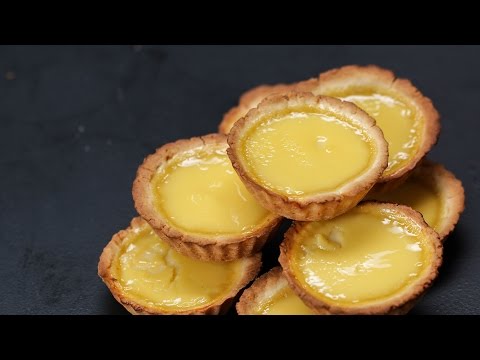
Why This Recipe Works
Cold butter and a light hand keep the pastry tender rather than tough. The flour is coated with small pieces of butter, which limit gluten development and leave the baked crust short and crumbly. A little egg yolk enriches the dough, while cold water brings it together without warming the butter. Resting the dough gives the flour time to hydrate and makes it easier to roll.
The filling is mixed gently instead of whisked vigorously. That matters because excess foam can leave bubbles or a rough surface on the baked custard. Dissolving the sugar in warm water first prevents gritty pockets, and straining the finished mixture removes any wisps of egg that could interrupt its smooth texture.
Finally, the shells and filling bake together at a moderate oven temperature. The pastry has time to cook through while the custard sets without aggressive bubbling. A slight wobble in the center is a better cue than waiting for the filling to look completely firm; it continues to settle as it cools.
Ingredients
- 200 g all-purpose flour
- 100 g unsalted butter, chilled and cubed
- 50 g powdered sugar
- 1/4 teaspoon fine salt
- 1 large egg yolk
- 2 to 3 tablespoons cold water, as needed
- 2 large eggs, for the custard
- 75 g granulated sugar
- 150 ml water, for the custard
- 100 ml evaporated milk
- 1/2 teaspoon vanilla extract
Ingredient Notes
Flour: All-purpose flour gives the shell enough structure to hold its shape while staying tender. Cake flour can make the crust more delicate, but it is softer to handle; avoid bread flour, which can make pastry chewy.
Butter: Unsalted butter lets you control the salt and gives the crust its rich flavor. Keep it cold until mixing. If salted butter is all you have, use it and omit the added salt. Margarine will change the flavor and texture, so butter is the better choice here.
Powdered sugar and yolk: Powdered sugar dissolves readily and gives the pastry a fine, crisp crumb. The yolk adds richness and helps bind the dough. Do not substitute a whole egg in the pastry; its extra liquid can make the dough sticky and less tender.
Cold water: Add it gradually. Flour absorbs moisture differently depending on how it is measured and the room’s humidity, so the dough may need closer to two tablespoons or the full three. Stop as soon as it holds together when pressed.
Eggs and evaporated milk: Whole eggs set the filling, while evaporated milk gives it a rounded dairy flavor. Use plain, unsweetened evaporated milk, not sweetened condensed milk. If needed, whole milk can replace it, though the custard will be a little less rich.
Sugar, water, and vanilla: Granulated sugar sweetens the custard and dissolves in warm water. Vanilla is optional but complements the egg and milk. For a more traditional, restrained flavor, leave it out.
Instructions
- Make the pastry. Put the flour, powdered sugar, and salt in a bowl and mix. Add the cold butter and rub it into the flour with your fingertips or cut it in with a pastry cutter until the mixture looks like fine crumbs with a few pea-size pieces. Stir in the egg yolk. Add cold water one tablespoon at a time, mixing just until the dough clumps when squeezed. It should feel cool and pliable, not wet or sticky. Stop mixing as soon as it comes together; overworking develops gluten and can make the crust firm.
- Chill the dough. Press the dough into a flat disc, wrap it, and refrigerate for 30 minutes. It should feel cool and firmer but still roll without cracking badly. This rest hydrates the flour and firms the butter, making the dough easier to shape and less likely to shrink in the oven.
- Prepare the custard syrup. Heat the 150 ml water until steaming, then stir in the granulated sugar until it dissolves. Let the syrup cool until it is warm rather than hot, about 10 to 15 minutes. It should feel comfortable to touch; hot syrup could start to cook the eggs when combined.
- Mix and strain the filling. In a bowl, stir the eggs gently until the whites and yolks are combined, taking care not to whip in foam. Stir in the evaporated milk, vanilla, and cooled sugar syrup. Pour the mixture through a fine-mesh sieve into a jug. The strained liquid should look even and have little or no foam on top. Straining removes egg strands and helps the baked custard look smooth.
- Heat the oven and shape the shells. Set a rack in the lower-middle of the oven and preheat to 375°F. Lightly grease twelve tart molds about 3 inches across if they are not nonstick. Roll the chilled dough on a lightly floured surface to about 1/8 inch thick. Cut rounds large enough to line the molds, then press each round gently into a mold, working from the center toward the sides. Do not stretch the dough; stretched pastry tends to pull back during baking. Patch small cracks with a scrap of dough.
- Chill the lined molds. Arrange the pastry-lined molds on a rimmed baking sheet and refrigerate for 15 minutes. The pastry should feel firm when touched. Chilling helps the shells hold their shape while the butter melts in the oven.
- Fill the shells. Pour the strained custard into the shells, leaving a little room at the top. Aim for roughly three-quarters full rather than filling to the rim, since moving the tray can make the liquid slosh. Transfer the baking sheet carefully to the oven. If the custard has developed bubbles, skim them off before filling for a cleaner surface.
- Bake until just set. Bake at 375°F for 20 to 25 minutes. The pastry should look lightly golden at the edges, and the custard should be set around the outside with a small, gentle wobble in the center. For an objective safety check, the center of an egg dish should reach 160°F; insert an instant-read thermometer into the center of one tart without touching the pastry. If the center is still loose or below that temperature, continue baking in short increments and check again. Avoid baking until the entire filling is rigid, which can make it rubbery as it cools.
- Cool and unmold. Let the tarts rest in their molds for about 10 minutes, until the pastry firms enough to handle. Loosen the edges carefully and lift them out. Cool on a rack until warm or at room temperature. The custard will settle as it cools, and the pastry will be easiest to handle once it has stopped steaming.
Tips for Success
- Keep the butter cold. If it begins to soften while you work, pause and chill the bowl or dough before continuing.
- Measure the water by feel as well as by spoon. A cohesive dough is the goal; adding extra water just because it is listed can make the shell tougher.
- Roll the pastry evenly. Thin spots can split or brown too quickly, while thick spots may stay doughy where the shell meets the filling.
- Use a light touch when lining the molds. Press the dough into the corners without pulling it across the rim.
- Let the sugar syrup cool before it touches the eggs. This keeps the mixture from forming cooked egg flecks.
- Pour the filling from a jug with a spout, or use a small ladle. It is easier to fill the shells neatly and avoid wetting the pastry rim.
- Watch the custard near the end of baking. A slight central wobble is desirable; a puffed, browned, or vigorously bubbling surface usually means it has gone too far.
Troubleshooting
The dough cracks while rolling: It may be too cold or slightly dry. Let it sit briefly at room temperature, then press cracks together. If it still crumbles, work in cold water a teaspoon at a time, stopping once it holds together.
The pastry shrinks in the oven: It may have been stretched into the molds or not chilled long enough. Press the dough into place rather than pulling it, and chill the lined shells before filling and baking.
The crust is pale or soft underneath: The oven may not have fully preheated, or the tray may be too high in the oven. Confirm the oven temperature and bake on the lower-middle rack. Give the shells enough time to turn lightly golden at the edges.
The custard has bubbles or a pitted top: Vigorous whisking traps air, and an oven that is too hot can make the filling bubble. Stir gently, strain the mixture, remove visible foam, and check the oven temperature.
The filling tastes rubbery or has cracks: It was likely baked too long or too hot. Take the tarts out when the edges are set and the centers still wobble slightly, while also confirming the center reaches 160°F.
The pastry is tough: Too much mixing or water can develop excess gluten. Handle the dough only until it comes together, and add water gradually rather than pouring it all in at once.
Variations
For a more delicate vanilla note, keep the extract in the custard; for a simpler egg-and-milk flavor, omit it. A small amount of finely grated lemon zest can add a fresh aroma, though it moves the flavor away from the classic plain custard.
You can make the tarts slightly less sweet by reducing the granulated sugar modestly. Avoid cutting it drastically, since sugar affects the custard’s flavor and texture. For a crispier shell, let the baked tarts cool fully on a rack rather than leaving them in the molds, where trapped steam can soften the pastry.
Small tart molds give the familiar individual shape. If using one larger tart pan, the deeper filling will need a different baking time, so rely on the set edges, a slight center wobble, and the safe egg temperature rather than the timing given for individual tarts.
What to Serve With It
Serve the tarts with hot tea, such as black tea, or with coffee. Their buttery pastry and sweet custard also pair well with fresh berries or sliced citrus, which add a bright contrast without competing with the filling. They are satisfying on their own as a small dessert or afternoon snack.
For the cleanest pastry texture, serve them the day they are baked. If serving after chilling, allow the tarts to lose their refrigerator chill before eating, or warm them briefly so the crust becomes more fragrant and crisp.
Make-Ahead, Storage and Reheating
The pastry dough can be wrapped and refrigerated for up to two days before shaping. You can also line the tart molds, cover them well, and refrigerate them overnight. Prepare the custard close to baking time; once mixed, keep it covered in the refrigerator and use it promptly rather than leaving raw egg mixture at room temperature.
Refrigerate baked egg tarts within two hours of baking, in a covered container, and eat them within three to four days. For longer storage, freeze the cooled tarts in a freezer-safe container for about two to three months. The pastry may soften slightly after thawing, but freezing is preferable to leaving egg custard at room temperature.
For best results, thaw frozen tarts in the refrigerator. Reheat refrigerated or thawed tarts on a baking sheet in a 300°F oven for about 8 to 10 minutes, until warmed through. Let them cool briefly before eating, since the custard can be hotter than the pastry. Avoid repeated reheating and cooling.
Recipe Card
Yield: 12 egg tarts
Prep time: 45 minutes, plus chilling
Cook time: 20 to 25 minutes
Total time: About 1 hour 30 minutes, including chilling and cooling
Ingredients
- 200 g all-purpose flour
- 100 g unsalted butter, chilled and cubed
- 50 g powdered sugar
- 1/4 teaspoon fine salt
- 1 large egg yolk
- 2 to 3 tablespoons cold water
- 2 large eggs
- 75 g granulated sugar
- 150 ml water
- 100 ml evaporated milk
- 1/2 teaspoon vanilla extract
Condensed Steps
- Rub the butter into the flour, powdered sugar, and salt. Mix in the yolk and enough cold water for the dough to hold together. Chill for 30 minutes.
- Dissolve the sugar in hot water and cool until warm. Stir the eggs gently with the evaporated milk and vanilla, add the syrup, then strain.
- Preheat the oven to 375°F. Roll the pastry about 1/8 inch thick, line twelve 3-inch tart molds, and chill the shells for 15 minutes.
- Fill the shells about three-quarters full. Bake at 375°F for 20 to 25 minutes, until the pastry is lightly golden and the centers are just set. The center of the egg filling should reach 160°F.
- Cool in the molds for about 10 minutes, then unmold and finish cooling on a rack.
Frequently Asked Questions
Can I make the pastry without a food processor?
Yes. Rub the cold butter into the dry ingredients with your fingertips or use a pastry cutter. Work quickly so the butter stays cool, and stop once the dough holds together when pressed.
Do I need to blind-bake the shells?
No. These individual shells bake with the custard inside. Chilling the lined molds helps them keep their shape, and baking on a lower-middle rack gives the pastry time to cook through.
Why strain the custard?
Straining catches egg strands and any bits of shell, while also removing some bubbles. It is a small step that helps the baked filling look and feel smoother.
Can I use sweetened condensed milk instead of evaporated milk?
Not as a direct swap. Sweetened condensed milk contains added sugar and is much thicker, so it would make the filling sweeter and change its texture. Use plain evaporated milk or whole milk instead.
How do I know when the custard is done?
The outer portion should be set and the center should have a slight wobble, not a liquid ripple. For food safety, an egg dish should reach 160°F at its center. Avoid waiting for the whole surface to become firm, which can overcook the custard.
Can I bake these in a muffin pan?
Yes, if the wells are close to the size of small tart molds. The shape and depth may differ, so check for the same visual cues and safe center temperature rather than assuming the timing will be identical.
Can I freeze baked egg tarts?
Yes. Cool them completely, wrap or cover them well, and freeze for about two to three months. Thaw in the refrigerator and warm briefly in the oven; the crust may be a little less crisp than when freshly baked.
Should egg tarts be served warm or cold?
Either works. Warm or room-temperature tarts make the buttery pastry especially fragrant, while chilled tarts have a firmer custard. For a crisp shell, reheat gently in the oven rather than the microwave.