Have you ever wanted to capture the intricate beauty of sushi in your photographs? Sushi photography is not just about food; it’s about art. This guide will help you elevate your photography skills and showcase the vibrant colors and delicate textures of sushi. Get ready to impress your followers with stunning images that make their mouths water.
From the glossy sheen of fresh sashimi to the vibrant hues of nigiri, the world of sushi offers endless opportunities for captivating photography. Whether you’re a professional photographer or just starting out, these tips will help you master the art of sushi photography and capture the essence of this culinary delight.
Capturing Sushi: An Artistic Approach
Sushi is a feast for the eyes, presenting a vibrant array of colors and textures that can captivate anyone.
When photographing sushi, the goal is to convey not just the food but the experience that comes with it.
The glossy sheen of fresh fish and the intricate details of each piece deserve a spotlight, and with the right techniques, you can turn a simple dish into a stunning visual.
Perfecting the Lighting
Natural light is your best friend in sushi photography.
Soft, diffused light brings out the freshness of the ingredients without creating harsh shadows that can detract from the subject.
Position your platter near a window or in an area with gentle lighting to enhance the glossy textures and vibrant colors of the sushi.
Avoid direct sunlight, which can wash out colors and create unflattering glare.
Instead, aim for early morning or late afternoon light for a warm, inviting glow that enhances your images.
Composition Techniques
Composition is key to creating engaging sushi photographs.
Experiment with different angles, such as shooting from above for a flat lay or from eye level for a more intimate perspective.
The rule of thirds can guide you in arranging your platter for a balanced and aesthetically pleasing shot.
Don’t hesitate to play with negative space around the sushi.
This technique draws the viewer’s eye directly to the food, emphasizing its beauty and intricacy.
Choosing Props and Backgrounds
The background and props can significantly impact the overall feel of your sushi photography.
Opt for simple, neutral backgrounds that won’t overshadow the sushi’s colors.
An elegant wooden table, for example, creates a warm, inviting atmosphere that complements the dish beautifully.
Incorporate props such as chopsticks or small dishes to add context without distraction.
These elements can enhance the story you’re telling through your images.
Focusing on Details
To truly showcase the intricate beauty of sushi, focus on the details.
Using a shallow depth of field can blur the background and draw attention to the sushi itself.
Consider using a macro lens to capture the fine textures and layers that make each piece unique.
Close-up shots can reveal the artistry involved in sushi-making, highlighting the skill and care that goes into each bite.
Post-Processing for Enhancement
Editing plays a pivotal role in elevating your sushi photographs.
Enhance colors and contrast during post-processing to make the sushi appear even more appetizing.
Small adjustments can create a significant impact, making the food look vibrant and fresh, much like it does in real life.
Using tools like brightness and saturation adjustments can help achieve that mouth-watering effect.
Don’t be afraid to experiment and find the style that resonates with your vision.
Mastering the Art of Sushi Photography
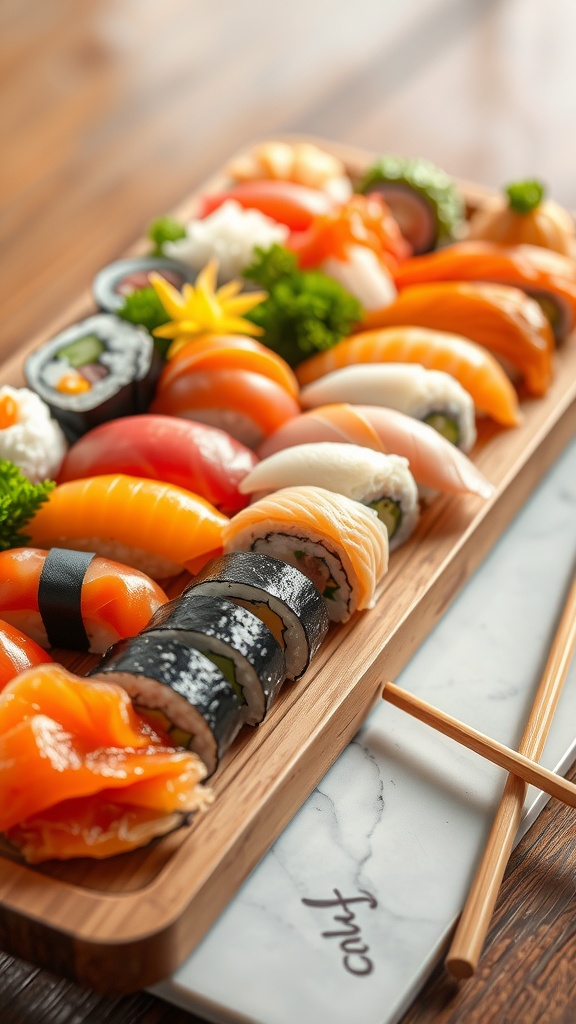
Sushi photography combines technical skills with a creative eye to highlight the beauty of food. The goal is to create images that not only look delicious but also evoke the experience of enjoying sushi.
With thoughtful composition and attention to detail, you can transform simple sushi presentations into visual masterpieces that tell a story.