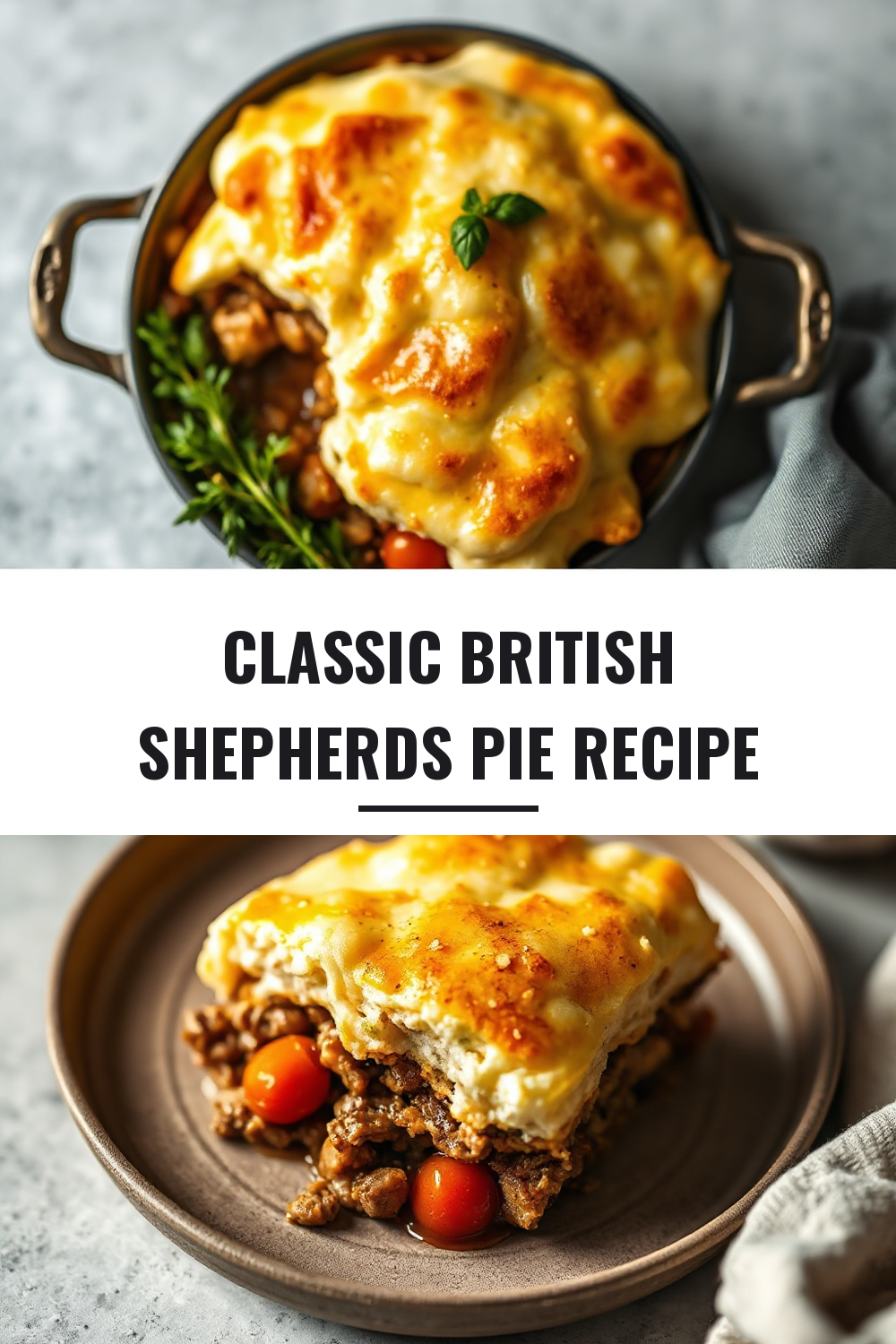
Classic British shepherd’s pie layers a savory minced-lamb filling with vegetables and gravy beneath a golden mashed-potato topping. The lamb stays tender under the crisped potatoes, while a little flour thickens the filling so each serving holds together instead of spreading across the plate. This recipe makes 6 generous portions.
Ingredients
- 2 lb (900 g) floury potatoes, such as russets or Maris Piper, peeled and cut into even chunks
- 4 tbsp (56 g) unsalted butter, divided
- ½ cup (120 ml) whole milk, warmed
- 1 tsp fine salt for the potatoes, plus more to taste
- 1 tbsp (15 ml) neutral oil
- 1½ lb (680 g) ground lamb
- 1 cup (150 g) finely diced yellow onion
- 1 cup (130 g) finely diced carrot
- 2 cloves garlic, minced (about 2 tsp)
- 2 tbsp (16 g) all-purpose flour
- 1 tbsp (16 g) tomato paste
- 1 tbsp (15 ml) Worcestershire sauce
- 1 cup (240 ml) low-sodium lamb or beef stock
- 1 tsp fresh thyme leaves, or ½ tsp dried thyme
- ½ tsp finely chopped fresh rosemary, or ¼ tsp dried rosemary
- ½ tsp ground black pepper, plus more to taste
- 1 cup (150 g) frozen peas
- ½ tsp fine salt for the filling, or to taste
- 1 tbsp (14 g) unsalted butter, for dotting the topping
Instructions
Heat the oven to 400°F (200°C). Set a rack in the middle of the oven and place a sturdy baking sheet on the rack to catch any filling that bubbles over. Choose a 2-quart (about 2-liter) baking dish. If you are using a shallow dish, check it has enough room for the filling and potato topping without reaching the rim.
Put the potatoes in a large saucepan and cover them with cold water by about 1 inch (2.5 cm). Add the potato salt. Bring the water to a boil, then lower the heat and simmer for 15–20 minutes, until the chunks are easily pierced with a knife. Drain thoroughly and leave the potatoes in the hot pan for a minute so excess steam can escape. This helps avoid watery mash.
While the potatoes cook, heat the oil in a large, heavy skillet over medium-high heat. Add the ground lamb and break it into small pieces with a wooden spoon. Cook for 6–8 minutes, stirring occasionally, until it is browned and no longer pink. If there is a large pool of rendered fat, carefully spoon off some of it, leaving enough to cook the vegetables. For food safety, cook ground lamb to 160°F (71°C); check with a food thermometer if you are unsure.
Add the onion and carrot to the skillet. Cook for 5–7 minutes, stirring often, until the onion softens and the carrot begins to turn tender. Stir in the garlic and cook for about 30 seconds, just until fragrant. Sprinkle in the flour and stir for 1 minute so it coats the meat and vegetables. Mix in the tomato paste, Worcestershire sauce, thyme, rosemary, pepper, and filling salt.
Pour in the stock gradually, scraping the browned bits from the bottom of the skillet as you stir. Bring the mixture to a gentle simmer and cook for 8–12 minutes, stirring now and then, until the carrots are tender and the gravy has thickened. It should be moist and spoonable, not soupy; it will continue to set a little in the oven. Stir in the frozen peas and taste the filling. Add salt or pepper if needed, then take the skillet off the heat.
Mash the drained potatoes until smooth, using a potato masher or ricer. Stir in 4 tablespoons of butter and the warm milk a little at a time until the mash is creamy but still firm enough to spread. Taste and adjust the seasoning. Avoid beating the potatoes vigorously, which can make their texture gluey. If the mash seems loose, hold back a little milk rather than adding extra flour to the topping.
Spoon the lamb filling into the baking dish and spread it into an even layer. Add the mashed potatoes in several dollops, then gently spread them to the edges to seal in the filling. Rough up the surface with a fork to make ridges that will brown. Dot the top with the remaining tablespoon of butter.
Set the dish on the heated baking sheet and bake for 20–25 minutes, until the filling is bubbling around the edges and the potato peaks are golden. If the top is not browned enough, place it under the broiler for 1–2 minutes, watching continuously because it can burn quickly. Let the pie stand for 10–15 minutes before serving; the short rest helps the gravy settle and makes portions easier to lift.

Tips
Keep the filling thick before it goes into the dish. If it looks watery, simmer it for a few more minutes; if it becomes too thick, loosen it with a small splash of stock. A watery filling can make the potato layer slide and leave a puddle on the plate.
Cut the potatoes into similarly sized pieces so they finish cooking at the same time. Drain them well and let steam escape before mashing. Warm milk blends in smoothly, but add it gradually because potato varieties absorb different amounts.
For a deeper browned flavor, let the lamb sit against the hot skillet briefly before stirring, and avoid crowding the pan. If your skillet is small, brown the lamb in batches. Drain only excess fat: removing all of it can make the filling dry and deprive the vegetables of flavor.
You can assemble the pie ahead, but cool the filling before adding the potato topping if you want clearly defined layers. Refrigerate the assembled dish promptly and bake it later according to the storage guidance below. If baking it straight from the refrigerator, allow extra time and confirm the center is hot.
Serving Suggestions
Serve shepherd’s pie hot, spooning down through the browned potato crust to include both the lamb and gravy in each portion. Because it is already a complete meal with meat, vegetables, and potatoes, a simple green vegetable makes a good side. Try steamed green beans, buttered cabbage, or peas, or serve a crisp green salad to balance the rich filling. A little extra gravy can be offered at the table if you have some available, but the filling should be moist enough to enjoy on its own.
For a traditional-feeling dinner, bring the baking dish to the table after its resting time and let everyone serve themselves. A spoon works better than a pie server because the filling is soft. If the pie is particularly hot, give children smaller portions and let them cool before eating. Leftovers also make a satisfying lunch; reheat a portion until it is steaming hot throughout rather than warming only the potato crust.
Variations
For a cottage pie, replace the lamb with the same quantity of ground beef. The name is different because shepherd’s pie is made with lamb, while cottage pie is commonly made with beef. The method and other ingredients can stay the same. Ground turkey can also be used, though it is leaner and milder; add a little extra oil if the pan is dry and season the filling to taste.
Use a mixed frozen vegetable blend in place of the peas, or add finely diced celery with the onion and carrot. Keep the total amount of vegetables close to the recipe quantity so the filling remains cohesive. For a more pronounced herb flavor, use a little extra thyme, but add rosemary sparingly because it can dominate the lamb.
For a richer potato topping, replace some of the milk with cream, or fold in a small handful of grated mature cheddar. Cheese is a variation rather than a requirement for the classic version. You can also use leftover mashed potatoes, provided they are not very loose; bring them to a spreadable consistency and season them before topping the filling. The browned fork ridges are useful with any topping because they create more surface area to crisp.
Storage and Reheating
Let leftovers cool and refrigerate them within 2 hours of cooking. Store them covered in the baking dish or in shallow, airtight containers for 3–4 days. For longer storage, freeze the pie in a freezer-safe container, or freeze individual portions, for up to 3 months for best quality. If freezing the whole pie, wrap it well to limit freezer burn. Thaw it in the refrigerator before reheating for more even warming.
Reheat individual portions in a microwave-safe dish, covered loosely, stirring is not practical with the layered pie, so pause to check the center and continue heating as needed. In an oven, cover the dish with foil and heat at 350°F (175°C) until hot throughout; remove the foil for the last few minutes if you want to refresh the crust. Reheat leftovers to 165°F (74°C) in the center, measured with a food thermometer. The time depends on portion size and whether the pie is chilled or frozen, so use temperature rather than a fixed time as the final check.
You can assemble the pie a day ahead and keep it covered in the refrigerator before baking. For best results, bake it within 24 hours, and expect a chilled dish to need extra oven time. Do not put a cold glass dish straight into a hot oven unless its manufacturer says it is safe for that temperature change; let it warm slightly while the oven heats, or use a suitable metal or ceramic dish. Avoid repeatedly cooling and reheating the whole pie; cut off only what you plan to serve.
Frequently Asked Questions
Is shepherd’s pie made with lamb or beef?
Shepherd’s pie is made with lamb; a similar pie made with ground beef is generally called cottage pie. Both use a savory meat filling covered with mashed potatoes, so the names are sometimes used loosely, but lamb is the choice for this recipe.
Can I make shepherd’s pie in advance?
Yes. Assemble it, cover it, and refrigerate it for up to a day before baking. Bake until the center is hot and the edges bubble, allowing additional time because the dish starts cold. You can also prepare the filling and mashed potatoes separately a day ahead, refrigerate them, and assemble shortly before baking.
Why is my shepherd’s pie watery?
The filling may not have simmered long enough to thicken, or the potatoes may have retained too much water after boiling. Simmer the lamb mixture until the gravy is spoonable before assembling, and let the drained potatoes steam dry. A short rest after baking also gives the filling time to settle.
Can I freeze shepherd’s pie?
Yes. Freeze it well covered, either baked or assembled but unbaked, and use it within about 3 months for best quality. Thaw it in the refrigerator before reheating or baking for more even results. If it was frozen unbaked, bake until the filling is bubbling and the center is hot.
How do I know when the pie is done?
The potato topping should be golden in places, and the lamb filling should bubble around the edges. Since the filling was cooked before assembly, baking mainly heats everything through and browns the topping. When checking a reheated pie, use a food thermometer to make sure the center reaches 165°F (74°C).