
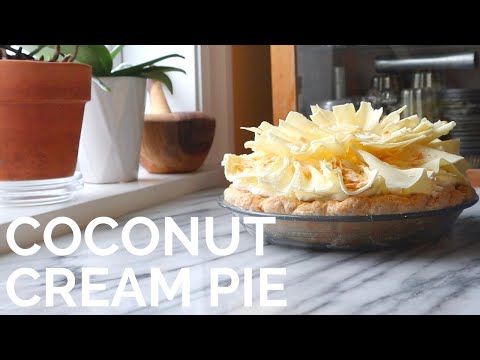
This classic coconut cream pie pairs a crisp, buttery pastry shell with a cool, silky coconut custard and a cloud of whipped cream. Toasted coconut on top adds a little crunch and makes the coconut flavor clear from the first bite.
The flaky crust starts with cold butter and just enough ice water, then bakes fully before the filling goes in. Cooking the custard until it thickens and bubbles gives it a clean slice after chilling, while a layer of plastic wrap against the surface keeps a skin from forming. Plan ahead for the chilling time: the pie is simple to assemble, but it needs several hours in the refrigerator before serving.
Why This Recipe Works
Cold butter is the foundation of a flaky crust. As the butter melts in the oven, it leaves small spaces in the pastry; keeping it chilled and handling the dough briefly helps preserve those pieces. Adding ice water a tablespoon at a time hydrates the flour without making the dough wet or tough. The dough should hold together when pressed, not feel sticky.
The crust is baked before it is filled. A custard pie filling does not spend enough time in the oven to bake raw pastry underneath it, so blind-baking gives the shell a crisp, fully cooked base. Pie weights keep the sides from slumping during the first part of baking; removing them partway through lets the base dry and turn golden.
For the filling, cornstarch thickens the milk and coconut milk into a spoonable custard, while egg yolks add richness. Tempering the yolks with warm liquid before returning them to the pan helps them heat gradually rather than curdle. Once the custard has thickened and bubbled, a brief cook finishes the starch and gives the filling enough structure to slice once cold.
Finally, chilling the pie thoroughly matters as much as cooking the filling. The custard firms as it cools, so cutting it early can make the slices slump. Whipped cream goes on after chilling, keeping the topping light and distinct from the coconut custard.
Ingredients
- 1 ½ cups all-purpose flour
- ½ teaspoon fine salt, divided (½ teaspoon for the crust and ¼ teaspoon for the filling; use ¾ teaspoon total)
- 1 tablespoon granulated sugar, for the crust
- ½ cup unsalted butter, chilled and cut into small cubes
- 4–6 tablespoons ice water
- ⅔ cup granulated sugar, for the filling
- ¼ cup cornstarch
- 1 ½ cups whole milk
- 1 cup canned, unsweetened coconut milk, well shaken
- 4 large egg yolks
- ¾ cup sweetened shredded coconut, for the filling
- 2 tablespoons unsalted butter, for the filling
- 1 teaspoon pure vanilla extract
- 1 cup cold heavy cream
- 2 tablespoons powdered sugar
- ½ teaspoon pure vanilla extract, for the whipped cream
- ⅓ cup unsweetened shredded or flaked coconut, for garnish
Ingredient Notes
Flour, butter, and water: All-purpose flour makes a sturdy pie shell. Unsalted butter lets you control the salt and gives the pastry a rich flavor. Keep the butter cold; if your kitchen is warm, chill the flour and mixing bowl briefly, too. The water should be very cold. Begin with 4 tablespoons and add more only if dry flour remains after you squeeze a handful of dough.
Milk and coconut milk: Whole milk gives the custard body and a familiar creamy flavor. Canned unsweetened coconut milk brings a stronger coconut note than a carton beverage. Shake the can well before measuring so the thick cream and liquid are evenly combined. Light canned coconut milk can be used, though the filling will be less rich. Do not substitute sweetened cream of coconut without adjusting the sugar; it is a different, sweetened product.
Egg yolks and cornstarch: Yolks enrich the filling and help it set. Separate them while cold, then let them stand briefly as you prepare the other ingredients; room-temperature yolks blend more easily. Cornstarch provides most of the sliceable structure. Arrowroot can thicken a custard, but it may set differently and is less reliable for this particular texture; cornstarch is the straightforward choice.
Coconut and flavorings: Sweetened shredded coconut gives the filling little chewy flecks and adds sweetness. Unsweetened coconut works if that is what you have, though the filling will taste less sweet. Vanilla rounds out the flavor. If you like a more pronounced coconut aroma, you can replace the filling’s vanilla with ½ teaspoon coconut extract, or use ¼ teaspoon coconut extract alongside it; extracts vary in strength, so start modestly.
Whipped cream: Cold heavy cream whips into a stable, soft topping. Powdered sugar dissolves readily and lightly sweetens it. For a less sweet finish, reduce the powdered sugar to 1 tablespoon.
Instructions
- Make and chill the dough. Whisk the flour, ½ teaspoon salt, and 1 tablespoon granulated sugar in a large bowl. Add the cold butter cubes and work them into the flour with a pastry cutter or your fingertips until you have a mix of pea-size pieces and flatter, flaky bits. Drizzle in 4 tablespoons ice water, tossing with a fork. Press a handful together; if it crumbles apart, add more water 1 tablespoon at a time, up to 6 tablespoons. The dough is ready when it holds together without feeling wet. Gather it into a disk, wrap it, and refrigerate for at least 1 hour. Chilling firms the butter and gives the flour time to hydrate, making the dough easier to roll.
- Roll and fit the shell. On a lightly floured surface, roll the cold dough into a circle about 12 inches across and roughly ⅛ inch thick. Turn it occasionally and dust the surface lightly if it sticks. Ease it into a 9-inch pie plate without stretching it, then trim the overhang and tuck or crimp the edge. Prick the base all over with a fork. Refrigerate the shaped shell for 30 minutes while the oven heats to 400°F. A cold shell is less likely to shrink as it bakes.
- Blind-bake the crust. Line the chilled shell with parchment paper or foil and fill it with pie weights or dry beans. Bake at 400°F for 18–20 minutes, until the edge looks set and pale golden. Carefully lift out the lining and weights, then bake for another 8–12 minutes. Look for a dry base and an evenly golden surface, with no translucent patches. If the base puffs, gently press it down with the back of a spoon. Cool the shell completely on a rack; filling a warm shell can soften the pastry.
- Prepare the custard base. In a medium bowl, whisk together ⅔ cup granulated sugar, the cornstarch, and the remaining ¼ teaspoon salt. Whisk in the egg yolks and about ½ cup of the whole milk until the mixture is smooth and lump-free. In a heavy saucepan, heat the remaining 1 cup whole milk with the coconut milk over medium heat, stirring now and then, until steaming and small bubbles appear around the edge. Do not let it boil unattended. Warming the milk first helps the custard cook evenly.
- Temper the yolks and thicken the filling. Whisking constantly, slowly pour about 1 cup of the hot milk mixture into the yolk mixture. Pour the warmed yolk mixture back into the saucepan in a steady stream, whisking all the while. Cook over medium heat, whisking continuously and reaching into the corners of the pan, until the custard is very thick and large bubbles break across its surface. Once it bubbles, continue whisking for 1 minute. The mixture should leave clear trails when you drag the whisk through it. This bubbling cook helps activate the cornstarch and, along with the hot cooking process, ensures the egg-based filling is thoroughly cooked. Take the pan off the heat.
- Finish and fill the pie. Whisk in 2 tablespoons butter and 1 teaspoon vanilla until smooth, then stir in ¾ cup sweetened shredded coconut. Pour the hot custard into the cooled shell and smooth the top. Press plastic wrap directly onto the custard so there is no air gap; this prevents a skin from forming. Let the pie cool until no longer steaming, then refrigerate for at least 4 hours, or until cold and firm throughout. A longer chill is useful if you want especially neat slices.
- Toast the garnish and whip the cream. While the pie chills, spread ⅓ cup coconut flakes on a small baking sheet and toast at 325°F for about 4–7 minutes, stirring once, until lightly golden and fragrant. Watch closely because coconut can darken quickly; let it cool. Just before serving, beat the cold heavy cream, powdered sugar, and ½ teaspoon vanilla with a whisk or mixer until it holds soft-to-medium peaks. Stop when the cream makes a gentle peak that keeps its shape; beating until stiff can make it grainy.
- Top and serve. Spread or pipe the whipped cream over the chilled pie and scatter the cooled toasted coconut over it. Slice with a sharp knife, wiping the blade between cuts for cleaner edges. Keep the pie refrigerated until serving; the filling should be cold and set, not warm or loose.
Serves: 8 | Prep time: 45 minutes, plus chilling | Cook time: 35–40 minutes | Total time: about 5 hours 20 minutes, including minimum chilling
Tips for Success
- Measure flour lightly. Spoon it into the measuring cup and level the top rather than packing it down. Too much flour makes pastry dry and difficult to roll.
- Stop adding water as soon as the dough holds. The dough may look shaggy in the bowl. Press it together to judge it; adding water until it looks smooth can make the crust tough.
- Keep the shaped crust cold. If it becomes soft while you roll or crimp it, refrigerate it again before baking. Cold pastry holds its shape better in the oven.
- Use pie weights generously. Cover the base and reach into the corners. If the sides slump, the weights may not have supported the pastry evenly.
- Whisk the custard without stopping. Custard can catch on the bottom or in the corners of a pan. A flat whisk is helpful, but any whisk works if you keep it moving.
- Chill before topping. The custard needs the full chilling time to set. Adding whipped cream while the filling is warm can melt the topping and soften its surface.
- Toast coconut gently. Spread it in a thin layer and stay nearby. The color can change quickly near the end, and residual heat continues to toast it slightly after it leaves the oven.
Troubleshooting
The crust shrank or slumped. It may have been stretched into the pie plate, too warm when it went into the oven, or insufficiently weighted. Ease the dough into the plate rather than pulling it, chill the shaped crust, and make sure weights cover the sides as well as the base.
The bottom crust is pale or soft. It likely needed more time after the weights came out, or the filling went into a warm shell. Bake until the base looks dry and golden, and cool the crust completely before filling. If the rim is browning too quickly, loosely cover just the edge with foil.
The custard has lumps. Lumps can form if the yolk mixture is not smooth before heating or if the custard is not whisked continuously. For a mostly smooth filling, press it through a fine-mesh strainer while hot before adding the coconut. Small flecks of cooked yolk are a sign that the mixture heated too quickly; use moderate heat and steady whisking next time.
The filling is runny after chilling. It may not have cooked long enough to bubble throughout, the cornstarch may have been measured short, or the pie may need more time to chill. Bring the custard to a full, even bubble and whisk for 1 minute before filling. Allow at least 4 hours in the refrigerator; do not expect a warm pie to slice cleanly.
The filling has a rubbery or pasty texture. Overcooking after the custard is thick can make the texture less pleasant. Once it bubbles across the surface, keep to the 1-minute cook and remove it from the heat. Whisk in the butter and flavoring off the heat.
The whipped cream turns grainy. It was probably beaten past stiff peaks. If it is only slightly overbeaten, gently fold in a tablespoon or two of unwhipped cream. If it has separated substantially, it will not return to a smooth topping; whip a fresh small batch and stop as soon as soft-to-medium peaks form.
Variations
More toasted flavor: Toast the coconut that goes into the filling as well as the garnish. Cool it completely before stirring it into the custard so it does not add heat to the filling. Toasted coconut has a deeper, nuttier flavor than untoasted coconut.
Extra coconut aroma: Add a small amount of coconut extract to the custard, starting with ¼ teaspoon. Keep the vanilla, too, for a rounded flavor. Extracts differ, and too much can taste artificial, so add cautiously.
Less-sweet filling: Use unsweetened shredded coconut in place of the sweetened coconut and reduce the filling sugar by 1–2 tablespoons if you prefer. Keep the cornstarch and liquid amounts the same so the custard sets as intended.
Graham cracker base: For a no-roll alternative, press a crumb crust into the pie plate and bake it according to the crumb-crust method you are using. Cool it fully before filling. The all-butter pastry is the defining flaky version here, but a crumb base is useful when you want to skip rolling dough.
Individual pies: Divide the pastry among small tart pans and blind-bake until golden, checking early because smaller shells bake faster. Fill the cooled shells with custard and chill them until set. The exact bake time depends on the size and material of the pans.
What to Serve With It
This pie is rich and creamy, so modest slices are satisfying. Serve it cold after a meal with coffee or unsweetened tea. Fresh berries can provide a tart contrast, especially raspberries or strawberries, but they are optional; the pie is complete on its own. If serving it as part of a holiday spread, it pairs naturally with other fruit or spice desserts without needing an additional sauce.
For the best texture, add the whipped cream and toasted coconut shortly before serving. If the pie will sit out during dessert, bring out only the slices you expect to serve and leave the rest refrigerated.
Make-Ahead, Storage and Reheating
The crust can be made ahead. Refrigerate the unbaked dough, wrapped well, for up to 2 days, or freeze it for up to 2 months for best quality. Thaw frozen dough in the refrigerator before rolling. You can also blind-bake the shell a day ahead; once completely cool, cover it and keep it at room temperature in a dry place. Fill it only when ready to make the pie.
The filled pie needs at least 4 hours to chill and can be made a day ahead. Store it covered in the refrigerator at 40°F or below. Because this is an egg-and-dairy custard, refrigerate it within 2 hours of serving or preparation rather than leaving it at room temperature. USDA guidance for refrigerated leftovers is 3–4 days; for the best pastry texture, serve this pie within that window and add whipped cream close to serving.
Freezing the assembled pie is not recommended for best quality. Custard can become watery or lose its smooth texture after thawing, and the crust may soften. If you do freeze leftovers, keep them continuously at 0°F; frozen food kept at that temperature remains safe, though quality can decline. Thaw in the refrigerator, not on the counter. The baked, unfilled shell is a better component to freeze ahead.
This pie is served cold, so reheating is unnecessary and would loosen the custard and whipped cream. If a slice has been chilled, serve it straight from the refrigerator. Do not leave the pie out for an extended period to warm up.
Frequently Asked Questions
Can I use refrigerated carton coconut milk?
It can be used in a pinch, but it is usually thinner and less rich than canned coconut milk, so the coconut flavor and custard texture may be lighter. Use unsweetened coconut milk and keep the recipe’s cornstarch amount unchanged. Avoid sweetened coconut beverages.
Can I make the pie crust without a food processor?
Yes. Use a pastry cutter, two knives, or your fingertips to work the butter into the flour. Stop when you see a mixture of small butter pieces and coarse flour crumbs; a few larger flat pieces are welcome. Add ice water gradually and avoid kneading.
How do I know the custard is thick enough?
It should be noticeably thick before it comes off the heat, with large bubbles breaking across the surface. A whisk drawn through it should leave a trail that remains visible briefly. After the required minute of bubbling, it will continue to firm as it cools.
Why does the plastic wrap touch the custard?
Covering the surface directly prevents a skin from forming as the filling cools. If you prefer not to use plastic wrap, a reusable cover that sits close to the surface can serve the same purpose, though it may be harder to fit neatly.
Can I make it without the whipped cream?
Yes. The chilled coconut custard is still delicious without a topping. Add the toasted coconut just before serving for texture, or serve each slice with a small spoonful of whipped cream on the side.
Can I use a store-bought pie shell?
Yes, use a 9-inch shell and bake it fully according to its package directions for a filled, blind-baked crust. Let it cool completely before adding the custard. The package time may differ from the homemade crust directions.
How can I get neat slices?
Chill the pie for at least 4 hours, use a sharp knife, and wipe the blade between cuts. A pie server helps lift the slices, but the custard will still be softer than a baked fruit pie. If the first slice is a little messy, the next cuts are often easier.
Can I prepare the whipped cream ahead?
It is best whipped shortly before serving for the lightest texture. You can whip it a few hours ahead, cover and refrigerate it, then briefly whisk it by hand to refresh it if it has softened. Keep it cold and add it to the fully chilled pie.