Discover the wonderful world of clay art, where creativity knows no bounds! This guide is perfect for beginners who want to embark on a hands-on artistic journey. Clay art is not just about making beautiful sculptures; it’s about expressing yourself and enjoying the process of creation. Whether you’re interested in pottery, sculptures, or decorative pieces, the possibilities are endless.
Imagine molding soft, pliable clay into your dream creations. The tactile experience is incredibly satisfying and can be quite therapeutic. You don’t need to be a professional artist to enjoy clay art; all you need is a little bit of imagination and the willingness to experiment!
In this article, we’ll explore fun and easy clay art projects that are perfect for anyone looking to get started. You’ll learn about the different types of clay, essential tools, and techniques that will help you bring your artistic visions to life.
A Creative Workspace: The Heart of Clay Art
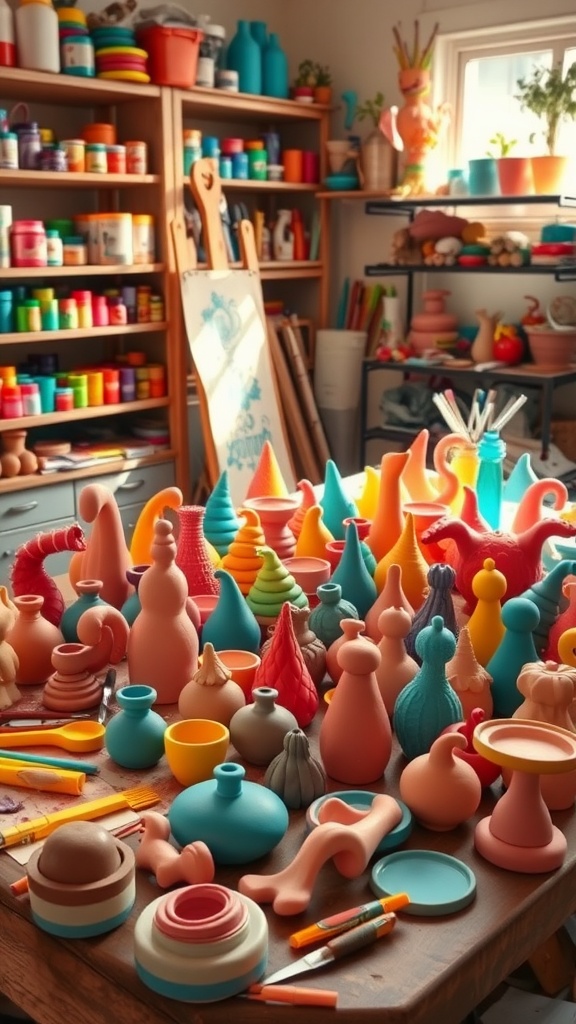
Setting up a workspace for clay art can transform your creative process. Picture a bright, inviting area with natural light streaming in, illuminating the colorful array of clay sculptures and tools scattered across the table.
This vibrant environment not only inspires creativity but also encourages experimentation. As you gather your materials, the joyful chaos of colors, shapes, and textures sparks ideas and motivates you to dive into your artistic endeavors.
Essential Art Supplies for Beginners
Having the right supplies is crucial for a fulfilling clay art experience. Start with a good quality air-dry or polymer clay, as these materials are beginner-friendly and versatile.
Gather essential tools like rolling pins, sculpting tools, and a clean surface such as a cutting board or mat. Don’t forget water for smoothing the clay and optional paint or glaze for finishing touches. A sealant can also protect your masterpieces if you plan to display them.
Creating Your First Clay Projects
When beginning your clay art journey, choosing the right project can make all the difference. Start with simple items such as pinch pots or basic sculptures that allow you to familiarize yourself with the medium.
Once you’ve selected a project, prepare your workspace by laying out all tools and materials within easy reach. This organization fosters a smooth creative process, allowing you to focus on the joy of creating rather than searching for supplies.
Techniques to Bring Your Vision to Life
Molding the clay is where the magic happens. Use your hands to shape the material into your envisioned form, playing with texture and design as you go. Don’t hesitate to experiment with techniques; clay allows for endless possibilities!
Be sure to add intricate details using sculpting tools. Carving and texturing can elevate your pieces, making them truly unique expressions of your creativity. Enjoy this part of the process, as the details often define the final look of your art.
The Importance of Drying and Finishing Touches
Once your clay creations are complete, it’s essential to let them dry correctly. If using air-dry clay, follow the manufacturer’s instructions for drying times. Patience here is key, as it allows your art to set properly.
After the drying phase, you can unleash your creativity further by painting or glazing your pieces. These finishing touches can add a personal flair and make your art pop. If your work is meant for display, consider applying a sealant for extra protection.
Inspiration from Your Craft
The process of creating art with clay is not merely about the final product; it’s an exploration of personal expression and creativity. Each piece reflects your unique style and reflects the joy you found in its creation.
As you build your skills and create a collection of clay art, you’ll find inspiration all around you. From the vibrant colors to the diverse shapes, your workspace is a testament to your artistic journey.
Your First Steps in Clay Art
Embarking on clay art offers a rewarding blend of creativity and craftsmanship. You’ll create unique pieces that reflect your personal style while developing valuable skills. From pinch pots to intricate sculptures, the journey is as enjoyable as the final product.