
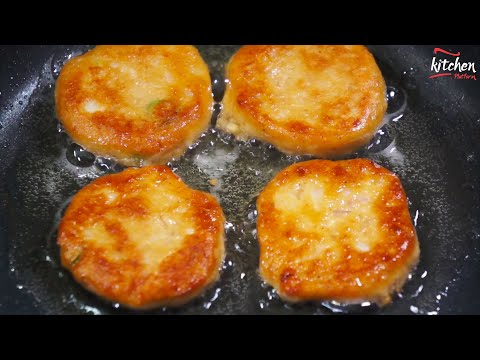
These crispy fried mashed potato patties turn cold leftover mashed potatoes into golden, savory rounds with soft centers. Cheddar and green onions add flavor, while a light coating of breadcrumbs gives the outside an extra crunch.
The key is starting with chilled potatoes and frying the patties in a properly heated pan without crowding it. The result is crisp at the edges, tender in the middle, and easy to serve as a snack, side dish, or quick lunch.
Why This Recipe Works
Cold mashed potatoes are firmer and easier to shape than warm ones. They also help the patties hold their shape as they go into the pan. If your potatoes are freshly made, spread them in a shallow dish and refrigerate until thoroughly chilled before mixing.
Flour and egg bind the potatoes into a mixture that can be shaped and turned. The flour also absorbs some moisture, but mashed potatoes vary: a thick, buttery mash needs less help than a loose or very creamy one. Mixing in the flour gradually lets you judge the texture instead of making the patties unnecessarily dense.
Frying over medium heat gives the outside time to brown while the center heats through. A moderate amount of oil and space between patties help them develop a crisp crust rather than steam. The optional breadcrumb coating adds a distinct crunch; leaving it off gives you a softer, more potato-forward exterior.
Ingredients
- 2 cups chilled leftover mashed potatoes
- 1/2 cup all-purpose flour, divided as needed for mixing and dusting
- 1/2 cup grated cheddar or another cheese
- 1/4 cup finely chopped green onions or chives
- 1/4 cup plain breadcrumbs, optional, for coating
- 1 large egg
- 1/2 teaspoon fine salt, or to taste
- 1/4 teaspoon ground black pepper, or to taste
- 1/4 cup vegetable or canola oil, as needed for shallow frying
Ingredient Notes
Mashed potatoes: Chilled leftover potatoes are easiest to handle. Smooth or chunky mash both work, but very loose potatoes may need a little extra flour. If the mash is already salty, start with less salt and adjust after mixing. Avoid using potatoes that have been left at room temperature for more than two hours.
Flour: All-purpose flour binds the mixture and helps the patties hold together. Add most of it to the bowl, then mix in the remainder only if the mixture is too soft to shape. A gluten-free all-purpose blend can be substituted; texture may vary by blend.
Cheese: Cheddar gives a savory, familiar flavor and melts into the center. Monterey Jack, mozzarella, or a firm, finely grated cheese can also work. A wetter cheese may soften the mixture slightly, so keep a little flour available for adjustment.
Green onions or chives: These add a fresh, mild onion flavor. Use either one, or substitute a small amount of finely chopped parsley for a different, gentler flavor. Chop the greens finely so the patties shape evenly.
Egg: The egg helps bind the ingredients as they cook. Beat it lightly before adding so it distributes evenly through the potatoes. For food safety, cook the patties until the center reaches 160°F.
Breadcrumbs and oil: Breadcrumbs are optional; use plain or panko crumbs for the coating. Panko makes a more textured crust. Use a neutral oil such as vegetable or canola, and add only enough to coat the pan in a shallow layer.
Instructions
- Prepare the potatoes and pan. If the mashed potatoes are not already chilled, refrigerate them until cold throughout. Set out a large plate or tray for shaping the patties. Cold potatoes should feel firm enough to scoop and hold a mound; chilling makes the mixture easier to handle and less likely to spread in the pan.
- Mix the patty mixture. In a bowl, beat the egg with the salt and pepper. Add the mashed potatoes, grated cheese, green onions, and about 1/3 cup of the flour. Stir until combined. The mixture should be moist but hold its shape when pressed; if it slumps or sticks heavily to your hands, mix in more flour a tablespoon at a time. This gradual adjustment helps avoid dry, heavy patties.
- Shape and coat. Divide the mixture into 8 portions and shape each into a patty about 1/2 inch thick. If using breadcrumbs, spread them on a plate and press each patty lightly into the crumbs on both sides. Dust your hands or the patties with a little of the remaining flour if they are sticky. Even thickness helps the patties brown and heat at a similar rate.
- Chill briefly if the mixture is soft. Arrange the patties in a single layer and refrigerate for 10 to 15 minutes if they feel fragile or have trouble holding their shape. They should look compact and stay intact when lifted. This short rest firms the mixture before frying; skip it if the patties already feel sturdy.
- Heat the oil. Pour enough oil into a large skillet to cover the bottom in a thin layer, usually a few tablespoons at a time. Heat over medium heat until it reaches about 350°F. If you do not have a thermometer, a breadcrumb should sizzle steadily when dropped into the oil without immediately turning dark. Properly heated oil helps form a crust; oil that is too cool can leave the patties greasy.
- Fry in batches. Carefully place patties in the skillet, leaving space between them. Fry for about 3 to 4 minutes on the first side, until the underside is deep golden and releases from the pan with a thin spatula. Flip gently and cook another 3 to 4 minutes. Adjust the heat as needed to keep the oil near 350°F and prevent the crust from darkening before the center heats.
- Check the centers and finish cooking. The patties should be browned on both sides and hot in the middle. Check a thick patty by inserting an instant-read thermometer from the side into its center; it should reach 160°F because the mixture contains egg. If the crust is already brown but the center is below temperature, place the patties on a baking sheet and finish in a 350°F oven for 5 to 8 minutes, checking again for 160°F.
- Drain and serve. Transfer the cooked patties to a wire rack or a paper-towel-lined plate and let excess oil drain briefly. They should have a crisp exterior and a tender, hot center. Serve warm; avoid stacking them while very hot, since trapped steam softens the crust.
Tips for Success
- Start with cold potatoes. Chilled mash is easier to portion and less likely to spread when it meets the hot pan.
- Adjust flour by texture. Potato moisture varies, so use the mixture as your guide. It should hold together when pressed, not feel like stiff dough.
- Keep patties even. Making them about 1/2 inch thick helps the outside brown before the inside dries out.
- Fry in uncrowded batches. Leave room to turn each patty. Too many at once can cool the oil and make it harder to brown them evenly.
- Use a thin, wide spatula. Slide it fully under each patty before turning so the crust stays intact.
- Let the oil recover between batches. If the next batch barely sizzles, wait briefly for the oil to heat back up.
- Drain on a rack when possible. Air can circulate around both sides, helping the crust stay crisp. If using paper towels, serve soon after draining.
Troubleshooting
The mixture is too sticky to shape. Stir in flour one tablespoon at a time until it holds together, then chill the shaped patties for 10 to 15 minutes. If the mash is especially loose, a light flour dusting on your hands can also help.
The patties fall apart when flipped. They may be too soft, too thick, or not browned enough on the first side. Chill them before frying, shape them a little thinner, and wait until the bottom is golden and releases from the skillet before turning. A fully cooked first-side crust acts as a sturdier surface.
The outside browns before the center is hot. Lower the burner slightly and give the patties more time, or move browned patties to a 350°F oven until the center reaches 160°F. Very thick patties are more likely to have this problem, so keep them close to 1/2 inch thick.
The patties are greasy rather than crisp. The oil may not have been hot enough, or the pan may have been crowded. Let the oil reach about 350°F before frying and cook in smaller batches.
The crust is too dark. The pan is likely too hot. Reduce the heat and allow the skillet temperature to settle before continuing. If the outside is already browned, finish the centers in the oven rather than leaving them over high heat.
The patties taste bland. Mashed potatoes vary in seasoning. Taste a small spoonful of the uncooked mixture before shaping, then adjust salt and pepper. Do not taste the mixture after adding raw egg unless you cook a small sample first.
Variations
For a sharper, savory version, use aged cheddar and chives. For a milder patty, choose Monterey Jack and green onion. You can also add a small amount of finely chopped cooked bacon or ham, but keep add-ins modest so the patties still bind and turn easily.
For extra crunch, coat the shaped patties in panko or plain breadcrumbs before frying. For a softer crust, omit the crumbs and dust the outside lightly with flour. A pinch of smoked paprika, garlic powder, or dried herbs can season the mixture; start with a small amount so the potato and cheese remain the main flavors.
To make smaller snack-size patties, divide the mixture into more portions and flatten them evenly. Smaller pieces cook faster, so watch the color closely and check that the center reaches 160°F. The same mixture can also be shaped into a single larger cake, but it is more delicate to flip and will need longer cooking over lower heat.
What to Serve With It
Serve the patties on their own with sour cream, plain yogurt, or a simple dip. For a fresh contrast, add a crisp green salad, sliced cucumber, or tomato. They also make a satisfying side for eggs, soup, or a sandwich, and work well as part of a casual snack plate with pickles and raw vegetables.
If serving a group, bring the patties to the table shortly after frying so their crust stays crisp. Offer dips on the side rather than spooning them over the patties in advance.
Make-Ahead, Storage and Reheating
Make ahead: Shape the patties, arrange them in a single layer, cover, and refrigerate for up to 24 hours before frying. Keep them cold and separate with parchment if stacking is necessary. You can also mix the potato filling a day ahead, cover it, and refrigerate it; shape the patties just before cooking for easiest handling.
Refrigerate leftovers: Refrigerate cooked patties within two hours of cooking in a covered container at 40°F or below. Use them within 3 to 4 days. Cool them in a shallow container rather than leaving them out to cool for an extended period.
Freeze: For best texture, freeze cooked patties in a single layer until firm, then transfer them to a freezer-safe container with parchment between layers. Use within 3 to 4 months for best quality. Thaw in the refrigerator or reheat from frozen; do not thaw them on the counter.
Reheat: For a crisp surface, warm refrigerated patties in a lightly oiled skillet over medium-low heat, turning once, until hot throughout. An oven or toaster oven at 350°F also works; arrange patties in a single layer and heat until the centers reach 165°F. Frozen patties may need additional time. Reheating in a microwave is convenient, but the crust will be softer. Reheat leftovers only until steaming hot, and use a thermometer to confirm 165°F.
Recipe Card
Servings: 4 (about 8 patties)
Prep time: 15 minutes, plus optional 10 to 15 minutes chilling
Cook time: 15 to 20 minutes
Total time: About 30 minutes, plus optional chilling
Ingredients
- 2 cups chilled leftover mashed potatoes
- 1/2 cup all-purpose flour, divided as needed
- 1/2 cup grated cheddar or another cheese
- 1/4 cup chopped green onions or chives
- 1/4 cup plain breadcrumbs, optional
- 1 large egg
- 1/2 teaspoon fine salt, or to taste
- 1/4 teaspoon ground black pepper, or to taste
- 1/4 cup vegetable or canola oil, as needed for frying
Condensed Instructions
- Beat the egg with salt and pepper. Mix with the potatoes, cheese, green onions, and about 1/3 cup flour. Add more flour if needed until the mixture holds its shape.
- Shape into 8 patties about 1/2 inch thick. Coat with breadcrumbs if desired. Chill for 10 to 15 minutes if they feel soft.
- Heat a thin layer of oil in a skillet to about 350°F. Fry in batches for 3 to 4 minutes per side, until golden and crisp.
- Check that the center of each patty reaches 160°F. If browned but not hot through, finish on a baking sheet in a 350°F oven for 5 to 8 minutes and check again.
- Drain briefly and serve warm.
Frequently Asked Questions
Can I use freshly made mashed potatoes?
Yes, but chill them thoroughly first. Warm potatoes make a softer, stickier mixture that is harder to shape. If the chilled mash is still loose, add flour gradually until the patties hold together.
Do I have to use breadcrumbs?
No. Breadcrumbs are optional and add a crisp coating. Without them, the patties still brown in the skillet, especially if you dust them lightly with flour before frying.
Can I make these without cheese?
Yes. Leave it out and keep the other ingredients the same, adjusting the flour only if the mixture needs it. The patties will have a simpler potato and onion flavor and may feel slightly less rich.
Can I bake the patties instead of frying them?
Yes, though the crust will be different. Arrange the patties on a lightly oiled baking sheet, brush or spray the tops lightly with oil, and bake at 400°F, turning once, until browned and hot through. Check that the centers reach 160°F; baking time will depend on patty thickness and your oven.
Can I cook them in an air fryer?
Yes. Lightly oil the air-fryer basket and patties, arrange them in a single layer, and cook at 375°F, turning carefully partway through, until browned and the centers reach 160°F. Air fryers vary, so begin checking early and avoid crowding the basket.
How do I keep the patties from sticking?
Use a clean skillet, preheat the oil, and wait for the underside to form a golden crust before turning. A thin, flexible spatula helps release and support the patty. If the pan is overcrowded, the oil temperature can drop and the patties may stick or soften.
Can I prepare the mixture the night before?
Yes. Cover it and refrigerate it, then shape the patties while it is cold. If the mixture firms up in the refrigerator, stir it briefly before shaping; if it seems loose, mix in a little flour.
Why are my patties soft after cooking?
They may have been stacked while hot, cooked in oil that was too cool, or held covered where steam collected. Drain them in a single layer, use properly heated oil, and serve soon after cooking. A rack helps air circulate around the crust.