
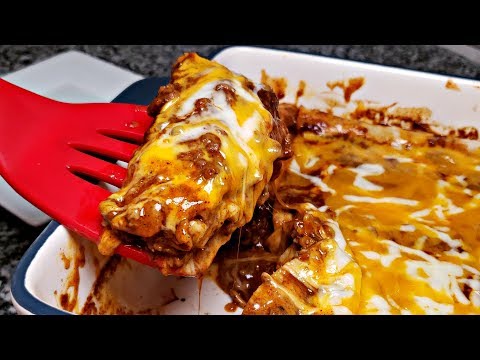
These easy cheesy shredded beef enchiladas wrap seasoned cooked beef, onion, garlic and optional refried beans in corn tortillas, then bake under a blanket of enchilada sauce and melted cheese. They’re a practical way to turn ready-to-use shredded beef into a cozy dinner without a long simmer.
The key is warming the tortillas before rolling and keeping the sauce measured: enough to coat the dish and soften the enchiladas, but not so much that they turn soggy. Expect savory, gently spiced beef, tender tortillas and a bubbling, cheesy top. Make them today with leftover beef or beef cooked ahead.
Why This Recipe Works
Briefly cooking the onion and garlic before adding the beef softens their sharp edges and gives the filling a more rounded flavor. Cumin and chili powder bloom in the warm pan, so their aroma spreads through the beef instead of sitting as dry seasoning on top.
Warming corn tortillas makes them flexible enough to roll without splitting. A little sauce in the bottom of the pan helps keep the tortillas from sticking, while a controlled layer on top gives the edges moisture and lets the cheese brown and bubble. The filling stays substantial rather than swimming in sauce.
Using already-cooked, seasoned shredded beef keeps the hands-on work short. Taste it before adding salt: some cooked beef and enchilada sauces are already well seasoned. Refried beans are optional, but they add a creamy texture and help the filling hold together.
Ingredients
- 2 cups cooked, seasoned shredded beef
- 10–12 corn tortillas
- 2 cups enchilada sauce, store-bought or homemade
- 2 cups shredded cheddar, Monterey Jack, or a blend
- 1 cup refried beans, optional
- 1 small onion, diced
- 2 cloves garlic, minced
- 1 teaspoon ground cumin
- 1 teaspoon chili powder
- 1 tablespoon neutral cooking oil
- ½ teaspoon fine salt, plus more to taste
- ¼ teaspoon black pepper, plus more to taste
Ingredient Notes
Shredded beef: Use beef that is fully cooked and easy to pull into strands, such as leftover braised beef or slow-cooked beef. If it is cold, separate any large clumps before adding it to the pan. Its existing seasoning matters, so taste before adding the listed salt.
Corn tortillas: Their earthy corn flavor is classic here, but they need warming to roll neatly. Choose tortillas that are pliable and not dried out. Flour tortillas can be used if that is what you have; they roll easily, though the texture and flavor will be different.
Enchilada sauce: Red sauce gives the dish a familiar savory, chile-forward flavor. A mild or spicy sauce both work; choose based on your preference and the seasoning in the beef. Green enchilada sauce is a reasonable swap for a brighter, tangier result. If the sauce is very thick, stir in a spoonful of water to make it easier to spread.
Cheese: Cheddar brings a fuller flavor, Monterey Jack melts smoothly, and a blend gives you both. Shred cheese from a block if convenient; pre-shredded cheese also works. Keep some cheese inside the enchiladas and most for the top so every serving has a cheesy center and finish.
Refried beans: They are optional, not a requirement for a successful filling. Stir them into the beef for a creamier, more cohesive mixture. If you leave them out, the beef flavor comes through more clearly. Mashed pinto or black beans can stand in if needed.
Onion, garlic and spices: These build the filling’s savory base. Yellow or white onion is suitable. Ground cumin and chili powder are convenient pantry seasonings; use a mild chili powder blend if you want gentle warmth, or a hotter ground chile if that is your preference.
Instructions
- Heat the oven and prepare the dish. Set the oven to 375°F. Lightly oil a 9-by-13-inch baking dish, then spread ½ cup of the enchilada sauce over its base. The sauce should make a thin coating, not a deep pool; it protects the tortillas from sticking and drying at the bottom.
- Soften the onion and garlic. Warm the oil in a large skillet over medium heat. Add the diced onion and cook for 4–5 minutes, stirring occasionally, until softened and turning translucent. Add the garlic and cook for about 30 seconds, just until fragrant. If the garlic begins to brown, lower the heat; browned garlic can taste bitter.
- Season and warm the filling. Stir in the cumin, chili powder, salt and pepper. Add the shredded beef and optional refried beans, breaking up any dense clumps. Cook for 3–5 minutes, stirring, until the filling is hot and evenly seasoned. Taste and adjust the salt or pepper. The mixture should be moist enough to hold together but not wet; if it seems dry, mix in a little enchilada sauce.
- Warm the tortillas. Heat a dry skillet over medium heat and warm each tortilla briefly on both sides, just until flexible, stacking them under a clean towel as you go. Alternatively, wrap a small stack in a damp paper towel and microwave in short bursts until pliable. They should bend without cracking; warming prevents breaks that can let filling escape.
- Fill and roll. Put a tortilla on a plate and spoon a narrow line of filling down its center. Add a small pinch of cheese, then roll the tortilla snugly around the filling and place it seam-side down in the prepared dish. Repeat, arranging the enchiladas close together without forcing them into the pan. If you have extra filling, tuck it into open spaces at the ends.
- Sauce and top. Spoon the remaining sauce over the rolled tortillas, spreading it across the tops and leaving some edges visible if you like a little crispness. Scatter the remaining cheese evenly over the sauce. Covering every tortilla with a thick layer of sauce can make the corn tortillas overly soft, so use the full amount but spread it rather than pouring it in one spot.
- Bake until bubbling. Bake uncovered for 20–25 minutes, until the sauce bubbles around the edges and the cheese is fully melted. If the cheese starts browning before the dish is hot, loosely tent the top with foil. When using refrigerated cooked beef, check the center of the filling with a food thermometer; it should reach 165°F for safe reheating.
- Rest and serve. Let the dish stand for 5 minutes before serving. The sauce settles and the filling becomes easier to lift out without the rolls falling apart. Add any fresh toppings at the table so they stay cool and crisp.
Tips for Success
- Warm tortillas in manageable stacks. Keep the warmed tortillas covered with a towel while you work. If they cool and become stiff, warm them again rather than trying to roll them dry.
- Keep the filling line narrow. A modest amount of filling makes each tortilla easier to roll and helps the seam stay underneath. Overfilled tortillas tend to split or push open in the pan.
- Season after tasting. The beef, beans and sauce may already contain salt. Add the measured salt gradually, then taste the filling before rolling.
- Use cheese in two places. A little inside adds flavor to the beef; most on top melts into a cohesive finish. Reserve a small amount of the topping cheese if you like to add it near the end for a fresh, glossy melt.
- Spread sauce evenly. Sauce should cover the tops, but it does not need to drown the rolls. An even layer helps the cheese adhere and prevents dry patches.
- Let the enchiladas rest briefly. Cutting or lifting them straight from the oven can make the filling spill out. A short rest lets the sauce thicken slightly around the rolls.
- Use a thermometer when reheating cooked beef. The center heats more slowly than the edges. Check the filling rather than relying only on browned cheese or bubbling sauce.
Troubleshooting
The tortillas crack while rolling. They are likely too cool or too dry. Warm them until flexible, keep them covered, and work with one at a time. If a tortilla has a small tear, place the tear facing upward before adding sauce and cheese; it can still bake successfully.
The enchiladas are soggy. The usual causes are excess sauce, very wet filling or tortillas left sitting in sauce before baking. Spread the sauce in a thin layer, drain excess liquid from the beef, and assemble just before baking. A little softness is normal for sauced corn tortillas, but they should still hold their shape.
The filling tastes bland. Cooked beef varies in seasoning. Taste the warm filling before rolling and add salt, pepper, cumin or chili powder in small increments. A spoonful of sauce stirred into the filling can also give it more chile flavor without making it dry.
The cheese is browned but the middle is not hot. Loosely cover the dish with foil and continue baking until the center is hot. If the enchiladas were assembled cold from the refrigerator, they need more time than freshly assembled ones; use the thermometer cue rather than the surface color alone.
The filling falls out when serving. The rolls may be overfilled or need a little more resting time. Use a narrow line of filling, place each roll seam-side down, and allow the baked dish to stand before lifting portions.
Variations
Make them bean-free: Leave out the refried beans and keep the rest of the filling as written. If the beef looks dry, add a spoonful of sauce while it warms.
Add vegetables: Stir finely diced bell pepper into the skillet with the onion, or fold in drained corn with the beef. Cook watery vegetables until their excess moisture has evaporated so the filling stays compact.
Change the cheese: Use Monterey Jack for a mild, smooth melt, cheddar for a sharper flavor, or a mixture of the two. A little crumbled cotija can be added after baking, but it does not melt like the shredded cheese.
Adjust the heat: Choose a mild enchilada sauce for a gentler dish, or use a hotter sauce and add a pinch of cayenne or chopped jalapeño to the filling. Increase heat gradually, especially if the beef is already spicy.
Use a different sauce: Green enchilada sauce pairs well with beef if you prefer a tangier chile flavor. Keep the quantity the same and taste the filling before adding extra salt, since sauces vary in seasoning.
What to Serve With It
Serve the enchiladas with a crisp green salad, shredded lettuce, sliced radishes or cabbage slaw to contrast with the warm, saucy filling. Rice, seasoned black beans or pinto beans make the meal more substantial. For simple toppings, set out chopped cilantro, diced tomato, sliced avocado, sour cream or plain yogurt, lime wedges and pickled jalapeños. Keep wet toppings off the baking dish until serving so the cheese stays intact.
If the enchiladas are the main dish, choose one or two sides rather than making every accompaniment rich. A fresh, acidic side such as slaw or lime-dressed greens is especially good alongside the melted cheese and savory beef.
Make-Ahead, Storage and Reheating
Make ahead: Prepare the beef filling and refrigerate it separately, then warm the tortillas and assemble the dish shortly before baking. You can also assemble the enchiladas, cover the dish and refrigerate it until baking. For the best tortilla texture, avoid leaving them submerged in sauce for a long stretch. A cold assembled dish may need extra oven time; heat the center until it reaches 165°F.
Refrigerate leftovers: Refrigerate cooked enchiladas within two hours, in a covered shallow container or tightly covered baking dish. Keep them refrigerated for three to four days. Divide a large amount into smaller containers so it cools promptly.
Freeze: Freeze cooked enchiladas in a well-sealed freezer-safe container for best quality within two to three months. You may freeze individual portions for easier reheating. Thaw in the refrigerator before reheating when possible; do not thaw on the counter.
Reheat: For a larger portion, cover the dish with foil and reheat in a 350°F oven until hot throughout. Uncover near the end if you want to refresh the melted cheese. Individual portions can be reheated in the microwave, covered loosely, stirring or turning as practical for even heating. In either case, reheat leftovers to 165°F at the center. Discard food left at room temperature for more than two hours.
Recipe Card
Servings: 5–6
Prep time: 20 minutes
Cook time: 25 minutes
Total time: 45 minutes
Ingredients
- 2 cups cooked, seasoned shredded beef
- 10–12 corn tortillas
- 2 cups enchilada sauce, store-bought or homemade
- 2 cups shredded cheddar, Monterey Jack, or a blend
- 1 cup refried beans, optional
- 1 small onion, diced
- 2 cloves garlic, minced
- 1 teaspoon ground cumin
- 1 teaspoon chili powder
- 1 tablespoon neutral cooking oil
- ½ teaspoon fine salt, plus more to taste
- ¼ teaspoon black pepper, plus more to taste
Condensed Instructions
- Heat the oven to 375°F. Oil a 9-by-13-inch baking dish and spread ½ cup enchilada sauce over the bottom.
- Cook onion in oil over medium heat for 4–5 minutes until soft. Add garlic and cook about 30 seconds, until fragrant.
- Stir in cumin, chili powder, salt, pepper, beef and optional beans. Warm for 3–5 minutes, taste and adjust seasoning.
- Warm tortillas until flexible. Fill each with a narrow line of beef mixture and a little cheese; roll and arrange seam-side down.
- Spread the remaining sauce over the rolls and top with the remaining cheese.
- Bake uncovered for 20–25 minutes, until bubbling and melted. If reheating refrigerated cooked beef, make sure the center reaches 165°F. Rest for 5 minutes before serving.
Frequently Asked Questions
Can I use leftover pot roast?
Yes. Shred it finely enough to fit neatly inside the tortillas, and drain or spoon off excess cooking liquid. Taste before adding salt because pot roast seasoning and cooking juices can be salty.
Do I have to fry the tortillas?
No. Warming them in a dry skillet or microwave is enough to make them pliable for rolling. Briefly frying in oil is another option, but it adds a step and is not necessary for this recipe.
Can I assemble the enchiladas the night before?
Yes. Cover and refrigerate the assembled dish, then bake it the next day. A chilled casserole takes longer to heat than one assembled just before baking, so check the center for 165°F rather than relying only on the listed baking time.
Should I cover the pan while it bakes?
Start uncovered so the cheese melts and the sauce bubbles. If the top browns before the center is hot, loosely cover the dish with foil for the rest of baking.
Can I make this without refried beans?
Yes. The beans are optional and can simply be omitted. The beef mixture may be a little less creamy, so add a spoonful of enchilada sauce if it needs moisture.
How do I keep corn tortillas from tearing?
Warm them until flexible and keep them under a clean towel while filling. If they still crack, warm them a little longer or use a fresh tortilla; dry or cold tortillas are difficult to roll neatly.
Can I freeze the enchiladas before baking?
Yes. Assemble in a freezer-safe dish, cover tightly and freeze. For more even heating, thaw in the refrigerator before baking; bake until the center is hot and reaches 165°F if the beef was cooked previously.
What if I only have flour tortillas?
Flour tortillas work and are usually easy to roll without warming as much. They have a softer, less distinctly corn-forward texture, so avoid using extra sauce or leaving the assembled dish sitting in it for a long time.