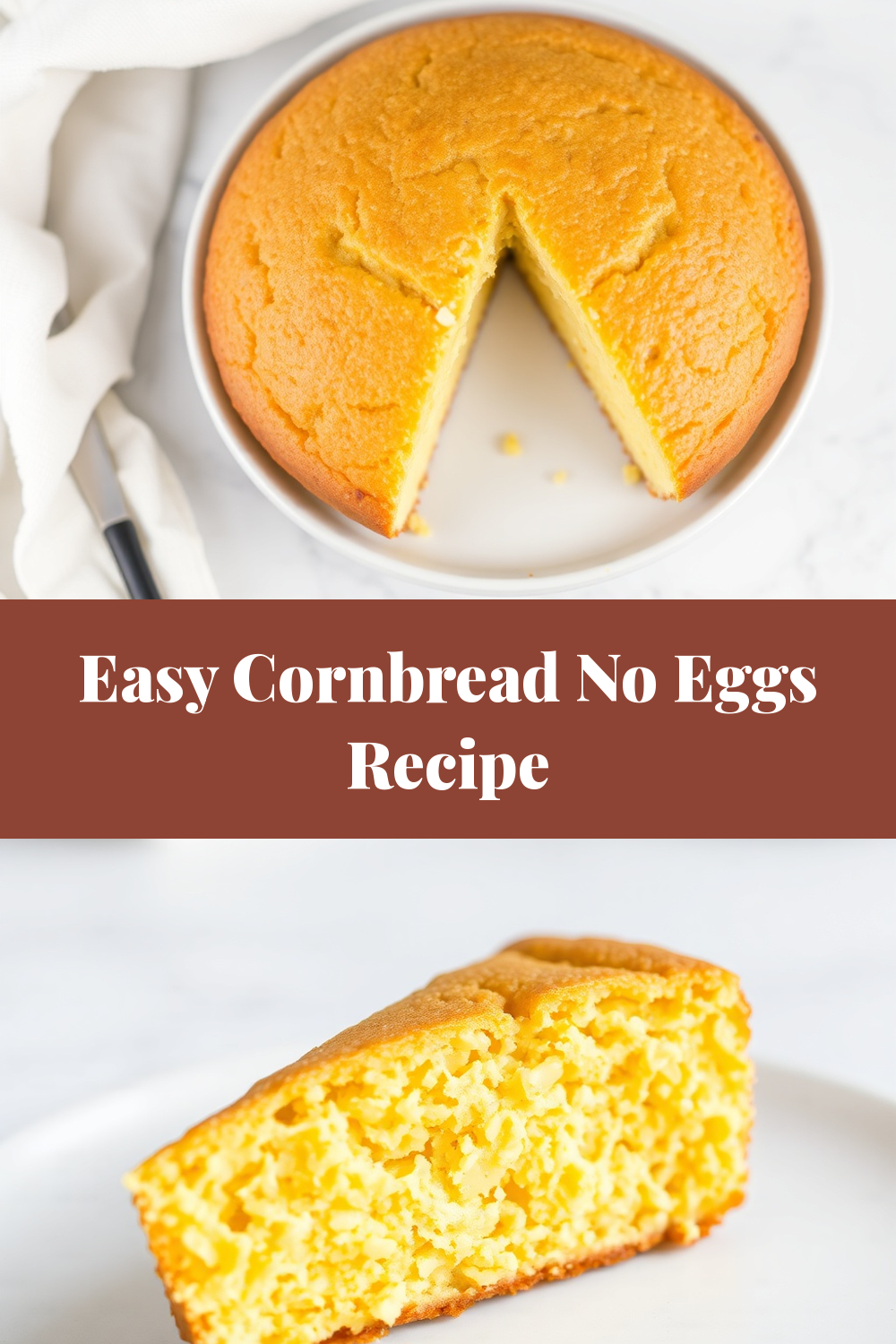
This easy egg-free cornbread has a golden top, a tender crumb, and the familiar corn flavor that belongs beside chili, soup, or a barbecue supper. Applesauce helps hold the batter together without eggs, while acidified milk and baking soda give it lift; the method is simple enough for a weeknight.
Ingredients
- 1 cup (150 g) medium-grind yellow cornmeal — The main source of corn flavor and texture. Fine- or medium-ground cornmeal works well; avoid coarse polenta, which can make the crumb gritty.
- 1 cup (125 g) all-purpose flour — Gives the bread structure and keeps it from being too crumbly. Spoon the flour into the measuring cup and level it rather than packing it down.
- 2 tablespoons granulated sugar — Adds a mild sweetness and helps the top brown. For a more savory loaf, reduce it to 1 tablespoon.
- 1 tablespoon baking powder — Provides most of the rise. Check that it is fresh, since old leavening can leave the bread dense.
- 1/2 teaspoon baking soda — Works with the vinegar in the milk mixture to add lift.
- 1/2 teaspoon fine salt — Balances the cornmeal and sweetness.
- 1 cup (240 ml) milk — Whole or 2% milk both work. For a dairy-free version, use an unsweetened plain plant milk.
- 1 tablespoon cider vinegar or white vinegar — Stir it into the milk to make a quick acidic milk mixture. Lemon juice also works.
- 1/4 cup (60 g) unsweetened applesauce — Adds moisture and helps bind the batter in place of eggs. Avoid pie filling or sweetened applesauce.
- 1/4 cup (57 g) unsalted butter, melted and cooled slightly — Adds richness and a soft crumb. Use dairy-free butter or neutral oil if needed.
Instructions
- Prepare the pan and oven. Set a rack in the center of the oven and heat it to 400°F (200°C). Grease an 8-inch square baking pan with butter or oil, or line it with parchment paper, leaving a little overhang to lift the bread out later. A metal pan gives the edges a nicely browned finish; if using glass, begin checking for doneness at the early end of the baking range.
- Acidify the milk. Pour the milk into a small bowl or measuring jug and stir in the vinegar. Let it stand for about 5 minutes while you measure the remaining ingredients. It may look slightly curdled; that is expected. This mixture supplies acidity for the baking soda, not a thick buttermilk texture.
- Combine the dry ingredients. In a large bowl, whisk together the cornmeal, flour, sugar, baking powder, baking soda, and salt. Break up any lumps of baking powder so the leavening is spread evenly. Even mixing matters because a concentrated patch of baking soda can leave a bitter spot in the finished bread.
- Mix the wet ingredients. Whisk the applesauce and melted butter into the milk mixture until combined. The butter should be warm rather than piping hot; very hot butter can firm up when it meets cool milk. A few small flecks of butter are harmless.
- Make the batter. Pour the wet mixture into the bowl of dry ingredients. Fold with a spatula just until no large dry pockets remain. The batter will be thick and slightly lumpy, not smooth like cake batter. Do not beat it for a long time: overmixing can make the bread heavy, and a few small lumps disappear as it bakes.
- Bake until set. Spread the batter evenly in the prepared pan and smooth the surface gently. Bake for 20 to 24 minutes, until the top is golden, the center looks set, and a toothpick inserted in the middle comes out clean or with a few moist crumbs. If wet batter clings to it, bake for another 2 to 3 minutes and check again.
- Rest, then serve. Set the pan on a rack and let the cornbread rest for at least 10 minutes before slicing. This gives the tender crumb time to settle, making the squares easier to lift out. Cut into 9 squares for generous portions or 12 smaller pieces.
Tips
- Measure the flour lightly. Too much flour is a common reason egg-free cornbread turns dry or dense. Fluff the flour, spoon it into the measuring cup, and level it with a straight edge. If you use a kitchen scale, the listed gram amount is a useful guide.
- Use plain, unsweetened applesauce. It provides moisture and some binding without making the bread taste strongly of fruit. If you only have sweetened applesauce, the recipe can still work, but expect a slightly sweeter result. Do not increase the amount to replace an egg; extra applesauce can make the center damp.
- Get the batter into the oven promptly. Once the acidic milk meets the baking soda, the leavening reaction begins. Finish mixing gently, spread the batter in the pan, and bake without a long wait. Check that your baking powder is fresh if the loaf repeatedly comes out flat.
- Let it cool before storing. Warm cornbread releases steam. Sealing it while hot can make the top and edges damp, so allow it to cool until no longer warm before packing it away. For clean slices, use a sharp knife and wipe the blade between cuts if it becomes sticky.
Serving Suggestions
Serve the cornbread warm with a pat of butter, or add honey or jam if you like a sweeter bite. Its mild flavor also works well with savory meals: pair a square with chili, bean soup, vegetable soup, or a bowl of stew, and use extra pieces to soak up the broth. It is a useful side for roasted vegetables and barbecue-style meals, too.
For a simple snack, split a piece and top it with butter or a spoonful of plain yogurt. If serving a group, cut the bread into smaller squares and put the toppings on the side so everyone can choose. The bread is tender rather than sturdy like a firm skillet loaf, so use a small spatula when lifting hot pieces from the pan.
Variations
Make it dairy-free: Use unsweetened plain plant milk and dairy-free butter or neutral oil. Stir the vinegar into the plant milk as directed. Choose a plant milk with a mild flavor; sweetened or strongly flavored varieties can change the taste of the cornbread.
Adjust the sweetness: The recipe has a lightly sweet profile. For a more savory side, reduce the sugar to 1 tablespoon or leave it out; the bread will still bake, though the top may brown a little less. For a sweeter table bread, serve it with honey rather than adding a large amount of extra sugar to the batter.
Add flavor carefully: Fold up to 1/2 cup of grated cheddar or drained corn kernels into the finished batter. For a little heat, add 1 or 2 tablespoons of finely chopped jalapeño. Keep additions modest and drain wet ingredients well, since excess moisture can affect the center’s texture and baking time.
Try a different pan: A greased 9-inch round pan can be used instead of an 8-inch square one; the cornbread will be thinner, so begin checking it a few minutes earlier. A cast-iron skillet also works if it is well greased, but the batter may bake faster around the edges. Watch for a set center rather than relying only on the clock.
Storage and Reheating
Cool the cornbread completely, then keep it in an airtight container at room temperature for up to 2 days. If your kitchen is warm or you need to keep it longer, refrigerate it in a sealed container for up to 4 days. Refrigeration can make the crumb feel firmer, so warm individual pieces before serving. Keep the bread away from strong-smelling foods in the refrigerator because it can absorb odors.
To freeze it, wrap individual squares or the whole cooled loaf tightly, then place them in a freezer-safe bag or container for up to 2 months for best quality. Thaw wrapped pieces in the refrigerator or at room temperature, then reheat. For a whole portion, cover it loosely with foil and warm it in a 300°F (150°C) oven for about 8 to 12 minutes. For one square, microwave it for 10 to 20 seconds, checking and adding short bursts if needed. Avoid overheating, which can dry the edges.
Frequently Asked Questions
Will cornbread really hold together without eggs? Yes. This recipe uses applesauce for moisture and binding, along with flour to help give the crumb structure. It will be tender and a little more delicate than some egg-based cornbreads, especially while hot, so allow it to rest before cutting and lift the squares gently.
Can I leave out the applesauce? It is best to keep it in this version because it helps replace some of the moisture and binding an egg would provide. Plain, unsweetened yogurt can be used in the same 1/4-cup amount, though it makes the bread a little tangier and is not dairy-free. Avoid simply omitting it, as the result may be drier and more crumbly.
Can I make this recipe without vinegar? The vinegar reacts with the baking soda, so it is better to replace it than skip it. Use the same amount of lemon juice, or use 1 cup of buttermilk in place of the milk and vinegar together. If using buttermilk, keep the baking soda in the recipe; the added acidity is part of the balance.
Why did my cornbread turn out dense? Common causes include old baking powder, measuring too much flour, overmixing, or letting the mixed batter sit before baking. Check the date and condition of the leavening, fold only until combined, and place the pan in the oven soon after mixing. Cornbread is naturally more compact than an egg-rich cake, but it should not have a gummy center.
How do I know when it is done? Look for a golden surface and a center that no longer looks wet or wobbly. A toothpick inserted in the middle should come out clean or with a few moist crumbs, not streaked with raw batter. If the top browns before the center sets, loosely cover the pan with foil and continue baking for a few minutes.
Can I mix the batter ahead of time? For the best rise, do not mix the wet and dry ingredients until you are ready to bake. You can measure the dry ingredients and combine the milk with vinegar separately ahead of time, then whisk the wet ingredients together and finish the batter just before baking. Once mixed, the baking soda begins reacting, so a long rest may reduce the lift.