
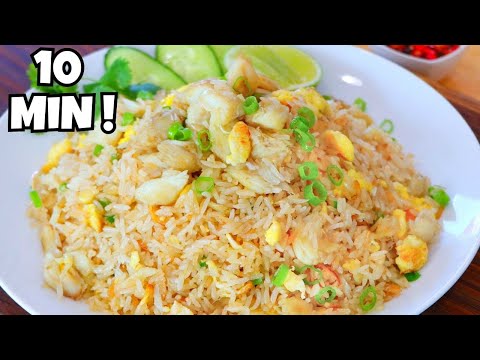
Easy Crab Cake Fried Rice brings crisp-edged crab cake pieces, cold rice, and colorful vegetables together in a savory, quick-cooking skillet meal. It has the familiar comfort of fried rice with the sweet, briny flavor and seasoned crumbs of crab cakes in every serving.
The key is to use chilled rice, cook the ingredients in stages, and add the crab back near the end. That keeps the rice separate instead of soggy, lets the vegetables retain a little bite, and helps the delicate crab stay in generous pieces. The finished dish is savory and aromatic, with a nutty hint of sesame and a fresh lift from scallions or lemon.
Why This Recipe Works
Cold, day-old rice has had time to dry out, so its grains are less likely to mash together when they hit a hot pan. If you are making rice today, spread it in a shallow layer to cool quickly, then chill it before frying. Break up clumps with your fingers or a fork before adding it to the skillet.
Cooking in stages matters, too. Crab cakes are browned first and set aside, while the vegetables, garlic, and ginger get their own time in the pan. The rice then gets direct contact with the hot surface, which helps it warm and lightly toast rather than steam. Returning the crab cakes at the end protects their texture and keeps their seasoning noticeable.
A small amount of soy sauce and oyster sauce gives the rice a rounded savory flavor without drowning out the crab. Sesame oil is used sparingly as a finishing flavor; too much can dominate the dish. Keep the pan hot, but lower the heat if the garlic starts to brown quickly.
Ingredients
- 4 cups cooked, chilled rice, preferably day-old
- 2 crab cakes, about 8 ounces total, cooked or uncooked according to the package or your recipe
- 6 ounces peeled shrimp or scallops, optional
- 2 tablespoons vegetable or canola oil, divided
- 1/2 cup finely diced onion
- 1/2 cup diced carrot
- 1/2 cup diced bell pepper
- 1/2 cup green peas, fresh or frozen
- 2 teaspoons minced fresh garlic
- 1 tablespoon minced fresh ginger
- 2 tablespoons soy sauce, preferably low-sodium
- 1 tablespoon oyster sauce
- 1 teaspoon sesame oil
- 1/3 cup thinly sliced scallions, divided
- 1 tablespoon sesame seeds, optional
- 1 lemon, cut into wedges, optional
Ingredient Notes
Rice: Long-grain white rice is a reliable choice because the cooked grains tend to stay distinct. Jasmine rice also works and brings a gentle fragrance. Brown rice can be used; its chewier texture will make the finished dish heartier. Avoid freshly cooked, steaming rice if you can, since excess moisture encourages clumping.
Crab cakes: Use crab cakes you enjoy eating on their own. Chilled cooked cakes may be homemade or store-bought; check package directions if reheating a packaged product. If the cakes are uncooked, cook them through according to the recipe or label before crumbling. For seafood, the safe minimum internal temperature is 145°F. Previously cooked leftovers should be reheated to 165°F.
Optional shrimp or scallops: They add another seafood element but are not necessary. Pat them dry so they sear rather than steam, and cook them separately before combining with the rice. Cook seafood to 145°F. If using frozen seafood, thaw it safely in the refrigerator and drain it well.
Vegetables: The diced onion, carrot, bell pepper, peas, and scallions bring sweetness, color, and different textures. Cut the firm vegetables into small, similar-sized pieces so they soften at about the same rate. Frozen peas can go straight into the pan; there is no need to thaw them first.
Sauces and oils: Soy sauce seasons the rice, while oyster sauce adds a deeper savory note. Low-sodium soy sauce gives you more control, especially since crab cakes can already be well seasoned. Use vegetable or canola oil for high-heat cooking, then add sesame oil near the end for aroma. For an oyster-free version, use an equal amount of extra soy sauce, though the flavor will be a little less rounded.
Garnishes: Scallions and sesame seeds add freshness and a little crunch. Lemon is optional, but a squeeze just before eating brightens the rich, savory flavors.
Instructions
- Prepare the ingredients. Break the chilled rice into loose grains and set it near the stove. Mix the soy sauce and oyster sauce in a small bowl. Dice the vegetables, mince the garlic and ginger, and slice the scallions. This quick setup helps prevent the garlic from overcooking while you reach for another ingredient.
- Cook the optional seafood, if using. Heat 1 teaspoon of the vegetable oil in a large skillet or wok over medium-high heat until shimmering, about 1 minute. Add the shrimp or scallops in a single layer and cook, turning once, until opaque and cooked through, usually 2 to 4 minutes depending on size. Check for 145°F at the thickest part. Transfer to a clean plate. If the pan is dry, add a little more oil before the next step.
- Brown and prepare the crab cakes. Add 2 teaspoons of oil to the pan over medium heat. Cook already-cooked crab cakes for about 2 to 3 minutes per side, until browned and heated to 165°F. If using uncooked cakes, follow their package or recipe directions and check that the center reaches 145°F. Transfer them to a plate and let them rest briefly, then break them into large bite-sized pieces. Keeping some larger pieces makes the crab easy to notice in the finished rice.
- Soften the vegetables. Add the remaining oil to the skillet and set the heat to medium-high. Add the onion, carrot, and bell pepper. Stir-fry for 3 to 4 minutes, until the onion is beginning to turn translucent and the carrot is just tender but still has a little bite. Add the peas, garlic, and ginger, then stir for about 30 seconds, just until fragrant. If the garlic starts to darken, reduce the heat.
- Fry the rice. Add the rice and spread it across the pan. Let it sit undisturbed for 30 to 45 seconds at a time, then toss and spread it again. Cook for 3 to 5 minutes, breaking up any remaining clumps, until the grains are hot and separate. A broad spatula makes it easier to turn the rice without crushing it.
- Season and finish. Pour the soy and oyster sauce mixture around the edge of the pan, then toss thoroughly so the rice is evenly seasoned. Add the crab cake pieces and optional cooked seafood. Fold gently for 1 to 2 minutes, until everything is hot. For a rice dish made with previously cooked ingredients, heat the combined leftovers to 165°F. Take the pan off the heat and stir in the sesame oil and half of the scallions. Taste before adding any extra soy sauce.
- Serve. Divide the fried rice among bowls and top with the remaining scallions, sesame seeds if using, and lemon wedges. Serve while hot, when the rice is at its best and the crab cake pieces still have some browned edges.
Tips for Success
- Use rice that is cold and dry. Refrigerated rice is easier to separate and less likely to turn sticky. If it has formed a solid block, loosen it gently before it goes into the pan.
- Choose a wide pan. A wok or a large skillet gives moisture room to escape. If your pan is small, fry the rice in two batches rather than crowding it.
- Keep the vegetables small and even. Small dice cook quickly and distribute through the rice, so each forkful gets a mix instead of a few oversized chunks.
- Get the pan hot before adding rice. The surface should be hot enough that the rice sizzles. If the pan is cool, the rice can sit and steam while it warms.
- Keep the crab in chunks. Fold it in gently near the end instead of stirring vigorously. That preserves the texture and makes the crab cake flavor stand out.
- Season in stages. Crab cakes, soy sauce, and oyster sauce all contribute salt. Taste after tossing in the sauces, then add more soy sauce only if needed.
- Use sesame oil as a finishing touch. Adding it after cooking preserves its aroma and prevents its flavor from taking over the whole pan.
Troubleshooting
The rice is clumping or mushy. It may have been too moist or the pan may have been crowded. Spread the rice out and let it sit over medium-high heat briefly before turning it. For next time, chill the rice uncovered until cool, then store it covered in the refrigerator; fry it in batches if needed.
The rice tastes bland. Toss it more thoroughly with the sauce and taste before serving. Add a small splash of soy sauce if it needs more salt, or a squeeze of lemon if it tastes heavy. Crab cakes vary in seasoning, so adjust gradually rather than adding a lot at once.
The dish is too salty. Add a little more plain cooked rice or unsalted peas and vegetables, if available. A squeeze of lemon can balance the impression of saltiness, but it will not remove salt. Next time, choose low-sodium soy sauce and check how salty the crab cakes are before seasoning.
The garlic tastes bitter. Garlic can scorch in a hot, dry pan. Add it after the firmer vegetables, stir only until fragrant, and lower the heat if it begins to brown. A little oil in the pan also helps protect it.
The crab cakes fall apart. They may be especially delicate or have been stirred too much. Brown them as intact patties, move them to a plate, and break them into pieces only after they have rested. Fold them into the rice gently at the end.
The vegetables are too firm. Cut the carrots smaller next time or give the onion, carrot, and pepper another minute before adding peas and aromatics. If the rice is already in the pan, keep tossing over medium heat until the vegetables reach the texture you like.
Variations
For a seafood-forward skillet, add the optional shrimp or scallops, or use a smaller amount of each. Cook them separately and avoid crowding the pan so they brown instead of releasing excess moisture. For extra vegetables, finely chopped cabbage, corn, or diced zucchini can fit in; add firmer vegetables with the carrot and softer ones toward the end of that step.
For a little heat, add a pinch of red pepper flakes with the garlic and ginger, or serve chili sauce at the table. If you do not have oyster sauce, replace it with an equal amount of soy sauce and taste carefully. To make the dish oyster-free while keeping the soy flavor less intense, use a mild vegetarian stir-fry sauce whose ingredients suit your needs. For a gluten-free version, use rice labeled gluten-free and replace both sauces with suitable gluten-free alternatives; check the crab cake ingredients as well.
You can also change the rice. Brown rice gives a firmer chew, while jasmine rice makes a fragrant, tender version. Avoid adding a lot of wet ingredients, such as extra sauce or watery vegetables, because they can soften the rice and obscure the browned crab cake flavor.
What to Serve With It
This is a complete meal on its own, especially with the optional shrimp or scallops. For a lighter plate, serve it with a crisp cucumber salad, simply dressed greens, or steamed broccoli. A bowl of clear soup also works well alongside the savory rice. Keep side dishes lightly seasoned so they do not compete with the crab cakes, soy, and oyster sauce.
Set lemon wedges and extra scallions on the table for anyone who wants a brighter finish. If you like a little spice, offer chili sauce separately rather than mixing it into the whole pan; that lets everyone choose their own level of heat.
Make-Ahead, Storage and Reheating
For advance preparation, dice the vegetables and mix the sauces up to a day ahead, storing them covered in the refrigerator. Cooked rice can also be prepared ahead, but cool it promptly in a shallow container and refrigerate it within 2 hours of cooking, or within 1 hour if the room is hotter than 90°F. Keep it chilled until you are ready to fry. Do not leave cooked rice at room temperature while preparing the other ingredients.
Refrigerate leftover fried rice in a shallow, covered container within 2 hours of cooking. Use refrigerated leftovers within 3 to 4 days. For longer storage, freeze the rice in airtight, freezer-safe portions; use within 3 to 4 months for best quality. Thaw frozen portions in the refrigerator, not on the counter. If the crab cakes or seafood were previously frozen, follow their package guidance as well.
Reheat only the portion you plan to eat. In a skillet, add a teaspoon or two of water, cover, and heat over medium, stirring occasionally until steaming hot throughout. In a microwave, cover loosely, stir partway through, and continue heating until evenly hot. Reheated leftovers should reach 165°F. Add fresh scallions or lemon after reheating rather than before. Discard food that has been left at room temperature beyond the safe cooling window.
Recipe Card
Servings: 4 Prep time: 15 minutes Cook time: 20 minutes Total time: 35 minutes
Ingredients
- 4 cups cooked, chilled rice
- 2 crab cakes, about 8 ounces total
- 6 ounces peeled shrimp or scallops, optional
- 2 tablespoons vegetable or canola oil, divided
- 1/2 cup diced onion
- 1/2 cup diced carrot
- 1/2 cup diced bell pepper
- 1/2 cup green peas
- 2 teaspoons minced fresh garlic
- 1 tablespoon minced fresh ginger
- 2 tablespoons soy sauce
- 1 tablespoon oyster sauce
- 1 teaspoon sesame oil
- 1/3 cup sliced scallions, divided
- 1 tablespoon sesame seeds, optional
- 1 lemon, cut into wedges, optional
Condensed Instructions
- Break up the chilled rice and mix the soy sauce with the oyster sauce.
- If using shrimp or scallops, cook in a teaspoon of oil over medium-high heat until opaque and 145°F; transfer to a plate.
- Brown cooked crab cakes in 2 teaspoons of oil, heating them to 165°F. For uncooked crab cakes, follow package directions and cook to 145°F. Break into large pieces and set aside.
- Heat the remaining oil. Stir-fry onion, carrot, and bell pepper for 3 to 4 minutes. Add peas, garlic, and ginger; cook about 30 seconds.
- Add rice and stir-fry for 3 to 5 minutes, until hot and separated. Toss with the sauce.
- Fold in crab and optional seafood until hot throughout; reheat previously cooked leftovers to 165°F. Remove from heat and stir in sesame oil and half the scallions.
- Serve with remaining scallions, sesame seeds, and lemon, if desired.
Frequently Asked Questions
Can I make this with freshly cooked rice?
Yes, but freshly cooked rice is moist and more likely to clump. Spread it in a shallow layer so it cools quickly, then refrigerate it until cold before frying. Do not leave cooked rice at room temperature for an extended period.
Do I need to thaw frozen peas?
No. Add frozen peas directly to the pan with the garlic and ginger. They warm quickly as the vegetables cook.
Can I use uncooked crab cakes?
Yes. Cook them according to their recipe or package directions before breaking them into the fried rice. Check the center with a food thermometer; seafood should reach 145°F. If the cakes were already cooked and refrigerated, reheat them to 165°F.
Can I make the fried rice without oyster sauce?
Yes. Replace it with an equal amount of soy sauce, then taste before adding more. The flavor will be a little less rounded and may be saltier, so low-sodium soy sauce is useful.
Can I use a nonstick skillet instead of a wok?
Yes. Choose the widest skillet you have and cook over medium-high heat. A smaller pan can still work, but frying the rice in batches helps it heat and brown instead of steam.
How can I tell when shrimp or scallops are done?
Shrimp turn opaque and firm, while scallops turn opaque and feel firm but still tender. For a reliable safety check, seafood should reach 145°F at its thickest point. Avoid cooking them longer than needed, since they can become tough.
Can I freeze crab cake fried rice?
Yes. Cool it promptly, portion it into airtight freezer-safe containers, and freeze it for 3 to 4 months for best quality. Thaw in the refrigerator and reheat until the center reaches 165°F.
Is this dish spicy?
No, it is savory rather than spicy as written. Add red pepper flakes while cooking or offer chili sauce at the table if you want heat.