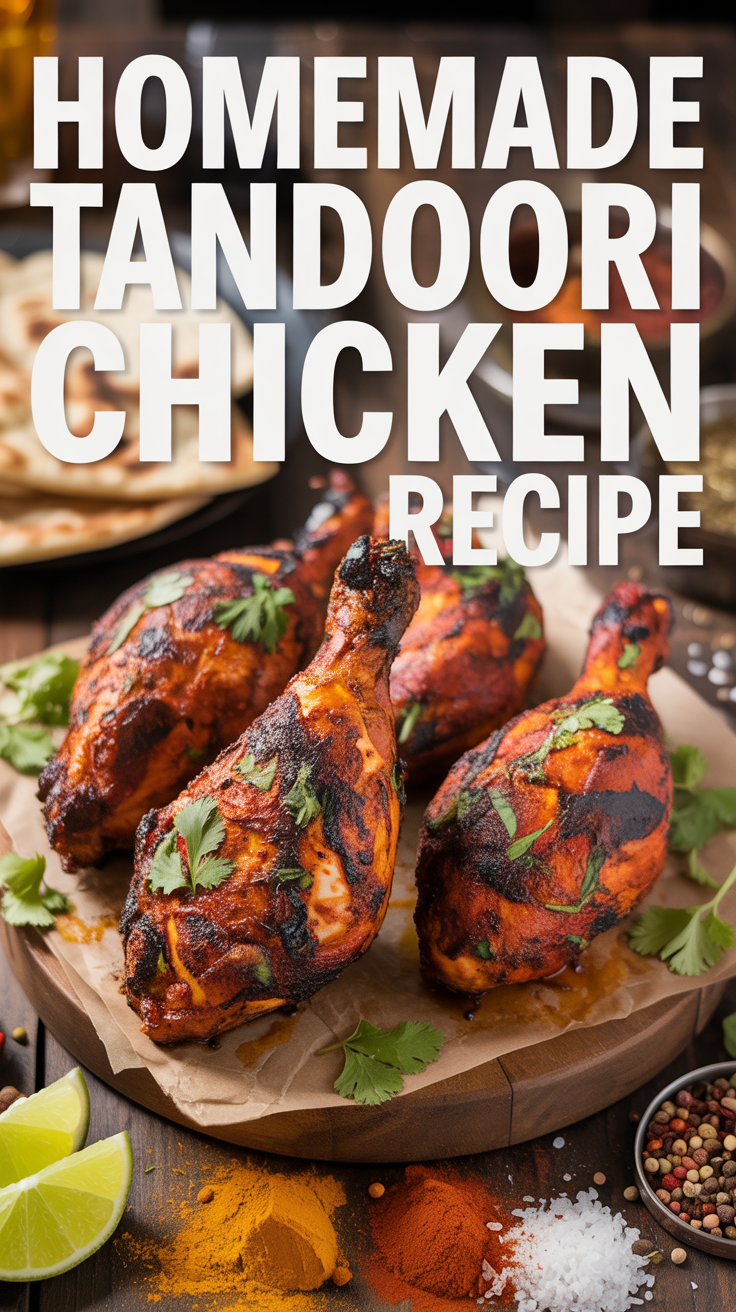
This easy homemade tandoori chicken is a home-oven take on the boldly spiced chicken traditionally cooked in a tandoor, a very hot clay oven. A tangy yogurt marinade helps season and tenderize the chicken, while a hot oven and a brief broil give it browned, flavorful edges without special equipment.
Ingredients
- 2½ lb bone-in, skinless chicken thighs and drumsticks
- 1 cup plain yogurt, preferably whole-milk or Greek-style
- 2 tbsp fresh lemon juice
- 1 tbsp neutral oil, such as avocado or canola oil
- 1 tbsp finely grated fresh ginger
- 1 tbsp minced garlic
- 1½ tsp kosher salt
- 2 tsp paprika
- 1½ tsp ground cumin
- 1½ tsp ground coriander
- 1 tsp garam masala
- ½ tsp ground turmeric
- ½ tsp ground black pepper
- ¼ tsp cayenne pepper, or up to ½ tsp for more heat
- 1 tbsp neutral oil for the baking rack
- 1 lemon, cut into wedges, for serving
- ¼ cup chopped fresh cilantro, for serving
Instructions
- Prepare the chicken. Pat the chicken dry with paper towels. Make two or three shallow cuts, about ¼ inch deep, in the thickest parts of each piece. These cuts help the marinade contact more of the surface and make it easier to check doneness later. Do not rinse raw chicken; rinsing can spread bacteria around the sink and nearby surfaces.
- Mix the marinade. In a large bowl, stir together the yogurt, lemon juice, 1 tablespoon oil, ginger, garlic, salt, paprika, cumin, coriander, garam masala, turmeric, black pepper, and cayenne. Mix until the spices are evenly distributed. Greek-style yogurt makes a thick coating; if yours is unusually stiff, stir in 1 tablespoon water to loosen it slightly.
- Coat and chill. Add the chicken and turn each piece until it is well coated, working some marinade into the cuts. Cover the bowl or transfer everything to a covered container, then refrigerate for at least 4 hours and preferably 8 to 12 hours. If you are short on time, 30 minutes will add flavor, though the seasoning will not have as long to work. Do not leave raw chicken marinating on the counter.
- Heat the oven and prepare the pan. Arrange a rack in the center of the oven and heat it to 425°F. Line a rimmed baking sheet with foil for easier cleanup, then set an oven-safe wire rack on top. Brush the rack lightly with the remaining 1 tablespoon oil. The raised rack lets hot air circulate around the chicken and gives excess marinade somewhere to drip. If you do not have a rack, use the foil-lined pan directly and turn the pieces once during baking.
- Arrange the chicken. Lift each piece from the marinade and let excess coating drip back into the bowl. Arrange the chicken on the rack with space between pieces. A thin, even coating is useful; thick clumps of yogurt can stay pale or slide off as the chicken cooks. Discard the marinade that touched the raw chicken rather than using it as a sauce.
- Bake until cooked through. Roast for 35 to 45 minutes, turning the pieces once if they are cooking directly on the pan. Timing depends on the size of the pieces and how accurately the oven holds its temperature, so use a food thermometer rather than relying on the clock alone. Check the thickest part of a thigh or drumstick without touching the bone. Poultry is safe when it reaches 165°F. Dark meat is often more tender at a higher temperature, but 165°F is the safe minimum.
- Brown the surface. For darker, lightly charred spots, switch the oven to broil after the chicken is cooked through and broil for 1 to 3 minutes. Keep the pan under close watch: yogurt and spices can darken quickly under the broiler, and the distance from the heating element varies by oven. Remove the chicken as soon as the edges look browned to your liking.
- Rest and serve. Let the chicken rest for about 5 minutes, then arrange it on a platter. Sprinkle with chopped cilantro and serve with lemon wedges. Check that the meat is cooked through before serving, especially when pieces vary in size.
Tips
- Choose a yogurt that coats well. Plain whole-milk yogurt gives the marinade a creamy texture, while plain Greek yogurt clings especially well. Avoid sweetened or flavored yogurt. If using a very thick Greek yogurt, a spoonful of water makes it easier to spread; if using thin regular yogurt, simply allow the excess to drip off before baking.
- Adjust the heat gradually. The recipe uses a modest amount of cayenne, but the final heat also depends on the pepper itself. Use a small pinch for a mild version, or increase it to ½ teaspoon for more warmth. Paprika mainly contributes color and a gentle pepper flavor; it is not a substitute for cayenne when you want extra heat.
- Give the chicken space. Crowding traps steam and can leave the coating wet instead of browned. Use two pans if needed, and rotate their positions partway through cooking if they do not fit on the same oven rack. A rack is helpful but not essential; on a bare foil-lined sheet, turn the chicken once and expect the underside to brown less.
- Keep raw-chicken equipment separate. Use clean tongs to move cooked chicken to the platter, and wash hands, bowls, and surfaces that touched raw chicken with hot, soapy water. Never spoon uncooked marinade over the cooked chicken. For extra sauce at the table, set aside a clean portion of yogurt sauce before adding the raw chicken.
Serving Suggestions
Serve the chicken hot with basmati rice, naan, or another flatbread to catch the juices and spices. A simple cucumber salad, sliced tomatoes, or lightly dressed greens adds a cool, fresh contrast to the warm seasoning. You can also offer plain yogurt or a quick raita made by stirring grated cucumber, a pinch of salt, and chopped mint into yogurt. Lemon wedges are worth putting on the table: a squeeze just before eating brightens the rich, savory marinade.
For a more substantial meal, pair the chicken with roasted cauliflower, potatoes, or a tray of vegetables cooked separately. If serving a group, leave the pieces whole on a platter and provide serving tongs; that keeps the browned coating intact better than cutting everything up ahead of time. Any juices that collect on the baking sheet are flavorful but may be quite salty or oily, so taste before spooning them over rice.
Variations
Use boneless chicken: Boneless, skinless thighs work well and are convenient to serve. Start checking them after about 20 minutes at 425°F; many pieces take around 20 to 25 minutes, but thickness matters. Breast meat is leaner and can dry out if overcooked, so check it early and remove it once the thickest part reaches 165°F. The thermometer, not a fixed cooking time, is the dependable guide.
Make it less spicy or more colorful: Leave out the cayenne for a mild marinade. For a stronger red-orange color without extra heat, use a little more paprika. Ground spices vary in strength and freshness, so add gradually if you are adapting the blend. Garam masala blends also differ, but the cumin, coriander, garlic, and ginger keep the chicken aromatic even if your blend is not identical to another brand.
Cook it on a grill: The same marinated chicken can be grilled over medium heat, turning as needed, until each piece reaches 165°F in its thickest part. Wipe excess marinade from the surface first so it is less likely to flare or burn. Use a clean platter for the cooked pieces, not the plate that held the raw chicken. Grill timing varies with the heat and piece size, so temperature remains the best doneness check.
Try a dairy-free marinade: Unsweetened, unflavored plant-based yogurt can be used, though the texture and browning may differ by product. Choose one thick enough to cling to the chicken and check its ingredient label for added sweetness or strong flavors. The yogurt is a major part of the coating, so replacing it with only oil or lemon juice will produce a different result rather than the same creamy marinade.
Storage and Reheating
Refrigerate cooked chicken in a covered, shallow container within 2 hours of cooking, or within 1 hour if the temperature is above 90°F. Keep the refrigerator at 40°F or below and use the leftovers within 3 to 4 days. If you will not eat them in that time, freeze the chicken in an airtight freezer-safe container. For best quality, use frozen leftovers within 2 to 6 months; thaw them in the refrigerator rather than on the counter.
To reheat, place the chicken in a baking dish, add a splash of water or broth if it looks dry, and cover loosely with foil. Warm it in a 325°F oven until the thickest part reaches 165°F. Smaller portions can be reheated in the microwave; cover them and heat in short intervals, turning or rearranging pieces for more even warming, then check the temperature. The broiler can restore some browning, but use it only briefly after the chicken is hot so the coating does not burn.
Frequently Asked Questions
Can I marinate tandoori chicken overnight?
Yes. Keep it covered in the refrigerator and marinate for about 8 to 12 hours for convenient planning and good flavor. You can go up to 24 hours, but longer is not necessary; the acidity and salt can begin to affect the texture if the chicken sits for too long. Do not reuse the raw marinade as a finishing sauce.
Do I need food coloring to make the chicken look red?
No. Paprika gives the coating a warm red-orange color, and the spices brown as the chicken roasts. Restaurant versions can have a brighter red appearance, but food coloring is optional and does not determine whether the chicken is flavorful or cooked properly. This recipe focuses on familiar pantry spices rather than coloring.
Can I make this recipe without a wire rack?
Yes. Put the chicken on a foil-lined rimmed baking sheet, leaving room around each piece, and turn it once during baking. The side touching the pan may be less browned, and the chicken may sit in more of its juices, but the recipe still works. Avoid using a flat cookie sheet without a rim because cooking juices can spill.
How can I tell when the chicken is done?
Use an instant-read food thermometer in the thickest part of each piece, taking care not to touch bone. The safe minimum for poultry is 165°F. Color and clear juices are less reliable checks, particularly with strongly colored marinades. If pieces are different sizes, check more than one and give any under-temperature pieces additional oven time.
Can I prepare the marinade ahead?
Yes. Stir together the marinade and refrigerate it in a covered container for up to a day before using it. Keep it separate from raw chicken until you are ready to marinate. If you want a dipping sauce, set aside a clean portion before the chicken goes into the bowl, then refrigerate it separately.