
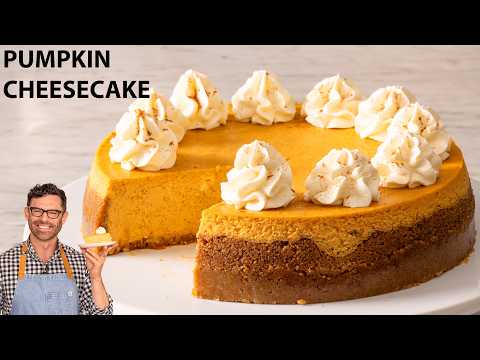
Easy Pumpkin Cheesecake Dessert is a smooth, gently spiced pumpkin cheesecake baked over a buttery graham cracker crust. Cut it into squares and serve it chilled, either plain or with a spoonful of whipped cream.
This version keeps the method simple: press and briefly bake the crust, mix the filling without whipping in excess air, then bake gently until just set. The result is creamy rather than cakey, with tangy cream cheese balancing pumpkin’s mellow sweetness and warm cinnamon, ginger, nutmeg, and clove.
Why This Recipe Works
A short pre-bake helps the graham crust hold together under the moist filling instead of turning soft and crumbly. Pressing the crumbs firmly into an even layer also gives each square a sturdy base.
The filling uses room-temperature cream cheese, which blends more smoothly than cold cream cheese. Mixing on low speed and stopping as soon as the ingredients are combined limits excess air. Too much incorporated air can make a cheesecake puff as it bakes and sink as it cools.
Pumpkin contains more moisture than cream cheese, so a little flour helps the filling set into slices. Sour cream adds a subtle tang and softens the texture. Baking at a moderate temperature gives the center time to set without exposing the edges to unnecessarily high heat.
Ingredients
- 1 ½ cups graham cracker crumbs
- ¼ cup granulated sugar, for the crust
- ½ cup unsalted butter, melted
- 16 ounces cream cheese, softened to room temperature
- ⅔ cup granulated sugar, for the filling
- 1 cup plain pumpkin purée, not pumpkin pie filling
- ½ cup sour cream, at room temperature
- 2 large eggs, at room temperature
- 2 tablespoons all-purpose flour
- 1 teaspoon vanilla extract
- 1 teaspoon ground cinnamon
- ¼ teaspoon ground ginger
- ⅛ teaspoon ground nutmeg
- ⅛ teaspoon ground cloves
- ¼ teaspoon fine salt
- 1 cup lightly sweetened whipped cream, optional, for serving
Ingredient Notes
Graham cracker crumbs: Fine, evenly crushed crumbs make a compact crust. Crush whole graham crackers in a food processor or put them in a sturdy bag and roll over them until no large pieces remain. Digestive biscuits can stand in for graham crackers; their sweetness and texture vary, so taste the crumb mixture before pressing it into the pan.
Butter and sugar: Melted butter binds the crumbs, while the crust sugar adds sweetness and helps it brown. If using salted butter, omit the salt from the filling only if you prefer a less pronounced salty note; the recipe’s small amount of salt is there to balance the sweetness.
Cream cheese: Use full-fat, brick-style cream cheese for the most reliable texture. Spreadable cream cheese sold in tubs can be softer and may produce a looser filling. Let brick cream cheese soften at room temperature until it gives slightly when pressed, but do not leave it out for more than two hours.
Pumpkin: Use plain pumpkin purée, not pumpkin pie filling, which is already sweetened and spiced. If using homemade purée, choose a thick, smooth purée; watery purée can make the filling slow to set. Do not add extra pumpkin to the measured cup.
Sour cream: Sour cream brings tang and a tender texture. Full-fat plain Greek yogurt can replace it, though the filling may be a little less rich. Bring either option to room temperature before mixing.
Eggs and flour: Eggs help the filling set as it bakes; room-temperature eggs incorporate more evenly. The flour helps steady the moisture in the pumpkin. For a gluten-free version, use a gluten-free all-purpose flour blend that works as a one-to-one substitute, and use gluten-free graham-style crumbs.
Spices and vanilla: Cinnamon leads, while ginger, nutmeg, and cloves give the filling a rounded pumpkin-spice flavor without covering up the cream cheese. You can replace the individual spices with 1½ teaspoons pumpkin pie spice. Vanilla rounds out the flavor.
Instructions
- Prepare the pan and oven. Heat the oven to 350°F. Line an 8-inch square metal baking pan with parchment paper, leaving enough overhang on two sides to lift out the chilled dessert. The parchment makes removal and neat slicing easier; a glass pan also works, but may bake a little differently.
- Make the crust. Stir the graham cracker crumbs and ¼ cup sugar together in a bowl. Pour in the melted butter and mix until all the crumbs look evenly moistened, like damp sand. Tip the mixture into the pan and press it firmly into an even layer, including the corners. A flat-bottomed measuring cup helps compact it without leaving a lumpy surface.
- Pre-bake the crust. Bake at 350°F for 8–10 minutes, until the crust smells toasty and looks set rather than wet. It should not be deeply browned. Set the pan on a rack while you make the filling; this brief bake helps the crust stay intact beneath the cheesecake.
- Lower the oven temperature and mix the cream cheese. Reduce the oven to 325°F. In a large bowl, beat the softened cream cheese on low speed until smooth, scraping the bowl as needed. Add the ⅔ cup sugar and beat just until blended. The mixture should look creamy, with no visible lumps; keeping the speed low avoids adding extra air.
- Add the pumpkin and flavorings. Mix in the pumpkin purée, sour cream, flour, vanilla, cinnamon, ginger, nutmeg, cloves, and salt on low speed. Scrape the bottom and sides of the bowl so no plain cream cheese remains. Stop when the mixture is uniform; prolonged beating is not needed.
- Blend in the eggs. Add the eggs one at a time, mixing on low speed after each just until the yolk disappears. Scrape the bowl once more and fold by hand if needed. The finished batter should be smooth and pourable, not foamy. Pour it over the warm crust and spread it to the corners.
- Bake until just set. Bake at 325°F for 40–50 minutes. Begin checking near 40 minutes: the edges should look set, while the center should have a small, gentle wobble when the pan is nudged. It should not ripple like liquid. For food safety, the center should reach 160°F; check with an instant-read thermometer inserted into the filling without touching the pan. Avoid baking until the whole surface is firm, since the center continues to set as it cools.
- Cool gradually, then chill. Set the pan on a rack and let the dessert cool at room temperature for about 1 hour, until it no longer feels warm. Transfer it to the refrigerator, uncovered until cold if convenient, then cover it. Chill for at least 4 hours, or overnight, until the center is fully firm. Cooling before covering helps limit condensation on top; chilling makes the squares easier to cut.
- Slice and serve. Use the parchment overhang to lift the dessert from the pan. Cut into 16 squares with a sharp knife, wiping the blade clean between cuts for tidy edges. Add whipped cream just before serving, if desired.
Tips for Success
- Soften the cream cheese thoroughly. Cold cream cheese is the most common reason for lumps. If you forget to take it out early, cut it into small cubes and let them stand briefly; avoid heating it until oily or partially melted.
- Measure crumbs after crushing. Measure 1½ cups of crumbs, not 1½ cups of whole crackers. Different cracker sizes and crushing methods change how much fits in a cup.
- Pack the crust evenly. A loose center can crumble when lifted, while an overly thick edge can be hard to cut. Aim for the same compact thickness from corner to corner.
- Use room-temperature filling ingredients. Cream cheese, sour cream, and eggs blend more evenly when they are not cold. This helps you mix briefly instead of beating longer to chase lumps.
- Do not overmix after adding eggs. Once the eggs are incorporated, stop. A smooth but not airy filling is less likely to rise dramatically and then fall.
- Trust the center, not just the clock. Ovens and pans vary. Look for set edges and a slight central wobble, and use a thermometer to confirm the center reaches 160°F.
- Chill before cutting. Warm cheesecake is soft and can smear. Give it the full chilling time, then use a clean, sharp knife for defined squares.
Troubleshooting
The crust falls apart. The crumbs may be too coarse, the butter may not have coated them evenly, or the mixture may not have been pressed firmly enough. Next time, crush the crackers more finely and compact the crumb mixture across the whole pan. If the dessert is already baked, chill it thoroughly before lifting and slicing.
The filling has cream cheese lumps. The cream cheese was probably too cold or not mixed smooth before the other ingredients went in. For the current batch, scrape the bowl well and gently press small lumps against its side with a spatula. Do not beat aggressively once the eggs are added.
The center is still loose after baking. A slight wobble is expected, but a liquid-looking center needs more time. Return the pan to the 325°F oven in 5-minute increments and check again. Confirm the center reaches 160°F, then cool and chill fully before judging the final texture.
The top cracks. Cracks can come from overbaking, excess air in the batter, or a quick temperature change. They do not affect the flavor. For a smoother top next time, mix on low, stop when the center still has a small wobble, and cool the dessert gradually. A little whipped cream can cover a crack when serving.
The texture is soft or damp. Make sure the measured pumpkin is plain purée rather than pie filling, and avoid using watery homemade purée. The dessert also needs a full chill; it will be much firmer after several hours in the refrigerator than it is at room temperature.
Variations
Change the spice profile: Use 1½ teaspoons pumpkin pie spice in place of the individual spices, or adjust the cinnamon and ginger slightly to suit your taste. Keep the total spice amount moderate so the pumpkin and cream cheese remain distinct.
Add a simple topping: Serve with whipped cream, a light dusting of cinnamon, or a small drizzle of caramel sauce. Add toppings at serving time rather than before storage so the surface stays neat.
Make a chocolate-crumb crust: Replace the graham crumbs with the same amount of finely crushed chocolate wafer cookies. Because those crumbs may have a different sweetness and fat content, check that the mixture holds together when pressed before baking.
Use a different pan shape: An 8-inch round pan with similar depth can work, though slices will be wedges rather than squares. A larger pan makes a thinner layer and will bake faster, so begin checking early; don’t assume the original baking time will still apply.
What to Serve With It
Serve each chilled square on its own or with whipped cream for a soft, airy contrast. A little cinnamon on top works well, as does a modest drizzle of caramel. For a dessert spread, pair it with crisp apple slices or simple shortbread cookies; both add texture without competing with the pumpkin spices. Coffee or black tea makes a good drink alongside the rich, tangy filling.
Make-Ahead, Storage and Reheating
This dessert is well suited to making ahead because it needs several hours to chill. Bake it the day before serving, cool it, and refrigerate it covered. Add whipped cream or other toppings just before serving.
Refrigerate cheesecake within 2 hours of baking or serving. Keep it covered in the refrigerator and use it within 3–4 days. Do not leave it at room temperature for more than 2 hours, or more than 1 hour if the room is above 90°F.
To freeze, chill the dessert completely, then wrap the whole slab or individual squares tightly and place them in a freezer-safe container. For best quality, use within 1–2 months. Thaw in the refrigerator, not on the counter. The texture may be slightly softer after thawing, but the squares are still good served cold.
Reheating is not recommended: cheesecake is meant to be served chilled, and warming it can soften the filling and crust. If frozen, thaw it in the refrigerator and serve cold.
Recipe Card
Servings: 16 squares
Prep time: 20 minutes
Cook time: 50–60 minutes, including crust baking
Total time: About 5 hours 30 minutes, including at least 4 hours of chilling
Ingredients
- 1 ½ cups graham cracker crumbs
- ¼ cup granulated sugar, for the crust
- ½ cup unsalted butter, melted
- 16 ounces cream cheese, softened
- ⅔ cup granulated sugar, for the filling
- 1 cup plain pumpkin purée
- ½ cup sour cream
- 2 large eggs
- 2 tablespoons all-purpose flour
- 1 teaspoon vanilla extract
- 1 teaspoon ground cinnamon
- ¼ teaspoon ground ginger
- ⅛ teaspoon ground nutmeg
- ⅛ teaspoon ground cloves
- ¼ teaspoon fine salt
- 1 cup lightly sweetened whipped cream, optional
Instructions
- Heat the oven to 350°F. Line an 8-inch square pan with parchment, leaving overhang for lifting.
- Mix the graham crumbs, ¼ cup sugar, and melted butter. Press firmly into the pan and bake for 8–10 minutes, until set and fragrant.
- Reduce the oven to 325°F. Beat the cream cheese on low until smooth; mix in the ⅔ cup sugar just until combined.
- Mix in the pumpkin, sour cream, flour, vanilla, spices, and salt. Add the eggs one at a time, mixing just until incorporated.
- Spread the filling over the crust. Bake for 40–50 minutes, until the edges are set, the center wobbles slightly, and the center reaches 160°F.
- Cool on a rack for about 1 hour, then refrigerate at least 4 hours. Lift out, cut into 16 squares, and serve cold with whipped cream if desired.
Frequently Asked Questions
Can I use pumpkin pie filling instead of pumpkin purée?
No. Pumpkin pie filling is already sweetened and spiced, so it changes the flavor and sweetness of the cheesecake. Use plain pumpkin purée for the measured cup.
Can I make this without a mixer?
Yes. A sturdy whisk and flexible spatula work if the cream cheese is very soft. Beat the cream cheese and sugar until smooth before adding the remaining ingredients, and mix gently after adding the eggs.
How do I know when the cheesecake is done?
The edges should look set and the center should have a small wobble, not a liquid ripple. For food safety, check that the center reaches 160°F with an instant-read thermometer. It will firm further as it cools and chills.
Can I bake it in a glass pan?
Yes. Use the same pan size and temperature, but start checking around the early end of the time range because glass and metal pans can transfer heat differently. Follow the visual and temperature cues rather than relying only on the clock.
Why does the recipe need to chill for so long?
The filling is soft while warm. Chilling lets it finish firming up, which gives the squares a creamy texture and helps them hold their shape when cut.
Can I make it gluten-free?
Yes. Use gluten-free graham-style crumbs and a gluten-free all-purpose flour blend that substitutes one-to-one for regular flour. Check the packaging of those ingredients if avoiding gluten is important for your household.
Can I freeze individual portions?
Yes. Chill the dessert first, cut it into squares, and wrap each piece tightly before placing the portions in a freezer-safe container. Thaw in the refrigerator and serve cold; use within 1–2 months for best quality.
Should I serve it at room temperature?
It is easiest to slice and serve cold. You can let a portion stand briefly before eating if you prefer a softer texture, but keep the dessert refrigerated when it is not being served.