
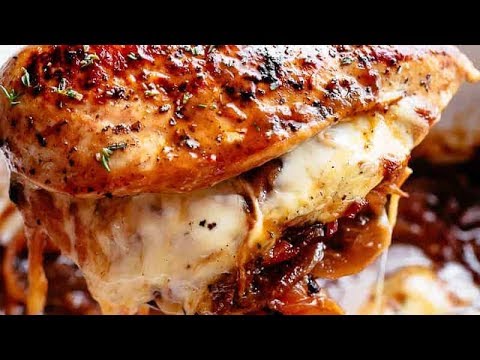
French onion stuffed chicken brings the savory comfort of French onion soup to a dinner-plate centerpiece: tender chicken breasts hold a creamy Gruyère filling with sweet, slowly browned onions, while more onions and broth make a simple pan sauce.
This version works by giving the onions time to soften and caramelize before they go into the chicken, then finishing the stuffed breasts in the oven so they cook evenly. Expect a rich, savory filling, nutty melted cheese, and a broth-based sauce that is delicious spooned over the chicken or a side of potatoes.
Why This Recipe Works
Good French onion flavor starts with properly cooked onions. Thin slices cook more evenly, and a moderately low heat gives their natural sugars time to brown without scorching. Stirring regularly and adding a splash of broth if the pan gets too dark helps keep the fond—the browned bits on the bottom—from burning. The onions should be soft and a deep golden brown before you divide them between the filling and sauce.
The filling combines softened cream cheese with Gruyère. Cream cheese makes the mixture cohesive and creamy, while Gruyère brings the savory, nutty flavor associated with French onion dishes. Keeping some Gruyère aside to melt over the chicken gives the top a pleasing finish without making the filling too loose.
A quick sear adds color, but the oven does the gentler, more even cooking. The broth loosens the browned bits from the skillet and catches any cheese or onion flavor that escapes the pockets. Since breast size and thickness vary, a thermometer—not the clock alone—is the reliable way to know the chicken is done: the thickest part of each breast must reach 165°F.
Ingredients
- 4 boneless, skinless chicken breasts, about 6 to 8 ounces each
- 2 large yellow onions, thinly sliced
- 1 tablespoon olive oil
- 1 tablespoon butter
- 1 teaspoon fresh thyme leaves or dried thyme
- 1 teaspoon garlic powder
- 1 cup beef broth or chicken broth
- 1 cup shredded Gruyère cheese, divided
- ½ cup cream cheese, softened
- ¾ teaspoon fine salt, divided, plus more to taste
- ½ teaspoon ground black pepper, plus more to taste
- 4 to 8 wooden toothpicks, for securing the chicken, optional
Ingredient Notes
Chicken breasts: Choose breasts of similar size so they finish cooking at about the same time. If one is especially thick, gently pound it to an even thickness before making a pocket. Avoid pounding so thin that the meat tears.
Onions: Yellow onions are a dependable choice for this savory, sweet-leaning filling. White onions also work. Red onions will cook down, too, but their flavor and color will be different. Slice from root to tip into thin, even strips so they soften at a similar rate.
Olive oil and butter: Oil helps the onions cook without the butter browning too quickly; butter adds flavor. The same skillet is used to sear the chicken, so the onion cooking fat can carry through. If the skillet looks completely dry before searing, add a small splash of oil.
Thyme and garlic powder: Thyme complements the onions and cheese. Dried thyme is convenient; fresh leaves give a lighter herbal note. Garlic powder blends easily into the filling. If using fresh garlic instead, finely mince one small clove and cook it with the onions for about 30 seconds near the end, rather than mixing raw pieces into the filling.
Broth: Beef broth makes the sauce deeper and more reminiscent of French onion soup; chicken broth keeps it a little lighter. Use a broth whose salt level you like, since it will reduce slightly and concentrate in the pan.
Gruyère and cream cheese: Gruyère melts smoothly and has a pleasantly savory flavor. Swiss cheese is a practical substitute; fontina also melts well but is milder. Use full-fat or reduced-fat cream cheese that has softened enough to stir. Neufchâtel can be substituted, though the filling may be a little less rich.
Salt and pepper: The amount you need depends on the broth and cheese. Season the chicken and filling modestly, then taste the finished pan sauce and adjust it at the end.
Instructions
- Heat the oven and prepare the chicken. Set a rack in the center and heat the oven to 375°F. Pat the chicken dry. Working with one breast at a time, lay it flat and cut a horizontal pocket into the thick side, stopping about ½ inch from the other edges so the sides remain intact. Season the outside and inside of the pockets with about ½ teaspoon salt total and the black pepper. Look for a pocket deep enough to hold filling but with an uncut edge all around; that helps keep the cheese from escaping. Wash your hands and any surfaces that touched raw chicken.
- Cook the onions. Heat the olive oil and butter in a large ovenproof skillet over medium heat. Add the sliced onions and the remaining ¼ teaspoon salt. Cook for 25 to 35 minutes, stirring every few minutes, until very soft and a deep golden brown. If the onions start sticking or the browned bits look close to burning, add 1 tablespoon of broth or water and scrape the pan. They should be richly browned and sweet-smelling, not black or bitter; this slow cooking builds the dish’s main savory-sweet flavor.
- Make the filling. Transfer about half of the cooked onions to a medium bowl and let them cool for 5 minutes. Stir in the softened cream cheese, ½ cup of the Gruyère, thyme, and garlic powder until combined. The mixture may be thick, which makes it easier to tuck into the pockets. Divide it among the four chicken breasts, pressing it gently into each pocket without packing so much in that the edges cannot close. Secure each opening with one or two toothpicks if needed; the filling should sit inside rather than bulge out.
- Sear the stuffed breasts. Return the skillet to medium-high heat. If no fat remains, add a small splash of oil. Place the chicken in the skillet and sear for about 3 minutes per side, turning carefully with tongs, until each side has a light golden-brown crust. The chicken will not be cooked through yet. Searing adds flavor and color; avoid pressing down on the breasts, which can force filling out.
- Add broth and the remaining onions. Pour the broth into the skillet around the chicken, not directly over the filling, and scrape up any browned bits with a wooden spoon. Spoon the reserved onions into the broth around the breasts. Bring the liquid to a gentle simmer on the stovetop for about 1 minute. It should bubble lightly, not boil hard; this deglazes the pan and starts the sauce without disturbing the stuffed pockets. If your skillet is not ovenproof, transfer the chicken and onion-broth mixture to a baking dish now.
- Bake until safely cooked. Sprinkle the remaining ½ cup Gruyère over the chicken. Bake uncovered at 375°F for 18 to 25 minutes, depending on breast thickness and how thoroughly the chicken cooked during searing. Begin checking early. Insert an instant-read thermometer sideways into the thickest part of the chicken, aiming for meat rather than the filling or pan. Remove the dish when every breast reads 165°F; the cheese should be melted and the broth bubbling gently around the onions. If the chicken needs more time, bake in 3-minute increments and check again.
- Rest and serve. Let the chicken rest in the pan for 5 to 10 minutes. Remove toothpicks before serving. Taste the sauce and add salt or pepper if needed, then spoon onions and broth over each portion. Resting lets the juices settle and gives the filling a moment to firm up, so it is less likely to run out when sliced.
Tips for Success
- Take your time with the onions. If they brown quickly but remain firm, reduce the heat. Soft, deep-golden onions give the filling its rounded flavor; pale, barely softened onions will taste sharper.
- Soften the cream cheese fully. Leave it at room temperature for about 30 minutes, or cut it into small cubes to soften faster. Cold cream cheese is harder to mix and can leave lumps in the filling.
- Keep the pocket edges intact. Cut into the thick side of each breast with a small sharp knife, and stop short of cutting through the far side. A pocket is easier to fill and more secure than a deep slit from edge to edge.
- Do not overfill. If some filling remains, serve it alongside the chicken or stir it into the hot sauce off the heat. Overstuffed breasts can split during searing and baking.
- Use a thermometer. Breast size, starting temperature, and pan material all affect cooking time. Check the thickest meat portion and verify 165°F for each breast rather than relying on color or a single timing estimate.
- Choose a skillet that can go in the oven. A heavy oven-safe skillet makes the stovetop-to-oven method straightforward. If the handle or pan is not oven-safe, move everything to a baking dish before baking.
- Watch the sauce as it rests. The broth will be loose rather than gravy-thick. If you want it more concentrated, transfer the cooked chicken to a plate and simmer the sauce on the stove for a few minutes, then spoon it over the chicken.
Troubleshooting
The onions are browning too fast or sticking. Turn the heat down to medium-low and stir more often. Add a tablespoon of water or broth to dissolve dark browned bits. If the bits are black and smell burnt, do not scrape them into the sauce; move the onions to a clean pan if necessary.
The filling leaks out. A small amount of leakage is normal. For the next breast, use less filling, keep a border of uncut chicken around the pocket, and secure the opening with a toothpick. If cheese has escaped into the pan, leave it there; it will add flavor to the sauce.
The chicken is browning but not done inside. Searing is only for color, not for cooking the center through. Transfer the skillet to the oven and continue baking, checking the thickest part with a thermometer until it reaches 165°F. If the top is already as browned as you like, loosely cover the pan with foil.
The chicken is dry. It may have cooked past 165°F, especially if the breasts were small or thin. Start checking at the early end of the bake time, and remove each breast as soon as it reaches the safe temperature. Next time, choose more evenly sized pieces and use a thermometer.
The sauce tastes too salty. Broth and cheese can both contribute salt. Stir in a small splash of water or unsalted broth, taste again, and avoid adding more salt until the sauce is adjusted. Serving the sauce with unsalted rice, potatoes, or bread also balances the plate.
The sauce is too thin. It is meant to be spoonable, not thick like gravy. For a more concentrated sauce, remove the chicken and simmer the liquid and onions uncovered for a few minutes. Keep the chicken warm while the sauce reduces, and avoid boiling the chicken in the pan.
Variations
Use a different melting cheese. Swiss, fontina, or a mild provolone can replace Gruyère. Choose a cheese that melts well, and expect the flavor to shift: Swiss stays close to the original, while provolone is milder.
Add mushrooms. Brown 6 to 8 ounces of sliced mushrooms after the onions are cooked, adding a little extra oil if the pan is dry. Stir them into the onions for the filling and sauce. Cook until their released liquid has evaporated so the filling does not become watery.
Make it without a pocket. If cutting pockets feels tricky, butterfly each breast almost all the way through, open it like a book, spread on a thin layer of filling, then fold it closed. Secure with toothpicks and check the internal temperature as directed. The shape may be less tidy, so take care when turning.
Use fresh garlic. Cook one finely minced clove with the onions during the final 30 seconds, stirring constantly. Garlic burns more readily than onions, so do not add it at the beginning of the long onion-cooking time.
Make a stronger herb note. Add a few extra fresh thyme leaves to the finished sauce, or replace the thyme with a small amount of chopped rosemary. Rosemary is more assertive, so use it sparingly.
What to Serve With It
The broth, cheese, and onions make this a rich main course, so a simple side works especially well. Mashed potatoes, roasted potatoes, or buttered egg noodles catch the pan sauce. Crusty bread is useful for the onions and broth, while rice offers a mild base without competing with the filling.
For something fresh, serve a green salad with a sharp vinaigrette, or add steamed green beans, broccoli, or asparagus. A crisp vegetable side cuts through the richness and rounds out the meal without requiring another elaborate preparation.
Make-Ahead, Storage and Reheating
You can cook the onions up to 3 days ahead and refrigerate them in a covered container. Let them cool, then chill promptly. Before cooking, soften the cream cheese and mix the filling; for the best texture, stuff and cook the chicken shortly before serving rather than storing raw stuffed chicken for an extended period.
Refrigerate cooked chicken and sauce within 2 hours of cooking, in shallow, covered containers. Use refrigerated leftovers within 3 to 4 days. For longer storage, freeze in a freezer-safe container for 3 to 4 months. The chicken and sauce may soften or separate slightly after thawing, but stirring the sauce as it warms helps bring it together.
Thaw frozen leftovers in the refrigerator. Reheat covered in a 325°F oven until the chicken and sauce reach 165°F, checking the center of the meat with a thermometer. A microwave also works: cover the portion, heat in short intervals, and turn or rearrange it as needed so it heats evenly to 165°F. Add a spoonful of broth if the sauce has thickened. Do not leave cooked chicken at room temperature for more than 2 hours, or more than 1 hour when the temperature is above 90°F.
Recipe Card
Servings: 4
Prep time: 20 minutes
Cook time: 55 minutes
Total time: About 1 hour 15 minutes
Ingredients
- 4 boneless, skinless chicken breasts, about 6 to 8 ounces each
- 2 large yellow onions, thinly sliced
- 1 tablespoon olive oil
- 1 tablespoon butter
- 1 teaspoon fresh thyme leaves or dried thyme
- 1 teaspoon garlic powder
- 1 cup beef broth or chicken broth
- 1 cup shredded Gruyère cheese, divided
- ½ cup softened cream cheese
- ¾ teaspoon fine salt, divided, plus more to taste
- ½ teaspoon ground black pepper, plus more to taste
- 4 to 8 wooden toothpicks, optional
Condensed Instructions
- Heat the oven to 375°F. Pat the chicken dry, cut a pocket into each breast, and season with about ½ teaspoon salt and the pepper.
- Cook the onions with the olive oil, butter, and remaining ¼ teaspoon salt over medium heat for 25 to 35 minutes, stirring often, until very soft and deep golden brown.
- Mix half the onions with the cream cheese, ½ cup Gruyère, thyme, and garlic powder. Divide among the chicken pockets and secure with toothpicks if needed.
- Sear the chicken in the onion skillet over medium-high heat for about 3 minutes per side, until lightly golden.
- Add the broth and remaining onions around the chicken. Scrape up browned bits and simmer gently for 1 minute. Transfer to a baking dish if the skillet is not oven-safe.
- Top with the remaining ½ cup Gruyère and bake at 375°F for 18 to 25 minutes, until each breast reaches 165°F in the thickest part.
- Rest for 5 to 10 minutes, remove toothpicks, taste and adjust the sauce, then serve with onions and broth spooned over the chicken.
Frequently Asked Questions
Can I use chicken thighs instead of breasts?
Boneless, skinless thighs are harder to stuff neatly and vary in shape, so this method is written for breasts. You can still make a similar dish by topping flattened thighs with the filling, folding or rolling them, securing them, and checking that the thickest meat reaches 165°F.
Can I make the chicken without an ovenproof skillet?
Yes. Cook the onions and sear the chicken in a regular skillet, then transfer the chicken to a baking dish. Pour in the broth, add the remaining onions, top with Gruyère, and bake as directed. Scrape the browned bits and pan juices into the dish for flavor.
How do I know when the chicken is done?
Use an instant-read thermometer in the thickest part of the chicken, inserting it sideways if that makes it easier to measure the meat without touching the filling. Each breast must reach 165°F. The filling can be hot and the cheese melted before the meat is safely cooked, so do not use those signs alone.
Can I prepare the stuffed chicken ahead?
For the best texture, cook the onions in advance and refrigerate them, then mix the filling and stuff the chicken shortly before cooking. If you do assemble it ahead, keep it covered in the refrigerator and cook it within a day; do not leave raw poultry at room temperature. Allow a little extra baking time if it goes into the oven cold, and use the thermometer to confirm doneness.
Can I use pre-shredded cheese?
Yes. Freshly shredded Gruyère often melts more smoothly, but pre-shredded cheese is convenient and will work. Check the package for the cheese type, since a blend may taste milder or saltier than Gruyère.
What if I do not have toothpicks?
You can leave the pockets unsecured if they close naturally and are not overfilled. Place the chicken seam-side up in the skillet and turn it gently. A few toothpicks help hold the opening closed, but remember to remove them before serving.
Can I freeze the cooked chicken?
Yes. Cool it promptly, package it with some sauce in a freezer-safe container, and freeze for 3 to 4 months. Thaw in the refrigerator and reheat until the center reaches 165°F. The cheese sauce may change texture a little after freezing, but warming it gently with a splash of broth can help.
Is the sauce supposed to be thick?
No. This is a light pan sauce of broth, onions, and cooking juices, not a flour-thickened gravy. If you prefer a more concentrated consistency, remove the chicken after baking and simmer the sauce for a few minutes before serving.