
This homemade lasagna layers a savory beef-and-tomato sauce with tender pasta, creamy ricotta, and plenty of mozzarella. It makes a generous 9-by-13-inch pan, so it works well for a family dinner or a meal with leftovers.
The key to neat, satisfying layers is a thick sauce, noodles cooked just shy of tender, and a short rest after baking. The finished lasagna is rich and cheesy, with a gently browned top and slices that hold together without being dry.
Why This Recipe Works
Simmering the sauce before assembly gives the tomatoes time to thicken and the beef time to take on the seasoning. A sauce that is not watery helps keep the layers distinct instead of pooling liquid at the bottom of the dish.
The noodles are boiled until just shy of fully tender because they continue cooking in the oven. The ricotta is mixed with egg and Parmesan so it spreads easily and sets into a creamy layer. Finally, resting the baked lasagna for 20 minutes lets the cheese and sauce settle, making it easier to cut clean portions.
Ingredients
- 12 oz dried lasagna noodles, about 12 sheets
- 2 tbsp olive oil
- 1 medium yellow onion, finely diced, about 1 cup
- 3 cloves garlic, minced
- 1 lb ground beef
- 2 tbsp tomato paste
- 28 oz crushed tomatoes
- 15 oz tomato sauce
- 1 tsp dried oregano
- 1 tsp dried basil
- 1 tsp kosher salt for the sauce, plus more to taste
- 1/2 tsp freshly ground black pepper
- 1/4 tsp crushed red pepper flakes, optional
- 15 oz whole-milk ricotta cheese
- 1 large egg
- 1 cup grated Parmesan cheese, divided
- 2 tbsp chopped fresh parsley, plus 1 tsp for garnish if desired
- 4 cups shredded low-moisture mozzarella cheese, about 16 oz
- 1 tbsp kosher salt for the pasta water
Ingredient Notes
Lasagna noodles: Regular dried noodles give the layers structure. Boil them before assembling; this recipe is not designed for no-boil noodles, which absorb moisture differently. If your noodles are longer than the dish, trim or break them to fit after cooking.
Ground beef: A lean-to-medium ground beef works well. Very fatty beef can leave grease in the sauce, while very lean beef may make it less rich. You can substitute ground turkey, but cook it thoroughly and expect a milder flavor.
Tomatoes and seasonings: Crushed tomatoes provide body, while tomato sauce makes the mixture easy to spread. If you do not have tomato sauce, use an equal amount of additional crushed tomatoes and simmer until the sauce is thick. Dried Italian seasoning can replace the oregano and basil; use 2 tsp.
Ricotta and egg: Whole-milk ricotta makes a soft, creamy filling. Part-skim ricotta works too, though it may be a little less rich. The egg helps the filling set as it bakes. For an egg-free filling, leave it out; the ricotta layer will be softer.
Cheese: Low-moisture mozzarella melts into distinct, stretchy layers without adding as much liquid as fresh mozzarella. Parmesan adds a salty, savory note. Pecorino Romano can replace some or all of the Parmesan, but it is saltier, so season the sauce carefully.
Instructions
- Heat the oven and prepare the dish. Set a rack in the middle of the oven and heat it to 375°F. Lightly oil a 9-by-13-inch baking dish. The dish should be ready before you start layering so the noodles do not sit and stick together.
- Boil the noodles. Bring a large pot of water to a boil, add 1 tbsp kosher salt, then add the lasagna noodles. Cook according to the package directions until just shy of al dente, usually 1 to 2 minutes less than the listed time. The noodles should bend without breaking but still have a slight firmness at the center; they will finish cooking in the oven. Drain and lay the noodles in a single layer on a lightly oiled tray or clean baking sheet to prevent sticking.
- Brown the beef. While the noodles cook, warm the olive oil in a large pot or deep skillet over medium heat. Add the onion and cook for 4 to 5 minutes, stirring now and then, until softened and translucent at the edges. Add the garlic and cook for 30 seconds, just until fragrant. Add the ground beef and cook for 7 to 9 minutes, breaking it into small pieces, until no pink remains and it reaches 160°F. Browning the meat first builds flavor and avoids watery, pale pieces in the finished sauce.
- Simmer the sauce. Stir in the tomato paste and cook for 1 minute. Add crushed tomatoes, tomato sauce, oregano, basil, 1 tsp salt, black pepper, and red pepper flakes if using. Bring to a gentle simmer, then lower the heat and cook uncovered for 25 to 30 minutes, stirring occasionally. The sauce is ready when it has thickened enough to cling to a spoon rather than run like soup. Taste and adjust the seasoning.
- Mix the ricotta filling. In a medium bowl, stir together the ricotta, egg, 1/2 cup of the Parmesan, and chopped parsley. Mix until smooth and evenly combined. The filling should be thick but spreadable; mixing it before assembly makes it easier to distribute without tearing the noodles.
- Build the first layers. Spread about 1 cup of meat sauce across the bottom of the prepared dish. Arrange 4 noodles over the sauce, overlapping them slightly if needed to cover the base. Spread about one-third of the ricotta mixture over the noodles, then spoon over about 1 cup of sauce. Sprinkle with 1 cup mozzarella and about 2 tbsp of the remaining Parmesan. The thin base of sauce helps keep the bottom noodles from sticking or drying out.
- Repeat the layers. Add another 4 noodles, one-third of the ricotta mixture, about 1 cup of sauce, 1 cup mozzarella, and about 2 tbsp Parmesan. Repeat once more with the final 4 noodles and the remaining ricotta. Spread the remaining sauce over the top, taking it to the edges so exposed pasta does not dry out. Finish with the remaining mozzarella and Parmesan. If a noodle does not fit neatly, trim it with kitchen scissors or break it to fill a gap.
- Bake covered. Cover the dish loosely with foil, making sure the foil does not press into the cheese. Bake at 375°F for 25 minutes. The sauce should be bubbling around the edges when you lift the foil; covering the pan first traps steam and helps the center heat evenly.
- Brown the top and check the center. Remove the foil and bake for another 25 to 30 minutes, until the cheese is melted and golden in spots and the sauce bubbles at the edges. Check the center with an instant-read thermometer; it should reach 165°F. If the top browns before the center is hot, cover it loosely with foil and continue baking in 5-minute increments.
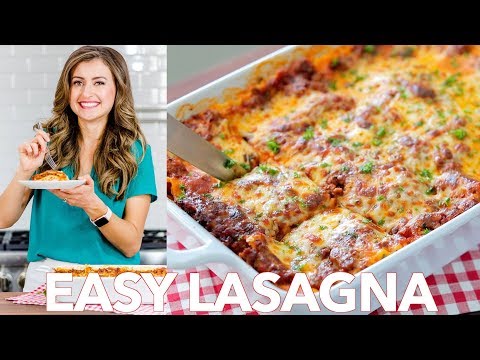
- Rest, then serve. Let the lasagna rest for 20 minutes before cutting. The bubbling will subside and the layers will firm up, so portions are easier to lift from the pan. Add the extra parsley, if desired, just before serving.
Tips for Success
- Keep the sauce thick. If it still looks loose after simmering, give it a few more minutes uncovered. Excess liquid is a common reason lasagna slides apart.
- Drain noodles well. Let them stop steaming before assembly, and keep them in a single layer. A pile of wet noodles can stick together and add water to the dish.
- Spread filling gently. Dollop the ricotta mixture across the noodles, then ease it out with the back of a spoon. Pressing hard can shift or tear the pasta.
- Cover without touching the cheese. A loose foil tent prevents sticking. If the cheese tends to cling, lightly oil the underside of the foil.
- Let the pan rest. Cutting straight from the oven makes the layers more likely to slump. Give it the full 20 minutes, and use a sharp knife for clean portions.
- Season in stages. Parmesan contributes salt, so taste the sauce before adding extra. Salt the pasta water as directed, but do not add more salt to the ricotta unless needed.
Troubleshooting
Why is my lasagna watery? The sauce may not have simmered long enough, the noodles may have carried excess water, or fresh mozzarella may have released moisture. Simmer the sauce until thick, drain noodles thoroughly, and use low-moisture mozzarella for the most dependable texture.
Why are the noodles still firm? They may have been undercooked before layering, or the sauce may have been too thick to provide enough moisture at the edges. Next time, cook the noodles closer to al dente and spread sauce all the way to the sides. If the center is still firm while baking, cover the pan and continue until hot throughout.
Why did the layers slide apart? Lasagna cut while piping hot is soft and loose. Let it rest for 20 minutes, and avoid using an overly thin sauce. A broad spatula helps lift each portion intact.
Why is the top too dark? Ovens and baking dishes vary. Cover the lasagna loosely with foil once the cheese is browned to your liking, then continue baking until the center reaches 165°F.
Why is the bottom stuck? The first layer of sauce may have been too thin or uneven. Spread sauce across the entire bottom of the dish before adding noodles, and allow the cooked lasagna to rest before serving.
Variations
Use Italian sausage: Replace half or all of the ground beef with mild or hot Italian sausage, removed from its casing if necessary. Brown it thoroughly; ground pork should reach 160°F. Sausage is seasoned, so taste the sauce before adding extra salt.
Add vegetables: Finely diced mushrooms, zucchini, or bell pepper can be sautéed with the onion. Cook them until their released moisture has mostly evaporated before adding the tomatoes, which helps keep the sauce thick.
Make it meatless: Leave out the beef and sauté 12 oz chopped mushrooms until browned, or use 2 cups cooked lentils. Simmer the tomato sauce until thick before layering.
Change the cheese: Use part-skim ricotta or replace up to half of the mozzarella with provolone. Keep some low-moisture mozzarella for reliable melting and a well-held top layer.
What to Serve With It
Lasagna is filling, so keep the sides simple. A crisp green salad with a tangy vinaigrette balances the rich cheese and meat sauce. Roasted broccoli, green beans, or sautéed greens make an easy vegetable side. Garlic bread is useful for catching extra sauce, though it is entirely optional. Serve water or a drink of your choice alongside.
Make-Ahead, Storage and Reheating
Make ahead: Assemble the lasagna, cover it tightly, and refrigerate it for up to 24 hours before baking. Because it will be cold, it may need extra oven time; use the bubbling edges and a 165°F center temperature as cues rather than relying only on the original baking time. Do not leave the assembled dish at room temperature for more than 2 hours, or more than 1 hour when the temperature is above 90°F.
Refrigerate leftovers: Refrigerate within 2 hours of cooking in a covered container. Keep leftovers for 3 to 4 days. For quicker cooling, divide a large pan into smaller portions before refrigerating.
Freeze: Freeze cooled portions in airtight, freezer-safe containers for best quality for about 2 to 3 months. You can also freeze the assembled, unbaked lasagna; wrap it tightly and freeze it promptly. Thaw in the refrigerator, not on the counter. A frozen lasagna can also be baked from frozen, but it will take substantially longer; keep it covered at first and check that the center reaches 165°F before serving.
Reheat: Reheat individual portions covered in a 350°F oven until hot throughout, or use a microwave, turning or rearranging the portion as needed for even heating. Reheated leftovers should reach 165°F in the center. Add a spoonful of water or sauce before reheating if the portion looks dry.
Recipe Card
Servings: 8 to 10 Prep time: 40 minutes Cook time: 1 hour 25 minutes Rest time: 20 minutes Total time: 2 hours 25 minutes
Ingredients
- 12 oz dried lasagna noodles
- 2 tbsp olive oil
- 1 medium yellow onion, diced, about 1 cup
- 3 cloves garlic, minced
- 1 lb ground beef
- 2 tbsp tomato paste
- 28 oz crushed tomatoes
- 15 oz tomato sauce
- 1 tsp dried oregano
- 1 tsp dried basil
- 1 tsp kosher salt for the sauce, plus more to taste
- 1/2 tsp black pepper
- 1/4 tsp crushed red pepper flakes, optional
- 15 oz whole-milk ricotta
- 1 large egg
- 1 cup grated Parmesan, divided
- 2 tbsp chopped fresh parsley, plus 1 tsp optional garnish
- 4 cups shredded low-moisture mozzarella, about 16 oz
- 1 tbsp kosher salt for the pasta water
Condensed steps
- Heat oven to 375°F and oil a 9-by-13-inch dish.
- Boil noodles in salted water until just shy of al dente; drain and lay flat.
- Sauté onion in olive oil for 4 to 5 minutes. Add garlic for 30 seconds, then beef; cook until browned and 160°F.
- Stir in tomato paste, tomatoes, and seasonings. Simmer uncovered for 25 to 30 minutes, until thick.
- Mix ricotta, egg, 1/2 cup Parmesan, and parsley.
- Layer sauce, 4 noodles, one-third of the ricotta, sauce, mozzarella, and Parmesan. Repeat to make three noodle layers; finish with sauce and the remaining cheeses.
- Cover and bake for 25 minutes. Uncover and bake 25 to 30 minutes more, until bubbling and 165°F in the center.
- Rest 20 minutes before cutting and serving.
Frequently Asked Questions
Can I use no-boil lasagna noodles?
These instructions are written for regular dried noodles that are boiled first. No-boil noodles need enough moisture and may require different layering or baking directions. For best results with this recipe, use the noodles listed and cook them until just shy of tender.
Can I assemble the lasagna the night before?
Yes. Cover the assembled dish and refrigerate it for up to 24 hours before baking. It will take longer to heat from cold, so check that the center reaches 165°F and that the sauce is bubbling before serving.
Should I cover lasagna while it bakes?
Yes, cover it loosely for the first 25 minutes to help the center heat without overbrowning the cheese. Remove the foil for the final 25 to 30 minutes so the top can brown.
How do I keep lasagna from falling apart?
Use a thick sauce, avoid overcooking the noodles, and let the baked dish rest for 20 minutes. Those steps give the layers time to settle before you cut and lift each portion.
Can I make this without ricotta?
Yes. Cottage cheese can replace ricotta in the same amount; drain it if it looks watery, and pulse it briefly if you prefer a smoother filling. The flavor and texture will be slightly different.
Can I freeze lasagna before baking?
Yes. Assemble it in a freezer-safe dish, wrap it tightly, and freeze promptly. Thaw it in the refrigerator before baking when possible, then bake until the center reaches 165°F. Baking from frozen takes longer, so keep it covered at first and check the center temperature.
How long do leftovers keep?
Store cooked lasagna covered in the refrigerator for 3 to 4 days, or freeze portions for best quality for about 2 to 3 months. Reheat leftovers to 165°F in the center.
Can I make the sauce ahead?
Yes. Cool the sauce promptly, refrigerate it in a covered container for up to 3 to 4 days, and reheat it before assembling. You can also freeze the sauce in a sealed freezer-safe container, then thaw it in the refrigerator.