
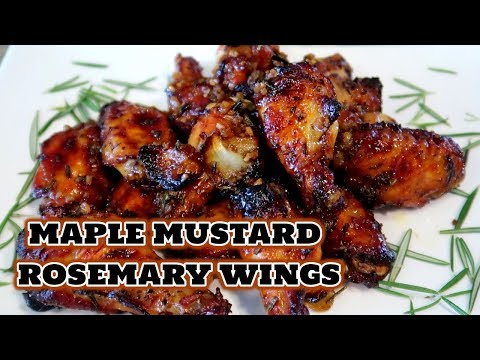
These oven-baked chicken wings get a crisp, well-browned start before they’re coated in a glossy glaze of maple syrup, Dijon, whole-grain mustard, garlic, and a little cider vinegar. The recipe uses a rack and a light dusting of baking powder to help the skin brown without deep-frying.
The glaze is sweet, tangy, and savory, with mustard’s gentle bite balancing the maple. It goes on near the end, so it clings to the wings without spending too long in the oven and scorching. Serve them hot as a shareable appetizer or make them the center of an easy dinner.
Why This Recipe Works
Dry skin is the starting point for crisp wings. Patting the wings thoroughly with paper towels removes surface moisture that would otherwise slow browning. A small amount of baking powder helps the skin brown and crisp as the wings roast; use baking powder, not baking soda, and mix it evenly with the seasonings so there are no bitter-tasting clumps.
A wire rack set over a rimmed baking sheet lets hot air circulate around the wings. The fat can render onto the pan instead of leaving the undersides sitting in it. Turning the wings partway through helps them color more evenly. If you don’t have a rack, parchment-lined baking sheets work—just turn the wings and expect the bottoms to brown a little less.
Maple syrup can darken quickly in a hot oven. Roasting the wings until crisp first, then brushing or tossing them with the cooked glaze for only a few minutes, gives you a shiny coating without overcooking the sugars. Dijon and whole-grain mustard bring both smoothness and texture, while cider vinegar keeps the glaze from tasting overly sweet.
Ingredients
- 2 1/2 lb chicken wings, separated into flats and drumettes, with tips removed
- 1 tsp baking powder, not baking soda
- 1 tsp kosher salt
- 1/2 tsp freshly ground black pepper
- 1/3 cup pure maple syrup
- 3 tbsp Dijon mustard
- 1 tbsp whole-grain mustard
- 1 tbsp apple cider vinegar
- 1 tbsp unsalted butter
- 1 small garlic clove, finely minced, about 1 tsp
- 1/8 tsp cayenne pepper, optional
Ingredient Notes
Chicken wings: Split wings are convenient and cook more evenly than whole wings. If you have whole wings, separate each at the joints with a sharp knife and discard or save the tips for stock. Fresh or thawed wings both work; dry them especially well if they were previously frozen.
Baking powder: This is a small but useful aid for crisp skin. Choose plain baking powder, not baking soda, and avoid baking powder that contains added flavoring. If you prefer not to use it, omit it; the wings will still roast, though the skin may be less crisp.
Maple syrup: Use pure maple syrup for its clear maple flavor and pourable consistency. Pancake syrup can be substituted, but it may taste sweeter and can brown differently. Keep an eye on the glaze during the final oven step either way.
Mustards: Dijon gives the glaze a smooth, sharp mustard flavor. Whole-grain mustard adds little pops of texture. If you only have Dijon, use 4 tablespoons total. If you only have whole-grain mustard, it will work, though the glaze will be more textured.
Vinegar, butter, and garlic: Cider vinegar brightens the sweet maple and mustard; white wine vinegar is a reasonable substitute. Butter rounds out the sauce and helps it coat the wings. Use a neutral-tasting oil instead if you need a dairy-free version. Fresh garlic gives the glaze a savory edge; 1/4 teaspoon garlic powder can stand in if needed.
Cayenne: A small pinch adds warmth without making the wings especially hot. Leave it out for a mild glaze, or add more at the table for people who like extra heat.
Instructions
- Heat the oven and prepare the pan. Set an oven rack in the upper-middle position and heat the oven to 425°F (220°C). Place a wire rack over a rimmed baking sheet. If you don’t have a rack, line the baking sheet with parchment. Starting with a fully heated oven helps the skin brown rather than slowly steam.
- Dry and season the wings. Pat the wings very dry with paper towels. In a large bowl, mix the baking powder, kosher salt, and black pepper; add the wings and toss until the coating is light and even. There should be no visible white clumps. Drying first is important because a damp coating can turn pasty instead of helping the skin crisp.
- Roast until browned, turning once. Arrange the wings in a single layer on the rack, leaving a little space between them. Roast for 25 minutes, turn each wing, then roast for another 15–25 minutes. Look for browned, crisp-looking skin and meat that is cooked through. Check the thickest part of a few wings with an instant-read thermometer, avoiding the bone: poultry must reach at least 165°F (74°C). Wings often become more tender at a higher temperature, so you can continue roasting a few minutes if they are safe but not yet as tender as you like. Their exact timing depends on size and how closely they are spaced.
- Make the glaze while the wings roast. Put the maple syrup, Dijon, whole-grain mustard, vinegar, butter, garlic, and cayenne, if using, in a small saucepan. Set over medium-low heat and stir until the butter melts and the mixture is smooth, about 3–5 minutes. Let it come to a gentle simmer, then take it off the heat. It should look glossy and slightly thickened, not reduced to a sticky candy-like syrup. Set aside about 2 tablespoons in a clean bowl if you want sauce for serving.
- Glaze the wings briefly. Once the wings are browned and cooked, transfer them to a clean large bowl and toss with the remaining glaze. Return them to the rack and roast for 3–5 minutes, just until the glaze looks shiny and clings to the skin. Watch closely: maple syrup can burn if left under high heat too long. For more color, broil for 1–2 minutes instead, keeping the pan nearby and watching continuously.
- Serve hot. Let the wings rest for a few minutes so the glaze settles, then serve with the reserved sauce if desired. Use clean serving utensils and discard any sauce that has touched raw chicken.
Tips for Success
- Get the wings genuinely dry. If time allows, arrange the seasoned wings uncovered on the rack in the refrigerator for 30 minutes to a few hours. This helps dry the skin further; keep raw poultry refrigerated and below ready-to-eat foods.
- Don’t crowd the pan. Wings packed tightly together trap steam and brown less evenly. Use two baking sheets if needed, and rotate their positions in the oven during roasting.
- Measure baking powder carefully. More is not better. Too much can leave an unpleasant taste, so use a level teaspoon and distribute it thoroughly.
- Use a thermometer for doneness. Check a few of the largest wings, inserting the thermometer into the thickest meat without touching bone. The safe minimum for poultry is 165°F (74°C); color alone is not a reliable temperature check.
- Keep the glaze gentle. A short, gentle simmer combines the ingredients without reducing the maple syrup too far. If it thickens as it sits, stir in 1–2 teaspoons of warm water.
- Glaze only cooked wings. Add the glaze after roasting and use a clean bowl and utensils. This avoids spreading raw-chicken juices into sauce meant for serving.
- Serve soon after glazing. The wings are crispest just after their final oven finish. If they need to wait, keep them warm briefly in a low oven and add any reserved sauce at the table.
Troubleshooting
The skin is pale or soft. The wings may have been damp, crowded, or sitting directly in rendered fat. Pat them dry before seasoning, leave space between them, and use a rack when possible. If they are already cooked through, return them to a 425°F oven for a few minutes before glazing.
The wings are cooked but not tender enough. The safe minimum is 165°F, but wings can feel more tender when cooked beyond that point. Continue roasting in short intervals and check again; avoid relying on a fixed time if the wings are large.
The glaze is too thick. Warm it gently and stir in warm water a teaspoon at a time until it coats a spoon and tosses easily. Don’t add a large splash at once, which can make it watery.
The glaze tastes too sweet. Stir in a little extra cider vinegar or Dijon, a small amount at a time. A pinch of salt can also sharpen the overall flavor. Adjust before tossing the glaze with the wings.
The glaze is getting dark too fast. Remove the wings from the oven as soon as the coating is glossy and set. Skip the broiler, which can scorch maple quickly, and finish with a brief bake instead.
The wings stick to the rack. Let them roast longer before turning; skin that has browned usually releases more easily. A thin layer of neutral oil on the rack can help, but avoid putting so much oil on the wings that it interferes with the dry coating.
Variations
More heat: Increase the cayenne to 1/4 teaspoon, or serve the wings with hot sauce at the table. Adding heat to the glaze gradually makes it easier to keep the batch mild enough for everyone.
Smoky maple mustard: Add 1/2 teaspoon smoked paprika to the dry seasoning. It complements the maple and mustard without changing the oven method.
Herby version: Stir 1 teaspoon finely chopped fresh thyme into the finished glaze, or add 1/2 teaspoon dried thyme while it simmers. Keep the amount modest so the herbs don’t overwhelm the mustard.
Boneless chicken: Boneless thighs can be cut into large pieces and roasted on a lined pan, but they will cook faster than wings. Check with a thermometer and cook poultry to at least 165°F (74°C); begin checking early and glaze only once the chicken is cooked through.
Gluten-free: The listed ingredients are commonly available in gluten-free forms, but check the labels on mustard and baking powder if gluten is a concern. Ingredients and manufacturing practices can vary.
What to Serve With It
For a casual spread, serve the wings with crunchy celery and carrot sticks, plus a cool dip such as ranch or blue cheese dressing. The fresh vegetables and creamy dip give the sweet-tangy glaze a contrasting bite. Put napkins within reach; the glaze is meant to be eaten with your hands.
To make the wings part of a meal, pair them with a crisp green salad, roasted potatoes, cornbread, or simple coleslaw. Steamed rice or plain buttered noodles are also good choices when you want something that catches any extra sauce. Keep sides simply seasoned so they don’t compete with the mustard and maple.
Make-Ahead, Storage and Reheating
Make ahead: You can mix the dry seasoning and make the glaze up to 2 days ahead; store them separately in covered containers in the refrigerator. The glaze may firm up when cold, so warm it gently and stir before using. Wings can be seasoned and left uncovered on the rack in the refrigerator for a few hours, but cook raw poultry within 1–2 days of purchase or thawing. Keep it covered or positioned so it cannot drip onto other food.
Refrigerate leftovers: Refrigerate cooked wings within 2 hours of cooking, in a shallow covered container. They keep for 3–4 days in the refrigerator. If the room or outdoor temperature is above 90°F (32°C), refrigerate within 1 hour. Store any untouched reserved glaze separately; discard sauce that has been in contact with raw chicken or left out too long.
Freeze leftovers: For best quality, freeze cooked wings in an airtight, freezer-safe container for about 3–4 months. Thaw in the refrigerator, not on the counter. The skin will soften during storage, but reheating in the oven can bring back some crispness.
Reheat: Arrange refrigerated or thawed wings in one layer on a baking sheet and heat in a 375°F (190°C) oven until hot throughout, turning once if needed. Check the thickest pieces with a thermometer; reheated leftovers should reach 165°F (74°C). Add a little fresh glaze after reheating if you want a brighter, stickier finish. A microwave works for reheating but softens the skin.
Recipe Card
Servings: 4 as an appetizer Prep time: 15 minutes Cook time: 45–55 minutes Total time: about 1 hour–1 hour 10 minutes
Ingredients
- 2 1/2 lb chicken wings, separated into flats and drumettes, tips removed
- 1 tsp baking powder
- 1 tsp kosher salt
- 1/2 tsp freshly ground black pepper
- 1/3 cup pure maple syrup
- 3 tbsp Dijon mustard
- 1 tbsp whole-grain mustard
- 1 tbsp apple cider vinegar
- 1 tbsp unsalted butter
- 1 small garlic clove, finely minced, about 1 tsp
- 1/8 tsp cayenne pepper, optional
Condensed Instructions
- Heat oven to 425°F (220°C). Set a wire rack over a rimmed baking sheet, or line the sheet with parchment.
- Pat wings very dry. Toss with baking powder, salt, and pepper, then arrange in one layer on the rack.
- Roast 25 minutes, turn, and roast another 15–25 minutes, until browned and at least 165°F (74°C) at the thickest part.
- Meanwhile, gently simmer maple syrup, both mustards, vinegar, butter, garlic, and optional cayenne for 3–5 minutes, stirring until smooth. Reserve 2 tablespoons in a clean bowl if desired.
- Toss cooked wings with the remaining glaze. Return to the oven for 3–5 minutes until glossy, watching carefully so the maple doesn’t burn. Serve hot.
Frequently Asked Questions
Can I use frozen wings?
Yes, but thaw them completely in the refrigerator before cooking, then pat them very dry. Cooking partially frozen wings can make the timing uneven and the skin harder to crisp. Don’t thaw raw chicken on the counter.
Do I have to use a wire rack?
No. A rack helps hot air circulate and lets fat drip away, but a parchment-lined baking sheet works. Turn the wings during roasting and give them space; the undersides may be less crisp without a rack.
Can I make these wings in an air fryer?
Yes, if your air fryer fits the wings in a single layer without crowding. Air fry at 400°F (205°C), turning during cooking, until browned and at least 165°F (74°C) inside. Air fryers vary, so begin checking early. Toss with the glaze only after the wings are cooked, then return them briefly to set it.
Can I use honey instead of maple syrup?
Honey can replace the maple syrup in the same amount, though the flavor will be different and honey can brown quickly. Keep the finishing step short and watch the wings closely.
Can I make the glaze ahead?
Yes. Refrigerate it in a covered container for up to 2 days. Warm it gently and stir until smooth before tossing. Keep a portion for serving separate before it touches cooked wings, and never reuse sauce that has contacted raw poultry.
How do I know when the wings are done?
Use an instant-read thermometer in the thickest part of a few wings without touching bone. Poultry is safe at 165°F (74°C). If you prefer a more tender texture, continue cooking beyond that minimum and check again.
Can I cook the wings ahead and glaze them later?
For the best texture, roast and glaze them close to serving. If you need to cook ahead, refrigerate the cooked wings promptly and reheat them in a 375°F (190°C) oven until they reach 165°F (74°C), then toss with warmed glaze and return them briefly to the oven.
Are these wings very spicy?
No. The optional cayenne adds only mild warmth at the listed amount, and you can leave it out entirely. For a hotter batch, add cayenne gradually or offer hot sauce on the side.