
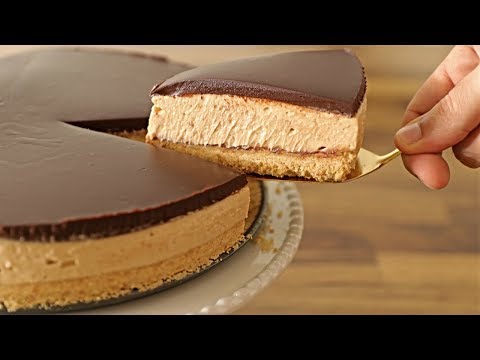
This no bake peanut butter cheesecake has a buttery graham cracker crust and a smooth, rich filling made with cream cheese, peanut butter, and softly whipped cream. It sets in the refrigerator, so there’s no oven to turn on and no water bath to manage.
The key is to use softened cream cheese, cold heavy cream, and enough chilling time. The finished cheesecake is creamy but sliceable, with salty-sweet peanut butter flavor balanced by the crisp, lightly sweet crust. Add a thin chocolate topping if you like a little extra contrast.
Why This Recipe Works
The crust is a simple mixture of graham cracker crumbs, melted butter, and sugar. Pressing it firmly into the pan gives the crumbs a compact base that holds together when sliced. A short chill before filling helps the butter firm up, so the crust is less likely to crumble as you spread the filling.
Softened cream cheese blends smoothly with peanut butter. If the cream cheese is still cold, it tends to leave small lumps that are hard to work out without overmixing. The heavy cream is whipped separately to stiff peaks, then folded into the peanut butter mixture. That adds air and gives the chilled filling a lighter texture without gelatin or baking.
Finally, the cheesecake needs a long, uninterrupted chill. It will feel soft when first assembled; time in the refrigerator firms the butter in the crust and helps the filling become neat enough to cut. Plan on at least 8 hours, with overnight chilling giving the most dependable slices.
Ingredients
- 1 ½ cups graham cracker crumbs
- ½ cup unsalted butter, melted
- ¼ cup granulated sugar
- 24 oz full-fat cream cheese, softened
- 1 cup creamy peanut butter, preferably conventional rather than separated natural peanut butter
- 1 cup powdered sugar, sifted if lumpy
- 1 tsp vanilla extract
- 1 ½ cups cold heavy whipping cream
- 4 oz semisweet chocolate, finely chopped, optional topping
- ⅓ cup heavy cream, for the optional chocolate topping
- 1 tbsp chopped roasted peanuts, optional garnish
Ingredient Notes
Graham cracker crumbs: Fine, even crumbs make a crust that presses together cleanly. Crush whole crackers in a food processor or seal them in a sturdy bag and roll over them with a rolling pin. If using a different crumb, such as digestive biscuits, keep the amount the same by volume; the flavor and sweetness may vary.
Butter and sugar: Melted unsalted butter binds the crumbs as it cools. Granulated sugar adds sweetness and helps the crust hold together. If you only have salted butter, you can use it, though the crust will taste a little saltier.
Cream cheese: Use full-fat cream cheese sold in blocks, not whipped cream cheese or a soft spread from a tub. Block cream cheese is firmer and gives the filling a better chance of setting. Let it soften until a finger leaves an easy dent, but do not warm it until greasy or melted.
Peanut butter: Creamy conventional peanut butter blends evenly into the filling. Natural peanut butter can separate and may make the texture oily or loose, especially if it is not thoroughly stirred. For a less sweet filling, you can reduce the powdered sugar slightly, but keep enough for a balanced flavor and structure.
Powdered sugar and vanilla: Powdered sugar dissolves readily into the cream cheese mixture and keeps the filling smooth. Sifting is useful if yours has hard lumps. Vanilla rounds out the peanut butter flavor; use the same amount of vanilla bean paste if that is what you have.
Heavy whipping cream: Use cold cream with enough milk fat to whip. It should be cold when it goes into the bowl; warm cream will take longer to whip and may not hold its shape as well. Do not substitute milk, half-and-half, or a non-dairy beverage for the whipped cream in this formula.
Optional chocolate topping: Semisweet chocolate offsets the sweet, creamy filling. Chocolate chips can be used, though chopped baking chocolate often melts more smoothly. The peanuts add crunch; leave them off if you prefer a plain top or need to avoid that garnish.
Instructions
- Prepare the pan and crust. Line the base of a 9-inch springform pan with parchment, if desired, and lightly grease the sides. Stir the graham cracker crumbs and granulated sugar together, then mix in the melted butter until the crumbs look evenly moistened, like damp sand. Press the mixture firmly over the bottom of the pan and slightly up the sides if you like. Use the flat bottom of a measuring cup to compact it. Refrigerate for 15 to 20 minutes, until firm to the touch. No oven is used for this recipe; baking the crust would change the no-bake method and is not necessary.
- Beat the cream cheese mixture. In a large bowl, beat the softened cream cheese on medium speed for about 1 to 2 minutes, scraping the bowl once or twice, until smooth with no visible lumps. Add the peanut butter, powdered sugar, and vanilla. Beat on low at first so the sugar does not puff out, then on medium for about 1 minute, stopping when the mixture is even and creamy. Avoid prolonged beating, which can make the filling looser than needed.
- Whip the cream. In a separate clean bowl, beat the cold heavy cream on medium-high speed for about 2 to 4 minutes, checking often near the end. Stop when it forms stiff peaks: when you lift the beaters, the peak should stand upright with only a slight curl. If the cream looks grainy or clumpy, it has been overwhipped; stop before that point.
- Fold the cream into the filling. Add about one-third of the whipped cream to the peanut butter mixture and stir gently to loosen it. Add the remaining cream in two additions, folding with a flexible spatula until no large white streaks remain. Use broad strokes from the bottom of the bowl up and over the mixture. The filling should look fluffy and uniform, not runny. Folding rather than beating helps preserve the air that gives the cheesecake its light texture.
- Fill and chill. Spoon the filling onto the cold crust and spread it into an even layer, smoothing the top. Tap the pan gently on the counter once or twice to settle large air pockets. Cover without letting the wrap touch the surface, and refrigerate for at least 8 hours, preferably overnight. The center should feel set when lightly touched and should not ripple when the pan is moved. Keep the refrigerator at 40°F or below.
- Add the optional chocolate topping. Once the cheesecake is set, put the chopped chocolate in a heatproof bowl. Warm the ⅓ cup heavy cream in a small saucepan over low heat until steaming but not boiling, or heat it in short microwave intervals. Pour it over the chocolate and let stand for 2 minutes, then stir slowly from the center until smooth. If a few pieces remain, warm the mixture briefly and stir again. Let the topping cool until it is fluid but no longer hot, then spread it over the cheesecake. Sprinkle with chopped peanuts, if using, and refrigerate for about 20 to 30 minutes until the topping is set.
- Release and slice. Run a thin knife around the inside edge of the pan before releasing the springform ring. For clean slices, use a long sharp knife dipped in hot water and wiped dry between cuts. The cheesecake should hold its shape while the filling stays creamy. Keep the cake chilled between servings.
Tips for Success
- Soften the cream cheese before mixing. Set it out about 30 to 60 minutes ahead, depending on room temperature. It is ready when it gives easily to a finger but still feels cool and holds its shape.
- Keep the whipping cream cold. If your kitchen is warm, chill the mixing bowl and beaters for 10 to 15 minutes first. Cold equipment is especially helpful when the cream is taking a while to thicken.
- Measure crumbs after crushing. The volume of whole crackers differs from the volume of fine crumbs. Measure 1 ½ cups once the crackers are crushed for the intended crust ratio.
- Press the crust evenly. Pay attention to the edge where the base meets the pan sides. A thin or loose patch there can break when you lift out a slice.
- Fold gently, but thoroughly. A few large white streaks mean the filling is not yet even, while vigorous mixing knocks out air. Scrape the bottom and sides as you fold so the texture stays consistent.
- Give it the full chill. A few hours may make the outside seem firm while the center is still soft. Overnight chilling gives the whole cake time to set and makes serving easier.
- Use a warm, clean knife for serving. Dip the blade in hot water, wipe it dry, and repeat between cuts. This helps the knife pass through both the filling and any chocolate topping without dragging crumbs across the surface.
Troubleshooting
The filling has lumps. The cream cheese was probably too cold or not beaten smooth before the other ingredients were added. If you notice lumps before folding in the whipped cream, pause and beat the cream cheese mixture until smooth, scraping the bowl. Once the whipped cream is folded in, avoid switching back to vigorous beating.
The whipped cream will not form peaks. Check that the cream is cold and that the bowl and beaters are clean and free of grease. Continue beating while watching closely. If the cream is warm, chill it and the bowl briefly, then try again. Milk or half-and-half will not whip into the same structure.
The cheesecake is too soft to slice. First give it more time in the refrigerator; a soft center often needs a full overnight chill. Also check that you used block cream cheese and heavy whipping cream, and that the cream reached stiff peaks. For the next batch, avoid natural peanut butter that has separated and measure the ingredients accurately.
The crust crumbles when cut. The crumbs may have been too coarse, the butter may not have coated them evenly, or the mixture may not have been pressed firmly enough. Compact the crumbs well and chill the crust before adding filling. For serving, use a sharp knife and wipe it between slices.
The chocolate topping is thick or streaky. The cream may not have been warm enough to melt all the chocolate, or the mixture may have been stirred too quickly. Let it stand for another minute, then stir gently from the center outward. If needed, warm it in very short intervals, stirring each time, until smooth. Let it cool before spreading so it does not soften the filling.
Variations
Chocolate-cookie crust: Replace the graham cracker crumbs with 1 ½ cups finely crushed chocolate sandwich cookie crumbs. Start with the same butter amount, then add only enough additional melted butter if the crumbs still seem dry; sandwich cookies contain their own filling, so the texture can vary.
Chocolate swirl: Leave off the full topping and drizzle 2 to 3 tablespoons of cooled melted chocolate over the filled cheesecake. Drag a skewer lightly through the lines once or twice for a simple swirl. Do this before chilling so the pattern sets in place.
Crunchy peanut butter: Use crunchy peanut butter for a little texture, provided it is a conventional, well-stirred style that is not oily or separated. The filling will be less uniformly smooth.
Mini cheesecakes: Divide the crust among paper-lined muffin cups and press it down firmly. Add the filling, then chill until set; smaller portions may set sooner, so check them after about 4 hours. The exact time depends on the size and depth of the cups.
Salted finish: Sprinkle a small pinch of flaky salt over the chocolate topping just before it sets. This is optional and best used lightly, since the peanut butter and crust already bring flavor and seasoning.
What to Serve With It
This cheesecake is rich, so small slices are satisfying. Serve it on its own, or add fresh strawberries, raspberries, or sliced banana for a fresh, tart or fruity contrast. A little unsweetened whipped cream also works if you want a softer finish, though it is not necessary.
For a dessert table, pair it with coffee, black tea, or cold milk. If you have added the chocolate topping, keep extra garnishes simple: a few chopped peanuts or a small amount of chocolate shavings is plenty. Serve the cake cold rather than letting it sit out to soften.
Make-Ahead, Storage and Reheating
Make ahead: This is an ideal dessert to prepare the day before serving. Chill it covered overnight, and add the chocolate topping either after the filling has set or several hours before serving. If using a fresh fruit garnish, add that shortly before serving so it stays neat.
Refrigerate: Keep the cheesecake covered in the refrigerator at 40°F or below. For food safety, do not leave it at room temperature for more than 2 hours, or more than 1 hour when the temperature is above 90°F. Store leftovers in the refrigerator and use within 3 to 4 days.
Freeze: For longer storage, freeze the cheesecake whole or in individual slices. Chill it until firm, wrap it well, and place it in a freezer-safe container. For best texture, use within about 2 months. Thaw covered in the refrigerator overnight; avoid thawing it on the counter. The chocolate topping may lose some of its shine after freezing, but the dessert remains suitable to serve when kept properly frozen and thawed in the refrigerator.
Reheating: There is no reheating step. Serve it chilled. Let a frozen portion thaw in the refrigerator until it is easy to cut and creamy, then return any remaining portions to the refrigerator promptly.
Recipe Card
Servings: 12 slices
Prep time: 30 minutes
Cook time: 0 minutes; no oven needed
Chill time: At least 8 hours
Total time: About 8 hours 30 minutes, plus optional topping set time
Ingredients
- 1 ½ cups graham cracker crumbs
- ½ cup unsalted butter, melted
- ¼ cup granulated sugar
- 24 oz full-fat cream cheese, softened
- 1 cup creamy peanut butter
- 1 cup powdered sugar
- 1 tsp vanilla extract
- 1 ½ cups cold heavy whipping cream
- 4 oz semisweet chocolate, finely chopped, optional
- ⅓ cup heavy cream, optional topping
- 1 tbsp chopped roasted peanuts, optional
Condensed steps
- Mix the graham crumbs, melted butter, and granulated sugar. Press firmly into the base of a 9-inch springform pan and chill for 15 to 20 minutes.
- Beat softened cream cheese until smooth. Beat in peanut butter, powdered sugar, and vanilla until creamy.
- Whip cold heavy cream to stiff peaks. Fold it gently into the peanut butter mixture until evenly combined.
- Spread the filling over the crust. Cover and refrigerate at least 8 hours, preferably overnight, until the center is set.
- For the optional topping, pour steaming ⅓ cup cream over chopped chocolate. Rest 2 minutes, stir smooth, cool until fluid but not hot, then spread over the cheesecake. Garnish with peanuts if desired.
- Chill the topping until set, release the pan, and slice with a warm, dry knife. Serve cold.
Frequently Asked Questions
Can I make this cheesecake without a springform pan?
Yes. A 9-inch deep pie plate works, though the sides may be harder to remove cleanly and the slices will be served directly from the plate. You can also use a square pan lined with parchment, leaving extra parchment over the sides to help lift the chilled cheesecake out.
Does the cream cheese need to be at room temperature?
It should be softened, not warm. Cream cheese that is cool but easy to press blends more smoothly than cream cheese straight from the refrigerator. If it is still firm, cut it into smaller pieces and give it more time; avoid melting it in the microwave.
Can I use natural peanut butter?
Conventional creamy peanut butter is the more reliable choice because it is less likely to separate in the filling. If you use natural peanut butter, stir it thoroughly until fully emulsified and check that it is not oily or runny. The final texture can still be softer than with conventional peanut butter.
How long does no bake peanut butter cheesecake need to chill?
Allow at least 8 hours in the refrigerator, and overnight is best for clean slices. A shorter chill may firm the edges while leaving the center too soft. Keep the cheesecake covered and the refrigerator at 40°F or below while it sets.
Can I make it without the chocolate topping?
Absolutely. The topping is optional and is not needed for the filling to set. Serve the cheesecake plain, or finish it with chopped peanuts, a little whipped cream, or fresh fruit just before serving.
Why is my cheesecake not firm?
It may need more chilling time, or the whipped cream may not have reached stiff peaks before it was folded in. The choice of ingredients matters too: block cream cheese and heavy whipping cream provide a firmer result than tub-style cream cheese or lower-fat cream substitutes.
Can I freeze individual slices?
Yes. Freeze slices until firm, then wrap them individually and store them in a freezer-safe container. Thaw them covered in the refrigerator. Freezing is convenient for portions, although the topping may look less glossy after thawing.
Can I use a store-bought graham cracker crust?
You can, but this filling makes a generous cheesecake, so a standard ready-made crust may not hold all of it. If your crust is smaller or shallow, fill it only to the rim and chill any extra filling in small cups. The homemade crust in the recipe is sized for a 9-inch springform pan.