
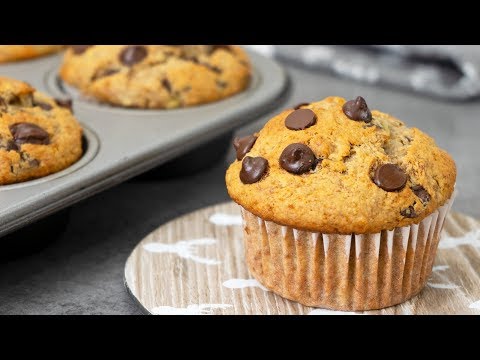
These oat flour muffins are soft-centered, lightly sweet breakfast muffins made with a short list of everyday ingredients. Choose blueberries, chopped nuts, or chocolate chips for the add-ins, and use dairy milk or an unsweetened dairy-free alternative.
The key is giving the batter a few minutes to rest before baking: oat flour absorbs liquid as it sits, which helps the muffins bake up evenly instead of crumbly. Expect a tender, pleasantly hearty crumb with a mild oat flavor and golden tops.
Why This Recipe Works
Oat flour behaves differently from wheat flour because it contains no gluten to give a muffin its familiar stretchy structure. Eggs help hold this batter together, while baking powder provides lift. Measuring the flour carefully and avoiding an overly vigorous mix both help keep the crumb tender rather than compact.
A short rest after mixing lets the oat flour take up some of the milk. The batter will thicken slightly, making it easier to portion and helping the muffins hold their shape. It is a small step, but especially useful with homemade oat flour, which can vary in fineness.
Oil keeps the muffins moist after cooling, and a moderate oven temperature gives the centers time to set before the tops become too dark. Honey works in place of sugar, though it makes the muffins a little moister and more deeply browned, so the milk amount and visual doneness cues matter.
Ingredients
- 2 cups oat flour, spooned into the measuring cup and leveled
- 1/2 cup granulated sugar or 1/2 cup honey
- 1 tablespoon baking powder
- 1/2 teaspoon fine salt
- 1 cup milk or unsweetened dairy-free milk; use 3/4 cup if using honey
- 1/2 cup vegetable oil or melted coconut oil, cooled slightly
- 2 large eggs
- 1 teaspoon vanilla extract
- 1 cup add-ins, such as blueberries, chopped nuts, or chocolate chips
Ingredient Notes
Oat flour: Use finely ground oat flour for the most even crumb. If making it at home, process rolled oats until powdery, then measure the flour after grinding. Avoid packing it into the measuring cup; too much can make the muffins dry and dense. Oat flour is not interchangeable cup-for-cup with wheat flour in every recipe, but this recipe is built around it.
Sugar or honey: Granulated sugar gives a straightforward sweetness and a lightly crisp top. Honey adds a rounded flavor and encourages faster browning. When using honey, reduce the milk to 3/4 cup as listed, and begin checking the muffins at the early end of the baking range.
Milk: Dairy milk or unsweetened oat, soy, or almond milk can work. Choose an unsweetened variety so the muffins do not become sweeter than intended. Different plant milks vary in thickness, but the batter should be thick and scoopable, not pour like a drink.
Oil: Neutral vegetable oil keeps the crumb soft and lets the oat and add-in flavors come through. Melted coconut oil is also suitable; let it cool until warm rather than hot before combining it with the eggs. If the eggs or milk are very cold, coconut oil may firm into little flecks, so room-temperature ingredients are helpful.
Eggs and leavening: The eggs add structure and moisture. Baking powder supplies lift, so check that it is fresh and measure it accurately. Do not substitute baking soda alone: this recipe does not contain enough acidic ingredients to activate it reliably.
Add-ins: Blueberries, chopped walnuts or pecans, and chocolate chips are easy choices. Keep the total to about 1 cup so the batter still has enough structure to rise around them. If using juicy berries, fold them in gently at the end.
Instructions
- Heat the oven and prepare the pan. Set the oven to 375°F (190°C). Line a standard 12-cup muffin pan with paper liners, or grease the wells thoroughly. Let the oven finish preheating before the pan goes in; a fully heated oven helps the baking powder lift the batter promptly.
- Combine the dry ingredients. In a large bowl, whisk together the oat flour, baking powder, and salt until no clumps of baking powder remain. Evenly distributed leavener helps the muffins rise consistently rather than forming isolated bitter spots.
- Whisk the wet ingredients. In a second bowl, whisk the sugar (or honey), milk, oil, eggs, and vanilla until blended. With honey, use 3/4 cup milk. The mixture need not be foamy, but the eggs should be broken up and the oil should look evenly incorporated.
- Make the batter. Pour the wet mixture into the dry ingredients and stir with a spatula just until no dry pockets remain. Fold in the add-ins with a few strokes. The batter will be thick and may look slightly grainy; that is normal for oat flour. Mixing until perfectly smooth can make the muffins heavy.
- Let the batter rest. Leave it in the bowl for 5 minutes while the oven finishes heating. It should thicken a little as the oat flour absorbs liquid. If it becomes unusually stiff, fold in 1 tablespoon of milk at a time, stopping when it is scoopable; avoid adding extra liquid automatically.
- Fill the muffin pan. Divide the batter evenly among the 12 prepared wells, filling each about two-thirds to three-quarters full. A spoon or a spring-loaded scoop makes portioning easier. Wipe away any batter on the pan between wells, since it can scorch.
- Bake until set. Bake for 18 to 22 minutes, rotating the pan once if your oven browns unevenly. The tops should look dry and lightly golden, and a toothpick inserted in the center of a muffin should come out clean or with a few moist crumbs, not wet batter. If checking with a food thermometer, the center should reach at least 160°F for egg safety; continue baking if the crumb still looks wet.
- Cool before serving. Let the muffins rest in the pan for 5 minutes, then transfer them to a wire rack. This brief cooling period helps the tender muffins firm enough to lift without breaking. Let them cool further before storing so trapped steam does not make the tops damp.
Servings: 12 muffins. Prep time: 15 minutes. Cook time: 18–22 minutes. Total time: about 40 minutes, including the short batter rest and cooling in the pan.
Tips for Success
- Measure oat flour lightly. Fluff it first, spoon it into the cup, and level the top. Scooping straight from a packed bag can add more flour than intended and lead to dry muffins.
- Use a light hand once the wet and dry ingredients meet. Stir only until combined. A few small lumps are fine; prolonged mixing does not improve an oat-flour batter.
- Give the batter its five-minute rest. This allows the flour to hydrate and makes the texture more predictable. Do not leave it sitting for a long time, since the baking powder starts working once wet.
- Bring cold ingredients closer to room temperature. This is particularly useful with melted coconut oil, which can solidify when it meets very cold milk or eggs.
- Fold in delicate fruit last. Use a spatula and turn the batter gently so blueberries stay intact and do not streak the whole bowl.
- Check early if using honey or dark add-ins. Honey browns readily, and chocolate can make visual cues harder to read. Use the toothpick test in the center rather than judging only by color.
- Let the muffins cool before sealing. Warm muffins release steam. Packing them while hot can leave the tops sticky and the paper liners damp.
Troubleshooting
The muffins are dry or crumbly. The most common cause is too much flour or baking them too long. Spoon and level the oat flour, and begin checking at 18 minutes. Also make sure the full amount of oil and eggs went into the batter; oat flour needs that moisture and binding.
The centers are gummy. They may need a few more minutes in the oven, or the muffins may have been stored before cooling and trapped steam. Check the center of a muffin rather than one near the edge, and cool the batch on a rack. If the toothpick shows wet batter, return the pan to the oven for a few minutes.
The muffins did not rise much. Check the baking powder’s freshness and measure it with a level spoon. Also make sure the oven was fully preheated and the batter was not left standing for a long time after mixing. Oat flour muffins are naturally more compact than wheat muffins, but they should still have a lifted top.
The tops browned before the centers cooked. This can happen with honey, an oven that runs hot, or a dark-colored pan. Check the oven temperature with an oven thermometer if you have one. If the tops are already dark, loosely cover the pan with foil and continue baking until the centers are set.
The batter seems too thick. Oat flour can absorb liquid quickly, especially if it is finely milled. After the five-minute rest, fold in milk 1 tablespoon at a time until it is thick but easy to portion. A small variation in consistency is expected; avoid thinning it until it pours.
The muffins stick to the liners. Oat-based muffins can cling while hot. Let them cool fully before peeling the paper away. Greasing the pan instead of using liners is another option, as long as the wells are coated well.
Variations
Blueberry: Fold in 1 cup fresh blueberries. Frozen berries can also be used straight from the freezer; do not thaw them first, since thawing releases extra juice and may streak the batter. The muffins may need an extra minute or two if the berries are very cold.
Nut and cinnamon: Use 3/4 cup chopped walnuts or pecans and add 1/2 teaspoon ground cinnamon to the dry ingredients. Toasted nuts have a more pronounced flavor, but cool them completely before adding them to the batter.
Chocolate chip: Fold in 1 cup chocolate chips, or use 1/2 cup chips with 1/2 cup chopped nuts. Since chocolate is sweet, sugar still works well at the listed amount; reduce it slightly only if you prefer a less-sweet muffin.
Apple spice: Fold in 3/4 cup finely diced apple and 1/2 teaspoon cinnamon. Keep the apple pieces small so they soften during the short bake. Larger amounts of juicy fruit can make the center take longer to set.
Less sweet: Reduce the granulated sugar to 1/3 cup for a more breakfast-like, gently sweet muffin. Avoid reducing the oil or eggs to compensate; they contribute moisture and structure, not just sweetness.
What to Serve With It
Serve a warm muffin with plain yogurt, cottage cheese, or a hard-cooked egg for a more substantial breakfast. Fresh fruit makes a simple side, while nut butter or a little butter works well spread on a split muffin. For a lighter pairing, have one with coffee, tea, or a glass of milk.
These muffins are also easy to pack for a commute or school morning. If serving them as part of brunch, pair them with savory eggs, fruit, and another option that is not sweet so the meal has a balance of flavors.
Make-Ahead, Storage and Reheating
You can measure the dry ingredients a day ahead and keep them covered at room temperature. For the best rise, mix the wet ingredients with the dry ingredients shortly before baking rather than refrigerating the mixed batter overnight; the oat flour will continue absorbing liquid, and the baking powder will lose some of its initial lift while the batter waits.
Cool baked muffins completely before storing. Keep them in a covered container in the refrigerator at 40°F (4°C) or below and use within 3 to 4 days. Refrigeration can make the crumb feel firmer, so warm individual muffins briefly in the microwave or in a 300°F (150°C) oven until heated through. Avoid overheating, which can dry them out.
To freeze, wrap cooled muffins individually or place them in a freezer-safe container with the air pressed out, then freeze for up to 3 to 4 months for best quality. Thaw overnight in the refrigerator or at room temperature, then warm gently if desired. Do not refreeze muffins that have been thawed and left out for an extended time.
Frequently Asked Questions
Can I make oat flour muffins without a mixer?
Yes. A whisk and a flexible spatula are all you need. Whisk the wet and dry ingredients separately, then stir them together by hand just until combined.
Can I use homemade oat flour?
Yes. Grind rolled oats in a blender or food processor until fine, then measure the flour. Very coarse flour can make a rougher crumb, and homemade flour may absorb liquid a little differently, so use the batter cues and add a small splash of milk only if needed.
Can I use honey instead of sugar?
Yes. Use 1/2 cup honey and reduce the milk to 3/4 cup. The muffins will taste a little different and brown more quickly, so start checking them at 18 minutes.
Can I make these muffins dairy-free?
Yes. Choose an unsweetened dairy-free milk and use vegetable oil or coconut oil. Check that any chocolate chips or other packaged add-ins are suitable for your needs.
Are these muffins gluten-free?
Oats do not naturally contain wheat, but oats and oat flour can be exposed to gluten-containing grains during growing or processing. If gluten avoidance is important, choose oat flour labeled gluten-free and check the labels on the baking powder and add-ins as well.
Can I bake this batter as a loaf?
A loaf pan changes the depth and baking time, so the muffin timing will not apply. For the most reliable result, use a loaf recipe designed for oat flour rather than transferring this batter without adjusting the bake and checking the center carefully.
How do I know the muffins are done without a thermometer?
The tops should be set and lightly golden, and a toothpick inserted into the center should come out clean or with a few moist crumbs. Wet batter on the toothpick means they need more time. Check a center muffin, since muffins near the edge can finish first.
Can I freeze the batter instead of baked muffins?
Baked muffins freeze more reliably. Freezing mixed batter can affect the lift from baking powder and the texture of the oat flour as it thaws. Bake the muffins first, cool them completely, then freeze and reheat portions as needed.