
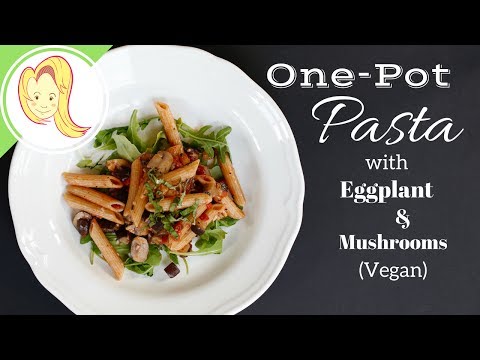
This one-pot pasta is the kind of dinner that saves a busy weeknight: everything cooks together in a single pot, and the starchy pasta water becomes the sauce. The eggplant softens into silky, almost creamy pieces, the mushrooms turn deeply savory, and the tomatoes and herbs tie it all together. It’s a hearty, vegetable-forward meal that feels a little special but comes together in about 30 minutes.
What makes this version work is the technique: instead of boiling pasta separately and making a sauce in another pan, you cook the pasta directly in the broth with the vegetables. The pasta releases its starch into the liquid, creating a naturally thickened, glossy sauce that clings to every strand. The eggplant and mushrooms soak up the broth as they cook, becoming tender and rich. The result is a comforting, rustic dish that tastes like it simmered for hours, but it’s ready before you’ve finished cleaning the cutting board.
Why This Recipe Works
- One pot, less cleanup: You cook everything in a single pot, from sautéing the aromatics to simmering the pasta. No colander, no extra saucepot, no mess.
- Starchy pasta water creates the sauce: As the pasta cooks in the broth, it releases starch, which thickens the liquid into a silky, clinging sauce. This is the same principle behind classic pasta cooking, but here it happens all in one pot.
- Eggplant and mushrooms add deep flavor: Sautéing the vegetables first builds a savory base. The mushrooms brown and develop umami, while the eggplant softens and becomes creamy, adding body to the sauce.
- Dried herbs are perfect here: Oregano and basil stand up to the long simmer and meld with the tomatoes. They don’t need to be fresh to taste great in this rustic dish.
- Flexible and forgiving: You can swap the pasta shape, use water instead of broth, or add greens at the end. The method is forgiving, so it’s great for beginners.
Ingredients
- 8 ounces pasta (spaghetti, penne, or fusilli)
- 1 medium eggplant (about 1 pound), diced into 1-inch pieces
- 8 ounces mushrooms (cremini or button), sliced
- 1 medium onion, chopped
- 2–3 cloves garlic, minced
- 1 can (14.5 ounces) diced tomatoes, with juice
- 4 cups vegetable broth or water
- 2 tablespoons olive oil
- 1 teaspoon dried oregano
- 1 teaspoon dried basil
- Salt and black pepper, to taste
- Optional: red pepper flakes, fresh parsley or basil for garnish, grated Parmesan or vegan Parmesan
Ingredient Notes
- Pasta: Choose a shape that cooks in about 8–10 minutes. Spaghetti, penne, or fusilli all work well. Avoid very thick shapes like rigatoni that take longer to cook; you can still use them but add 2–3 minutes to the simmer time.
- Eggplant: One medium eggplant gives a meaty texture. If you have a large one, use about half. No need to salt it unless you want to reduce bitterness (older eggplants can be bitter, but salting is optional).
- Mushrooms: Cremini or button mushrooms are easy to find and have a mild, earthy flavor. You can use shiitake or portobello for a deeper taste. Slice them about ¼-inch thick so they cook evenly.
- Onion and garlic: Yellow or white onion is fine. Garlic adds a punch; if you love garlic, use 3 cloves.
- Diced tomatoes: Use canned diced tomatoes with their juice. Fire-roasted tomatoes add a smoky note. If you have whole tomatoes, crush them with your hands before adding.
- Vegetable broth or water: Broth adds more flavor, but water works well because the vegetables and herbs carry the dish. If using water, add an extra teaspoon of salt.
- Olive oil: Use a good-quality olive oil for sautéing; it’s the base of the flavor.
- Dried oregano and basil: These classic Italian herbs are essential. If you have fresh herbs, add them at the end for brightness, but dried are best here because they infuse the broth.
Instructions
- Heat the olive oil in a large pot or Dutch oven over medium-high heat. Use a pot that can hold at least 5 quarts to give everything room. Once the oil shimmers, add the onion and cook, stirring occasionally, until it becomes translucent, about 3–4 minutes. This builds the aromatic base.
- Add the mushrooms and eggplant. Stir to coat them in the oil. Cook for 5–6 minutes, stirring only occasionally, until the mushrooms have released their liquid and started to brown, and the eggplant begins to soften. The eggplant will soak up oil; add a splash of water or broth if it looks too dry. You want the vegetables to be golden and slightly caramelized, not burnt.
- Add the garlic, oregano, basil, and a pinch of red pepper flakes if using. Stir and cook for 30 seconds until fragrant. This blooms the spices and garlic without burning them.
- Pour in the diced tomatoes with their juice and the vegetable broth (or water). Add a teaspoon of salt (or more if using water) and a few grinds of black pepper. Stir everything together, scraping up any browned bits from the bottom of the pot.
- Bring the liquid to a boil over high heat. Once boiling, add the pasta. If using spaghetti, break it in half for easier stirring. If using penne or fusilli, add them whole. Stir well to prevent sticking.
- Reduce the heat to medium-low and simmer, uncovered, stirring every 2–3 minutes. Cook until the pasta is al dente and most of the liquid has been absorbed, about 10–12 minutes for spaghetti/penne, 12–14 for fusilli. The sauce should be thick enough to coat the back of a spoon, but still a little saucy—it will continue to thicken as it sits. Taste a piece of pasta to check for doneness; it should be tender but still have a slight bite.
- Turn off the heat and let the pasta rest for 2–3 minutes. This allows the sauce to cling to the pasta and the flavors to meld. Taste and adjust seasoning with more salt, pepper, or herbs. If the mixture seems too dry, stir in a splash of hot water or broth.
- Serve immediately. Garnish with fresh parsley or basil and grated Parmesan if desired.
Servings: 4 main course servings | Prep time: 10 minutes | Cook time: 20–25 minutes | Total time: 30–35 minutes
Tips for Success
- Use a wide pot: A Dutch oven or wide pot gives the pasta room to cook evenly. A narrow pot may cause the pasta to stick together.
- Stir frequently: The pasta will want to stick to the bottom. Stir every 2–3 minutes, especially in the last few minutes of cooking.
- Don’t drain the tomatoes: The juice is part of the sauce. If you drain them, you’ll lose flavor and liquid.
- Adjust liquid as needed: Different pasta shapes absorb liquid differently. If the pot looks dry before the pasta is done, add a splash of hot water or broth. If it’s too soupy at the end, simmer a few extra minutes uncovered.
- Salt in layers: Add a little salt when you sauté the vegetables and more at the end. This builds flavor without over-salting.
- Cut eggplant into uniform pieces: 1-inch cubes cook evenly. If they’re too big, they’ll be hard; too small, they’ll disintegrate.
- Use low-sodium broth if you can: If your broth is salted, you may need less added salt. Taste before adding more.
Troubleshooting
- Pasta is too dry: Add ½ cup of hot water or broth and stir well. Simmer for a minute or two to loosen the sauce.
- Pasta is too soupy: Continue simmering uncovered for 3–5 minutes, stirring often, until the liquid reduces and thickens.
- Pasta is stuck together: This happens if you don’t stir enough or use too little liquid. Break it apart with a spoon and add a splash of hot water. For next time, stir more frequently and use the full 4 cups of liquid.
- Eggplant is bitter: If your eggplant tastes bitter, it might be older. Salting the diced eggplant for 15 minutes and patting it dry before cooking helps draw out bitterness. But most modern eggplants are not bitter.
- Mushrooms are watery: If the mushrooms release too much liquid, cook them a few minutes longer before adding the tomatoes. The liquid will evaporate.
- Too salty: Add a squeeze of lemon juice or a splash of water to balance the salt. Serve with a dollop of plain yogurt or a drizzle of olive oil.
Variations
- Add greens: Stir in a handful of spinach or kale during the last 3 minutes of cooking until wilted.
- Make it creamy: Stir in 2–3 tablespoons of cream, coconut milk, or a spoonful of ricotta at the end for a richer sauce.
- Spicy kick: Add ½ teaspoon of red pepper flakes with the garlic, or a splash of hot sauce at the end.
- Protein boost: Add a can of drained chickpeas or white beans with the tomatoes for extra protein. Or top with cooked Italian sausage.
- Swap the herbs: Use thyme or rosemary instead of oregano and basil for a different flavor profile.
- Use water and bouillon: If you don’t have broth, dissolve 1 vegetable bouillon cube in 4 cups of boiling water.
What to Serve With It
This pasta is a complete meal on its own, but it pairs well with a simple green salad dressed with lemon and olive oil, or a slice of crusty bread to mop up the sauce. For a heartier dinner, serve alongside roasted chicken or a frittata. A light red wine, like a Chianti or Pinot Noir, complements the earthy mushrooms and tomatoes.
Make-Ahead, Storage and Reheating
Make-ahead: You can prep the vegetables (dice eggplant, slice mushrooms, chop onion) up to a day ahead and store them in an airtight container in the refrigerator. The dish itself is best cooked fresh, but leftovers are excellent.
Storage: Cool the pasta completely, then transfer to an airtight container. Refrigerate for up to 4 days. The pasta will absorb more liquid as it sits, so when reheating, add a splash of water or broth to loosen it.
Freezing: You can freeze the cooked pasta in a freezer-safe container for up to 2 months. Thaw overnight in the refrigerator before reheating. The texture of the eggplant may soften further, but the flavor will remain good.
Reheating: Reheat in a saucepan over medium heat with a splash of water or broth, stirring occasionally, until hot. Or microwave in 1-minute intervals, stirring between, adding a little water if needed.
Frequently Asked Questions
Can I use fresh tomatoes instead of canned? Yes, use about 2 cups of chopped fresh tomatoes. Add them with the broth and simmer a little longer to break them down. You may need to add a pinch of sugar to balance acidity.
Do I need to salt the eggplant first? No, it’s not necessary for this recipe. Salting is only needed for older eggplants that may be bitter. If you want to be safe, you can salt the cubes and let them sit for 15 minutes, then pat dry before cooking.
Can I use gluten-free pasta? Yes, but cooking times vary. Use a gluten-free pasta that cooks in about 8–10 minutes and check the package. Stir more frequently to prevent sticking, as gluten-free pasta can be more delicate.
What if I don’t have vegetable broth? Water is fine. Just add an extra teaspoon of salt and maybe a splash of soy sauce or a pinch of dried herbs to boost flavor.
Can I add meat to this dish? Absolutely. Brown some Italian sausage or ground beef before adding the onion, then proceed. You may need to add a little more liquid if the meat absorbs some.
Why is my pasta not cooking evenly? If the pot is too small or the heat is too low, the pasta may cook unevenly. Make sure the liquid is at a gentle simmer and stir well. Break long pasta like spaghetti in half to help it submerge.
Can I use fresh herbs instead of dried? Yes, but add them at the end. Use about 1 tablespoon of fresh oregano and 2 tablespoons of fresh basil, chopped, stirred in just before serving.
How do I know when it’s done? The pasta should be al dente—tender but with a slight bite. The sauce should be thick enough to coat the back of a spoon, not watery. If it’s too liquid, simmer a few more minutes.