
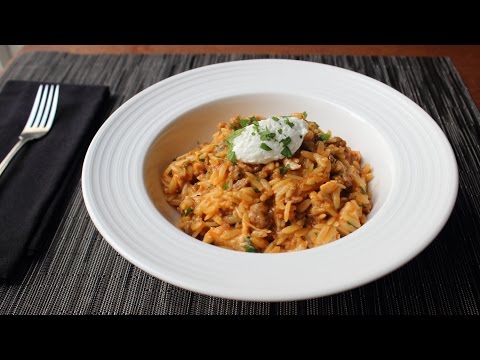
This one-pot pumpkin orzo is a hearty stovetop dinner made with Italian sausage, tender pasta, kale, and canned pumpkin. The pumpkin blends into the broth as the orzo cooks, giving the dish a velvety texture without turning it into a sweet pumpkin pasta.
Sausage brings savory seasoning, while thyme and oregano keep the flavor familiar and cozy. The finished dish is spoonable and gently creamy, with soft orzo, wilted greens, and enough broth to keep it loose. It comes together in one pot, so there is less cleanup after dinner.
Why This Recipe Works
Browning the sausage first builds savory flavor in the pot and cooks the meat before the pasta goes in. The onion softens in the drippings, and a brief sauté of the garlic and dried herbs releases their aroma without scorching them. Scrape the browned bits from the bottom of the pot when you add the broth; they add flavor and help prevent anything from sticking as the orzo simmers.
Pumpkin puree dissolves into the broth, adding body and a mild earthy sweetness. It does not need to be cooked separately. The orzo releases starch as it simmers, which thickens the liquid further. Stirring periodically keeps the small pasta from settling and sticking, while adding the kale near the end preserves its green color and lets it soften without becoming overly limp.
The amount of broth makes this a loose, stew-like pasta rather than a dry skillet dish. Orzo brands and pots vary, so use the cooking time as a guide and judge the final texture by the pasta and liquid. The dish thickens as it stands; a splash of warm broth will loosen leftovers or a pot that has reduced more than expected.
Ingredients
- 1 lb raw Italian sausage, mild or spicy, casings removed if using links
- 1 cup uncooked orzo pasta
- 1 cup canned pumpkin puree, not pumpkin pie filling
- 4 cups vegetable or chicken broth, preferably low-sodium if you want more control over seasoning
- 2 cups chopped kale, tough stems removed and leaves roughly chopped
- 1 medium onion, diced, about 1 cup
- 3 cloves garlic, minced, about 1 tablespoon
- 1 tsp dried thyme
- 1 tsp dried oregano
- ½ tsp fine salt to start, plus more to taste; use less or omit at first if the sausage or broth is salty
- ¼ tsp ground black pepper, plus more to taste
- 1 tbsp olive oil, only if needed for lean sausage or a pot that looks dry
Ingredient Notes
Italian sausage: Mild sausage keeps the dish savory and approachable; spicy sausage adds heat and often brings its own pepper and chile seasoning. Pork sausage is common, but turkey or chicken Italian sausage also works. If using poultry sausage, cook it to 165°F; pork or beef sausage should reach 160°F. If the sausage is very lean, a little oil can help the onion sauté without sticking.
Orzo: Orzo is a small, rice-shaped pasta, not a grain of rice. It cooks directly in the broth and gives the dish its soft, creamy texture. Other small pasta shapes can work, but their cooking times and liquid needs may differ, so follow the package guidance and check frequently.
Pumpkin puree: Use plain canned pumpkin, not pumpkin pie filling, which contains sugar and spices. If you have homemade pumpkin puree, use it only if it is thick and smooth; a watery puree can make the broth thinner. Butternut squash puree is a reasonable substitute, though it may taste a little sweeter.
Broth: Chicken broth gives the dish a rounded, savory taste; vegetable broth keeps it meat-free only if you also replace the sausage. Low-sodium broth makes it easier to season at the end because sausage can already be salty. Keep extra broth nearby if you prefer a looser consistency or need to refresh leftovers.
Kale: Remove the tough center ribs before chopping. Curly or lacinato kale both work. Baby spinach can replace kale; stir it in at the end and cook just until wilted, usually a minute or two.
Onion, garlic, and herbs: Onion makes a sweet-savory base, while garlic, thyme, and oregano complement the sausage and pumpkin. If you do not have both herbs, use 2 tsp of either one, or substitute 2 tsp Italian seasoning. Dried herbs go into the pot before the liquid so their flavor has a moment to bloom.
Instructions
- Prepare the ingredients. Dice the onion, mince the garlic, remove the kale stems, and chop the leaves. Measure the pumpkin, broth, orzo, and herbs before you start cooking. This is a stovetop recipe; no oven temperature or baking time is needed. Keeping the kale and orzo ready to add makes it easier to stir the pot once it begins simmering.
- Brown the sausage. Set a large, heavy pot or Dutch oven over medium-high heat. Add the sausage, breaking it into small pieces with a spoon. Cook for about 7–9 minutes, stirring and turning the pieces, until browned and cooked through. Check the thickest pieces with an instant-read thermometer: ground pork or beef sausage should reach 160°F, and poultry sausage should reach 165°F. Browning adds flavor; cooking it fully here means you do not have to guess whether it is done later. Transfer the sausage to a plate if the pot is crowded or has pooled fat. If there is more than a thin coating of fat, spoon off the excess.
- Soften the onion. Reduce the heat to medium. Add the diced onion to the pot and cook for 4–5 minutes, stirring occasionally, until softened and beginning to look translucent. Add the optional olive oil only if the pot is dry or the sausage was very lean. The onion should soften rather than brown deeply; lower the heat if the browned bits on the bottom start to darken.
- Add the garlic and herbs. Stir in the garlic, thyme, and oregano and cook for about 30 seconds, just until fragrant. Garlic can turn bitter if it browns, so do not leave it unattended. Stir the sausage back into the pot if you removed it.
- Build the pumpkin broth. Add the pumpkin puree and broth, stirring well to break up any lumps of puree and loosen browned bits from the bottom. Bring the mixture to a gentle boil over medium-high heat, then reduce the heat to medium-low so it maintains a steady simmer. A gentle simmer gives the orzo time to cook without rapidly reducing the liquid.
- Simmer the orzo. Stir in the uncooked orzo. Cook uncovered for about 9–12 minutes, stirring every minute or two and scraping along the bottom and corners of the pot. Start checking the pasta at the package’s suggested cooking time. It is ready when tender but still holds its shape, with no hard center. The liquid should look creamy and loose, not dry; add a little warm broth if it thickens before the orzo is done. Frequent stirring helps keep the pasta from clumping or sticking.
- Wilt the kale and season. Stir in the kale and cook for 2–4 minutes, until the leaves are tender and a deeper green. Taste the broth before adding more salt, since sausage and broth vary in saltiness. Add salt and pepper as needed. Take the pot off the heat and let it stand for 2 minutes; the orzo will continue to absorb liquid, so loosen it with a splash of broth if it becomes thicker than you like.
Tips for Success
- Choose a roomy pot. A 4- to 5-quart Dutch oven or heavy saucepan gives the pasta space to simmer and makes it easier to stir without splashing.
- Brown in batches if necessary. If the sausage forms a crowded layer, cook it in two batches. Crowding traps steam and makes browning harder.
- Keep the simmer gentle. A vigorous boil can make the liquid evaporate too quickly while the orzo is still firm. Lower the heat if the surface is bubbling hard.
- Stir more often than you would with soup. Orzo can settle to the bottom as it cooks. Scrape the base of the pot every minute or two, especially toward the end.
- Use package timing as a checkpoint, not a promise. Pot shape, heat, and pasta brand affect how quickly orzo cooks. Begin checking early and stop when it is tender with a little bite.
- Season at the end. Broth reduces as it simmers, and sausage is already seasoned. Taste after the kale wilts before adding the full amount of salt.
- Serve soon after cooking. Orzo continues to absorb liquid as it sits. Keep a little warm broth on hand to stir in just before serving if the pot thickens.
Troubleshooting
The orzo is still firm, but the pot is getting thick: Stir in ¼ cup warm broth or water at a time and continue simmering gently, stirring often, until the pasta is tender. Repeat if needed. The pasta needs time and moisture; turning the heat up high is more likely to scorch the bottom than cook the center evenly.
The dish looks too soupy: Simmer uncovered for another minute or two, stirring frequently, then let it stand briefly off the heat. Orzo absorbs liquid as it rests. Avoid a long, hard boil to reduce it, since the pasta can become overcooked.
The bottom is sticking: Lower the heat and scrape the bottom with a wooden spoon. Add a splash of broth if the mixture is too thick to stir easily. A little sticking can happen as the pasta releases starch, but a strong burnt smell means the scorched portion should not be scraped into the rest.
The flavor seems flat: Add a small pinch of salt, a few grinds of black pepper, or a little more dried oregano after tasting. If it tastes overly rich, a small squeeze of lemon at the table can brighten it without changing the method.
The kale is tougher than you like: Give it another minute or two in the simmering pot. For especially mature leaves, chop them smaller and add them a few minutes before the orzo is expected to finish.
Variations
- Make it spicier: Use hot Italian sausage or add a pinch of red pepper flakes with the garlic and herbs.
- Use another green: Swap the kale for chopped Swiss chard, adding the leaves near the end. Spinach needs less time and can be stirred in just before turning off the heat.
- Add a finishing touch: Serve with grated Parmesan, chopped parsley, or a squeeze of lemon. These are optional additions, not needed for the pot to cook properly.
- Make it meat-free: Omit the sausage and use vegetable broth. To keep a hearty texture, brown sliced mushrooms in a little olive oil before adding the onion; season the pot carefully since the sausage will no longer contribute salt and spice.
- Change the pasta: Small pasta such as ditalini may work, but check its package timing and add broth as needed. Larger shapes may need more liquid and a longer simmer, so the result will not be exactly the same.
What to Serve With It
This is a filling one-pot meal, so it needs little alongside it. A simple green salad with a sharp vinaigrette offers a fresh contrast to the creamy pumpkin broth. Roasted or steamed green beans, broccoli, or Brussels sprouts also make an easy vegetable side. For a heartier table, serve crusty bread to catch the remaining broth. If you offer Parmesan or lemon wedges, let everyone add them at the table.
Make-Ahead, Storage and Reheating
For easiest texture, cook the dish just before serving. You can prep the onion, garlic, and kale up to a day ahead and refrigerate them in separate covered containers. The sausage can also be browned ahead and refrigerated promptly, then returned to the pot when you add the broth. Keep perishable ingredients refrigerated at 40°F or below.
Refrigerate leftovers in shallow, covered containers within 2 hours of cooking. They keep for 3–4 days in a refrigerator at 40°F or below. The orzo will absorb broth as it cools, so the leftovers will be thicker than the freshly cooked dish.
To reheat on the stovetop, place a portion in a small saucepan with a splash of broth or water. Warm over medium-low heat, stirring often, until steaming hot throughout. In the microwave, cover loosely and heat in short intervals, stirring between intervals so the center warms evenly. Reheat leftovers to 165°F. Add liquid a little at a time until the texture is as loose as you like.
For longer storage, freeze cooled portions in airtight, freezer-safe containers for about 3–4 months. The pasta and kale may soften after thawing, so the texture will be less distinct than when freshly made. Thaw in the refrigerator and reheat to 165°F, adding broth or water as needed. Do not leave cooked food at room temperature for more than 2 hours, or more than 1 hour when the temperature is above 90°F.
Recipe Card
Servings: 4 generous servings or 6 smaller servings
Prep time: 15 minutes
Cook time: 30 minutes
Total time: 45 minutes
Ingredients
- 1 lb raw Italian sausage, mild or spicy, casings removed if using links
- 1 cup uncooked orzo pasta
- 1 cup canned pumpkin puree, not pumpkin pie filling
- 4 cups vegetable or chicken broth
- 2 cups chopped kale, stems removed
- 1 medium onion, diced
- 3 cloves garlic, minced
- 1 tsp dried thyme
- 1 tsp dried oregano
- ½ tsp fine salt to start, plus more to taste
- ¼ tsp ground black pepper, plus more to taste
- 1 tbsp olive oil, optional if the pot is dry
Condensed Instructions
- In a large pot over medium-high heat, brown and cook the sausage for 7–9 minutes, breaking it into small pieces. Verify ground pork or beef sausage reaches 160°F, or poultry sausage reaches 165°F.
- Reduce heat to medium. Soften the onion for 4–5 minutes, adding oil only if needed. Stir in garlic, thyme, and oregano for 30 seconds.
- Stir in pumpkin and broth, scraping the bottom of the pot. Bring to a gentle boil, then lower to a steady simmer.
- Add orzo. Simmer uncovered for 9–12 minutes, stirring every minute or two, until tender. Add a splash of broth if the pot thickens before the pasta is done.
- Stir in kale and cook for 2–4 minutes, until tender. Taste, season with salt and pepper, and rest for 2 minutes. Loosen with broth if desired and serve.
Frequently Asked Questions
Can I use pumpkin pie filling?
No. Pumpkin pie filling is sweetened and spiced, which would change the savory flavor of the dish. Choose plain canned pumpkin puree; the ingredient list should identify it as pumpkin, not pie filling.
Can I use fresh pumpkin puree?
Yes, if it is plain, smooth, and not watery. Homemade puree varies in thickness, so if yours is loose, reduce the broth slightly at first and add more as the orzo cooks. Keep the final texture loose enough for the pasta to simmer.
Can I cook the orzo separately?
You can, but the result will be less creamy because the pasta will not release its starch into the pumpkin broth. If cooking it separately, simmer the pumpkin, broth, sausage, and vegetables until the flavors come together, then stir in cooked orzo at the end. Use less broth in the pot initially and adjust to taste.
Can I use pre-cooked sausage?
Yes. Slice or crumble it and brown it briefly to add flavor, then proceed with the onion. Since it is already cooked, follow the package directions and heat it thoroughly in the finished dish. The browning step is for flavor rather than cooking raw sausage through.
Why did my orzo absorb all the broth?
Orzo keeps absorbing liquid while it cooks and rests, and the rate varies by brand and pot. Stir in warm broth or water a little at a time until the consistency is loose again. For leftovers, add liquid as you reheat rather than trying to keep the original consistency in the refrigerator.
Can I make this without kale?
Yes. Leave it out, or replace it with spinach, chard, or another quick-cooking green. Add tender greens at the end so they wilt without overcooking; sturdier greens may need a few extra minutes.
Is this recipe gluten-free?
Orzo is usually made from wheat, so this recipe as written is not gluten-free. A gluten-free small pasta may be used, but it can behave differently and may need different simmering time and liquid. Check the pasta package and stir frequently.
Can I double the recipe?
Use a very large pot and make sure there is room to stir without spilling. Brown the sausage in batches so it can brown rather than steam. A larger quantity may take longer to return to a simmer, and the orzo will still need frequent stirring; check its texture instead of relying only on the listed time.