
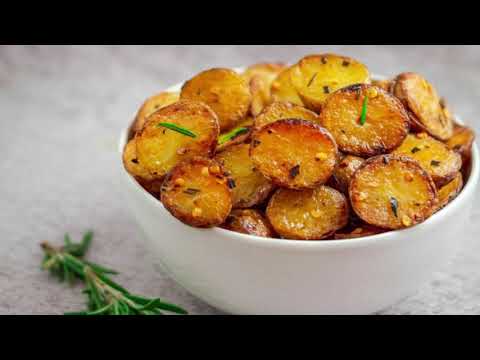
These pan-roasted baby potatoes are browned in a skillet, then finished in the oven until their centers are tender. Yukon Gold or red potatoes are cut into even pieces so they cook at the same pace, and a final addition of garlic and fresh herbs keeps those flavors bright.
Expect crisp, golden edges, a creamy middle, and savory rosemary, thyme, and garlic in every bite. The method uses one oven-safe skillet and familiar ingredients, making this a practical side dish for tonight’s dinner.
Why This Recipe Works
Starting the potatoes cut-side down in hot oil gives them direct contact with the skillet, so they develop a browned surface before the oven cooks the centers through. Leaving them undisturbed at first matters: if you move them too soon, they may stick or tear rather than release with a golden crust.
The oven supplies steady heat from all sides and finishes the potatoes without constant stirring. Cutting the potatoes to a similar size helps them become tender together; halve small ones and quarter any larger ones so no pieces are left firm while others soften.
Garlic and chopped herbs go in near the end rather than at the beginning. Minced garlic can turn bitter if it spends too long against a hot skillet, while fresh herbs keep more of their aroma when they are not browned for the entire cooking time. The brief finish lets their flavor coat the potatoes without overpowering them.
Ingredients
- 1½ pounds baby potatoes, Yukon Gold or red, scrubbed and dried
- 3 tablespoons olive oil, divided
- 4 cloves garlic, finely minced
- 1 teaspoon fresh rosemary, finely chopped
- 1 teaspoon fresh thyme leaves, chopped
- ¾ teaspoon fine salt, or to taste
- ¼ teaspoon freshly ground black pepper, or to taste
- 1 tablespoon chopped fresh parsley, optional, for garnish
Ingredient Notes
Baby potatoes: Yukon Golds have a naturally buttery texture, while red potatoes tend to hold their shape well. Either works. Small potatoes can be halved; larger baby potatoes should be quartered. Aim for pieces roughly the same size, rather than worrying about perfectly uniform cuts.
Olive oil: Oil helps the cut surfaces brown and carries the garlic and herb flavors. Regular olive oil is a good choice here. If you prefer, use another neutral, high-heat cooking oil. Divide the oil so the potatoes can brown first and the garlic-herb mixture can be added later.
Garlic: Four cloves give the finished dish a clear garlic flavor. Mince them finely so they distribute easily, but add them only for the final minutes. If you have no fresh garlic, ½ teaspoon garlic powder can be stirred in with the herbs near the end; the flavor will be less pungent and less textured.
Rosemary and thyme: Fresh rosemary brings a woodsy, pine-like note, and thyme adds a softer, earthy aroma. Chop the rosemary finely because its leaves are firm. If using dried herbs instead, use about ⅓ teaspoon dried rosemary and ⅓ teaspoon dried thyme; add them with the garlic, and expect a more concentrated flavor.
Salt, pepper, and parsley: The listed salt and pepper are starting amounts; potato size and personal taste vary, so taste and adjust at the end. Parsley is an optional fresh finish, not a required part of the roast. Chives can stand in for it if that is what you have.
Instructions
- Heat the oven and prepare the potatoes. Set a rack in the center of the oven and heat it to 425°F (220°C). Scrub the potatoes, dry them thoroughly, and cut them into halves or quarters so the pieces are close in size. Dry surfaces help the potatoes brown instead of steaming in excess moisture.
- Warm the skillet. Set a 12-inch oven-safe skillet over medium-high heat and add 2 tablespoons of the olive oil. When the oil shimmers and moves easily across the pan, add the potatoes in one layer, cut sides down where possible. Season with the salt. If the skillet is crowded, brown the potatoes in batches or use a larger oven-safe pan; crowded pieces trap steam and brown less effectively.
- Brown the cut sides. Cook the potatoes without moving them for 5 to 7 minutes. Look for a deep golden-brown surface and edges that release from the pan when nudged. If they are still pale or firmly stuck, give them another minute or two rather than scraping them up. This first sear builds the browned crust.
- Roast until nearly tender. Transfer the skillet carefully to the preheated oven and roast for about 14 to 18 minutes. At this point, a thin knife should enter a potato with some resistance, but the centers should not be completely firm. The exact time depends on the size of the pieces and how hot the skillet was when it went into the oven.
- Add the garlic and herbs. Carefully remove the hot skillet from the oven and set it on a heat-safe surface. Add the remaining 1 tablespoon olive oil, minced garlic, rosemary, thyme, and black pepper. Turn the potatoes gently to coat, keeping the browned sides as intact as possible. Adding these ingredients now gives the garlic enough time to soften without burning.
- Finish roasting. Return the skillet to the oven for 6 to 9 minutes. The potatoes are ready when a knife slides into the largest piece without resistance, the cut faces are browned, and the garlic smells fragrant rather than sharp or scorched. If the potatoes need more time, roast in 2-minute increments and check again.
- Season and serve. Taste a potato and add more salt or pepper if needed. Scatter parsley over the top, if using, and serve warm. Use a thick oven mitt when handling the skillet; its handle stays hot after it leaves the oven.
Tips for Success
- Dry the potatoes well. After washing, pat them dry with a clean towel. Water left on the skins can create steam in the pan and slow browning.
- Use a wide pan. The potato pieces should sit mostly in one layer, with room for heat to circulate. If they overlap, brown them in batches or finish them on a rimmed sheet pan.
- Keep the cut face against the pan. The cut side has more surface area for browning. Arrange pieces cut-side down where practical, and resist frequent stirring.
- Cut larger potatoes smaller. A mix of halves and quarters is fine as long as the pieces are similar in thickness. Very large pieces take longer for the center to become tender.
- Use an oven-safe skillet. Cast iron and many stainless-steel skillets are suitable, but check the manufacturer’s guidance for your pan, especially if it has a coated surface or a handle that may not tolerate oven heat.
- Protect the garlic from excessive heat. Add it during the final roast, not while searing the potatoes. If your oven runs hot or the garlic is minced especially finely, check the pan after 5 minutes.
- Let the potatoes tell you when they are done. Use the knife test on the largest piece. The time is a guide; size, pan material, and starting temperature can all change how quickly the centers soften.
Troubleshooting
The potatoes are pale instead of browned. The pan may have been crowded, the potatoes may have been damp, or the oil may not have been hot enough. Give pieces space, dry them well, and wait for the oil to shimmer before adding them. If they are already tender, use the oven’s broiler briefly to deepen the color, watching closely so the garlic does not burn.
The potatoes stick when I try to turn them. They may need more time to form a crust. Leave them alone for another minute, then test a piece gently. A well-browned surface usually releases more easily than a pale one.
The outside is brown but the middle is still firm. The pieces may be larger than expected or the skillet may have gone into the oven before it was fully heated. Lower the oven to 400°F (205°C) if the outside is dark, then continue roasting in 3- to 5-minute intervals until a knife enters the largest potato easily.
The garlic tastes bitter or looks very dark. It has likely browned too much. For the next batch, add it later or check the skillet sooner. If only a few bits are dark, remove them before serving; do not scrape scorched garlic through the potatoes.
The potatoes seem oily. Measure the oil rather than pouring freely, and make sure the potatoes are not crowded. If excess oil gathers in the skillet, lift the potatoes out with a slotted spoon and leave the extra behind.
Variations
Lemon and herbs: Finish with a little finely grated lemon zest or a small squeeze of lemon juice just before serving. Add it after roasting so the fresh citrus flavor stays distinct.
Smoky paprika: Add ½ teaspoon smoked paprika with the salt before the potatoes go into the oven. It brings a smoky note that works well alongside the rosemary.
Parmesan finish: Sprinkle finely grated Parmesan over the hot potatoes as soon as they come out of the oven. The residual heat softens the cheese without needing to roast it until it turns dark.
Different herbs: Swap the rosemary or thyme for chopped sage, or use a smaller amount of oregano. Stronger herbs can take over quickly, so begin with about 1 teaspoon total and adjust to taste.
Spicy version: Add a pinch of red pepper flakes with the garlic and herbs. Keep the amount modest at first; it is easy to add more heat at the table.
What to Serve With It
These potatoes pair naturally with roast chicken, grilled fish, pork chops, steak, or a simple omelet. For a vegetable-forward meal, serve them with roasted carrots, green beans, sautéed greens, or a crisp salad. Their browned edges and herbs also make them a useful side for a weeknight plate when the main dish is simply cooked and needs a savory accompaniment.
If serving them with a main dish that also uses rosemary or garlic, keep the seasoning on the main course a little simpler so the flavors do not compete. For a more casual meal, put the potatoes on the table with a bowl of sour cream or plain yogurt for dipping; that is optional and not needed for the recipe itself.
Make-Ahead, Storage and Reheating
You can wash and cut the potatoes a few hours ahead. Keep cut potatoes covered in cold water in the refrigerator so they do not discolor, then drain and dry them very thoroughly before cooking. For the best browning, do not leave water on the cut surfaces. The skillet method is most reliable when the potatoes are cooked just before serving.
Refrigerate cooked leftovers in a covered, shallow container within 2 hours of cooking. They keep in the refrigerator for 3 to 4 days. For longer storage, freeze them in a suitable airtight container; they remain safe while continuously frozen, though their texture is best used within about 2 to 3 months. Thawed potatoes may be softer than freshly cooked ones.
For the crispest leftovers, reheat the potatoes in a lightly oiled skillet over medium heat, turning occasionally until hot throughout and browned again. They can also be spread on a baking sheet and reheated at 400°F (205°C) until hot, usually about 10 to 15 minutes depending on their size and starting temperature. Microwave reheating is convenient but softens the browned surfaces. Reheat leftovers to 165°F (74°C), and only reheat the amount you plan to eat.
Recipe Card
Servings: 4
Prep time: 15 minutes
Cook time: 30 minutes
Total time: 45 minutes
Ingredients
- 1½ pounds baby potatoes, Yukon Gold or red, scrubbed and dried
- 3 tablespoons olive oil, divided
- 4 cloves garlic, finely minced
- 1 teaspoon fresh rosemary, finely chopped
- 1 teaspoon fresh thyme leaves, chopped
- ¾ teaspoon fine salt, or to taste
- ¼ teaspoon freshly ground black pepper, or to taste
- 1 tablespoon chopped fresh parsley, optional
Condensed steps
- Heat the oven to 425°F (220°C). Dry the potatoes and halve or quarter them into similar-sized pieces.
- Heat 2 tablespoons olive oil in a 12-inch oven-safe skillet over medium-high heat. Add the potatoes cut-side down in one layer, season with salt, and sear undisturbed for 5 to 7 minutes until golden.
- Roast in the skillet for 14 to 18 minutes, until the potatoes are nearly tender.
- Stir in the remaining 1 tablespoon olive oil, garlic, rosemary, thyme, and pepper. Roast 6 to 9 minutes more, until the largest potato is easily pierced with a knife and the garlic is fragrant.
- Taste, adjust the seasoning, garnish with parsley if desired, and serve warm.
Frequently Asked Questions
Do I need to boil the potatoes first?
No. Cutting them into halves or quarters and finishing them in the oven cooks the centers through without a separate boiling step. Keep the pieces similar in size and check the largest one for tenderness before serving.
Can I use larger potatoes instead of baby potatoes?
Yes. Yukon Gold or red potatoes are good choices. Cut them into roughly 1- to 1½-inch chunks so they cook at a similar pace to halved baby potatoes. Very small pieces can become tender before they develop much browning.
Can I make this without an oven-safe skillet?
Yes. Sear the potatoes in a regular skillet, then carefully transfer them to a rimmed baking sheet for the oven portion. Scrape the browned oil and potato bits onto the sheet too, and add the garlic, herbs, and remaining oil there for the final roast.
Can I roast the potatoes without searing them first?
Yes. Put the dried, oiled potatoes cut-side down on a rimmed baking sheet and roast at 425°F (220°C), turning once if needed. Add the garlic and herbs for the final 6 to 9 minutes. The skillet sear in this recipe gives the cut sides an early head start on browning, but the sheet-pan approach is useful when you need more space.
Can I use dried rosemary and thyme?
Yes. Use about ⅓ teaspoon of each dried herb in place of 1 teaspoon fresh. Dried herbs are more concentrated and have a different texture, so start with that amount rather than substituting equal volumes.
Why add the garlic near the end?
Finely minced garlic can burn during the longer searing and roasting stages. Adding it for the final minutes lets it soften and become aromatic while reducing the chance of a bitter, scorched flavor.
Can I prepare these potatoes ahead for a party?
They are best straight from the skillet, when the edges are crisp. You can cook them ahead and refrigerate the leftovers, then reheat them in a skillet or oven until hot. For the freshest texture, prepare the potatoes shortly before serving.
What should I do if the potatoes are different sizes?
Cut the largest ones into quarters and leave the smallest ones as halves. The goal is similar-sized pieces, especially similar thickness, so they become tender at about the same time. Check a larger piece first when judging doneness.