
This speckled butter bean okra stew is a one-pot meal of creamy beans, tender okra, tomatoes, leafy greens, and a warmly spiced broth. It works with either fresh or frozen okra and cooked dried beans or canned beans, so it’s practical to make today.
Building flavor in stages keeps the stew savory rather than flat: onion softens first, spices bloom in the oil, and tomatoes simmer with the broth before the greens go in. Expect a thick, satisfying stew with mellow beans, a gentle smoky heat, and okra’s pleasantly tender, slightly silky texture.
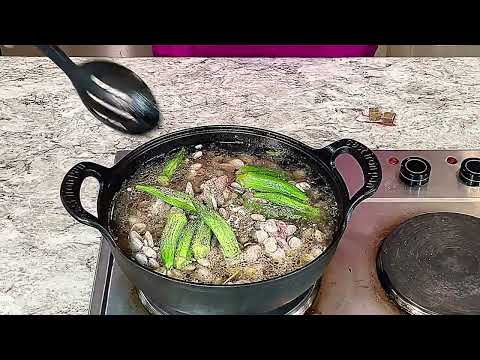
Why This Recipe Works
Cooking the onion until soft gives the broth a sweet, aromatic base without browning it too deeply. Adding the garlic and dry spices briefly afterward lets their fragrance bloom in the olive oil; adding them with the liquid would mute that effect.
The tomatoes simmer with the broth before the greens are added. That gives their acidity time to settle into the stew and helps the beans absorb the surrounding flavor. The beans are already cooked, so they need only a gentle simmer to warm through and become creamy without breaking apart.
Okra goes in near the end rather than simmering for the full cooking time. It has time to become tender while keeping its shape. The tomato’s acidity and restrained stirring also help the broth feel balanced and keep the okra from becoming more viscous than you want. Kale or chard goes in last, when it can wilt without losing all its color.
Ingredients
- 2 tablespoons extra-virgin olive oil
- 1 large yellow onion, about 1 1/2 cups finely diced
- 4 garlic cloves, minced, about 1 1/2 tablespoons
- 1 teaspoon smoked paprika
- 1/4 teaspoon cayenne pepper, or less to taste
- 1 teaspoon dried thyme
- 1/2 teaspoon fine salt, plus more to taste
- 1/4 teaspoon black pepper
- 1 can (14.5 ounces) diced tomatoes, with their juices
- 4 cups vegetable broth
- 3 cups cooked speckled butter beans, drained; about two 15-ounce cans, drained and rinsed
- 1 pound fresh or frozen okra, trimmed if fresh and sliced into 1/2-inch pieces
- 4 packed cups chopped kale or Swiss chard, tough stems removed
- 1 tablespoon lemon juice, optional, for finishing
- 1 tablespoon chopped fresh parsley, optional, for serving
Ingredient Notes
Speckled butter beans: Their soft, creamy centers make the stew substantial and help thicken the broth slightly. Use cooked beans, not dry beans, for this recipe. Canned butter beans are convenient; drain and rinse them. If cooking dried speckled butter beans, cook them separately until fully tender, then measure 3 cups for the stew. Beans vary in cooking time, so follow the package guidance and check for tenderness before using.
Okra: Fresh okra should feel firm, with no mushy spots. Frozen sliced okra can go straight into the pot from frozen; there is no need to thaw it. Fresh and frozen okra both work, though frozen pieces may soften a little sooner. If you prefer less of okra’s characteristic silkiness, keep the pieces fairly large and stir gently.
Vegetable broth and tomatoes: Choose a broth you enjoy tasting on its own, since it forms most of the stew’s liquid. Low-sodium broth gives you more control over seasoning. Canned diced tomatoes are consistent and convenient; ripe fresh tomatoes can be used instead, though their juiciness varies. If using fresh, chop about 2 cups and add a small splash of broth if the pot looks dry.
Onion, garlic, and spices: Yellow onion gives a mellow base; white onion works too. Smoked paprika brings a rounded, smoky note, cayenne adds heat, and thyme gives an herbal edge. Use sweet paprika if you do not have smoked paprika, and reduce or omit cayenne for a mild stew.
Leafy greens: Kale holds its texture well, while Swiss chard softens more quickly and has tender stems. Spinach can stand in; stir it in at the very end and cook only until wilted. Remove tough kale or chard stems, or chop tender stems finely and cook them with the onion.
Olive oil and finishing touches: Extra-virgin olive oil carries the aromatics and adds a fruity note. A neutral oil works if that is what you have. Lemon juice and parsley are optional, but lemon can brighten the finished bowl and parsley adds a fresh finish.
Instructions
- Prepare the ingredients. Dice the onion, mince the garlic, measure the spices, and chop the greens. If using fresh okra, rinse it and dry it well before trimming and slicing; dry pods are easier to handle. Drain and rinse canned beans. Keeping everything ready before the pot heats makes it easier to add the garlic and spices before the onion starts to brown.
- Soften the onion. Warm the olive oil in a large heavy-bottomed pot or Dutch oven over medium heat for about 1 minute. Add the onion and cook for 6–8 minutes, stirring occasionally. Look for translucent, softened pieces with little or no browning. If the onion is coloring quickly, lower the heat; the goal is a sweet, tender base, not a browned one.
- Bloom the garlic and spices. Add the garlic, smoked paprika, cayenne, thyme, salt, and black pepper. Stir for 30–45 seconds, until fragrant. Do not let the garlic turn brown, which can make it taste bitter. Briefly cooking the spices in oil helps their aroma spread through the stew.
- Simmer the tomato broth. Stir in the diced tomatoes and their juices, scraping the bottom of the pot to lift any flavorful bits. Add the vegetable broth and bring the mixture to a gentle boil over medium-high heat, about 3–5 minutes. Once bubbles appear across the surface, reduce the heat to medium-low and simmer uncovered for 10 minutes. It should bubble gently, not boil hard; this gives the tomato and spice flavors time to mingle.
- Add the beans and okra. Stir in the cooked beans and okra. Return the stew to a gentle simmer, then cook uncovered for 10–15 minutes, stirring carefully once or twice. The okra should be tender when pierced and the beans hot throughout, while most beans still hold their shape. Start checking fresh okra near 10 minutes; frozen okra may need closer to 15 minutes. If the stew boils vigorously, lower the heat to prevent the beans from breaking up.
- Wilt the greens and adjust. Stir in the kale or Swiss chard and simmer for 3–5 minutes, until tender but still colorful. Add spinach only for the final 1–2 minutes. Taste the broth and adjust the salt, pepper, or cayenne. If you want a brighter finish, stir in the lemon juice after turning off the heat; acidic ingredients taste freshest when added at the end.
- Rest and serve. Turn off the heat and let the stew stand for 5 minutes. It will settle and thicken slightly as it rests. Ladle into bowls and add parsley if using. If it thickens more than you like, stir in a little hot broth or water just before serving.
Tips for Success
- Start with tender, cooked beans. The simmer in this recipe is for warming and flavoring beans, not cooking dried beans from scratch. Undercooked beans will stay firm during the stew’s shorter cooking time.
- Keep the simmer gentle. A lively boil can split the butter beans and make the okra fall apart. Look for small, steady bubbles around the edge of the pot.
- Do not crowd the early flavor-building steps. Give the onion time to soften, then stir the garlic and spices just until fragrant. If the pot seems dry, lower the heat rather than letting the garlic scorch.
- Adjust okra texture with timing. For distinct, firmer pieces, begin checking early and stop cooking as soon as they are tender. For a thicker, silkier broth, simmer a few minutes longer and stir a little more.
- Season after the broth reduces slightly. Broths differ in saltiness, and the stew concentrates as it simmers. Taste near the end before adding more salt.
- Choose greens by the texture you want. Kale stays pleasantly substantial; chard softens quickly. Add either after the okra is nearly tender so the greens do not overcook.
- Serve with something to catch the broth. Rice, cornbread, or crusty bread makes the stew feel like a complete meal and is especially good with the tomato-rich liquid.
Troubleshooting
The stew is too thin: Simmer it uncovered for another 5–10 minutes, keeping the heat low enough that the beans do not break apart. You can also mash a few beans against the side of the pot and stir them back in to thicken the broth without adding another ingredient.
The stew is too thick: Add hot vegetable broth or water a few tablespoons at a time until it reaches the consistency you like. Taste again afterward, since added liquid can dilute the seasoning.
The okra feels too slimy: Okra naturally releases a little mucilage, especially as it cooks and is stirred. Keep the pieces larger, avoid vigorous stirring, and stop cooking once they are tender. A little more tomato or a squeeze of lemon at the end can balance the texture, though it will not remove okra’s natural character.
The beans are breaking apart: The pot may be boiling too hard or being stirred too often. Lower the heat to a gentle simmer and fold ingredients together carefully. If some beans have already broken, they will simply make the broth thicker.
The broth tastes flat: First check the salt. Then try a small squeeze of lemon or a pinch of black pepper. If the flavor seems dull rather than under-seasoned, the stew may need a few more minutes of gentle simmering to bring the tomato, thyme, and smoked paprika together.
The stew is too spicy: Cayenne heat is difficult to remove once it is in the pot. Stir in additional broth and beans if available, then adjust salt and finish with lemon. Next time, use a pinch of cayenne or leave it out; smoked paprika still provides warmth without the same heat.
Variations
- Milder stew: Omit the cayenne and use sweet or smoked paprika to keep the flavor rounded without noticeable heat.
- More heat: Add cayenne gradually, tasting as you go, or serve sliced fresh chile on the side so each person can choose their own level.
- Use another bean: Large lima beans or cannellini beans can replace the speckled butter beans in the same cooked quantity. Their texture and flavor will differ slightly, but they work well with the tomato broth.
- Change the greens: Use collard greens, spinach, or a mixture of greens. Add tougher leaves earlier and delicate leaves near the end, checking for tenderness as they cook.
- Add a grain: Serve the stew over cooked rice, or stir in cooked rice just before serving. Keep the rice separate if you plan to store leftovers, since it continues to absorb broth.
- Make it extra tomato-forward: Replace 1 cup of the broth with another cup of diced tomatoes. Simmer until the flavors come together, then taste before adding extra salt.
What to Serve With It
Steamed rice is a simple match: it catches the broth and keeps the focus on the beans and okra. Crusty bread or cornbread also works well for scooping. For a lighter-feeling plate, serve smaller bowls alongside a crisp salad dressed with a tangy vinaigrette. If you want the stew to stand on its own, offer lemon wedges and chopped parsley at the table so everyone can adjust their bowl.
Make-Ahead, Storage and Reheating
The stew can be made ahead and refrigerated, and its flavors meld as it rests. Cool leftovers promptly and refrigerate them in shallow, covered containers within 2 hours of cooking (within 1 hour if the room or outdoor temperature is above 90°F). Keep the refrigerator at 40°F or below and use the stew within 3–4 days.
For longer storage, freeze cooled portions in airtight, freezer-safe containers, leaving a little room for expansion. Use within about 3 months for best quality. Thaw overnight in the refrigerator, or reheat from frozen over low heat with a splash of broth or water. The okra and greens may soften more after freezing, but the stew will still be suitable for a simple reheated meal.
Reheat only the portion you plan to eat, on the stovetop over medium-low heat or in a microwave-safe dish, stirring occasionally until steaming hot throughout. For food safety, reheat leftovers to 165°F. Add a little liquid if the beans have thickened the broth during storage, and adjust the seasoning after reheating. Do not leave the stew at room temperature for extended periods.
Recipe Card
Servings: 4–6
Prep time: 15 minutes
Cook time: 30–35 minutes
Total time: 45–50 minutes
Ingredients
- 2 tablespoons extra-virgin olive oil
- 1 large yellow onion, about 1 1/2 cups diced
- 4 garlic cloves, minced
- 1 teaspoon smoked paprika
- 1/4 teaspoon cayenne pepper
- 1 teaspoon dried thyme
- 1/2 teaspoon fine salt, plus more to taste
- 1/4 teaspoon black pepper
- 1 can (14.5 ounces) diced tomatoes, with juices
- 4 cups vegetable broth
- 3 cups cooked speckled butter beans, drained, or about two 15-ounce cans, drained and rinsed
- 1 pound fresh or frozen okra, sliced into 1/2-inch pieces
- 4 packed cups chopped kale or Swiss chard, tough stems removed
- 1 tablespoon lemon juice, optional
- 1 tablespoon chopped fresh parsley, optional
Condensed steps
- Warm olive oil in a large pot over medium heat. Cook diced onion for 6–8 minutes, until soft and translucent.
- Add garlic, smoked paprika, cayenne, thyme, salt, and pepper; stir for 30–45 seconds, until fragrant.
- Add tomatoes and broth. Bring to a gentle boil, lower the heat, and simmer uncovered for 10 minutes.
- Stir in cooked beans and okra. Simmer gently for 10–15 minutes, until the okra is tender and the beans are hot.
- Add kale or chard and cook for 3–5 minutes, until wilted. Taste and adjust seasoning; finish with lemon juice and parsley if desired. Rest for 5 minutes, then serve.
Frequently Asked Questions
Can I use dried speckled butter beans?
Yes, but cook them separately before starting this stew. Dried beans need more time than the tomato-and-okra simmer provides. Once cooked until tender, drain them and measure 3 cups for the recipe.
Can I use canned butter beans?
Yes. Drain and rinse about two 15-ounce cans, then measure 3 cups. Cans vary in how many drained beans they contain, so use the measured quantity if possible. Add them with the okra so they warm through without becoming mushy.
Do I need to thaw frozen okra?
No. Add it directly from the freezer. It may take a few minutes longer than fresh okra to become tender, so check it as the stew simmers rather than relying only on the clock.
Can I make this stew without cayenne?
Absolutely. Leave it out for a mild stew. The smoked paprika and thyme still give the broth plenty of flavor, and anyone who wants more heat can add it at the table.
Can I make the stew in advance?
Yes. Make it a day ahead, cool it promptly, and refrigerate it in a covered container. Reheat it until steaming hot throughout, adding broth or water if it has thickened. You may want to add a fresh squeeze of lemon just before serving.
Can I freeze leftover okra stew?
Yes. Freeze cooled portions in airtight containers and use them within about 3 months for best quality. The okra and greens may be softer after thawing, but the stew can be reheated gently from thawed or frozen.
What can I use instead of kale or Swiss chard?
Spinach, collards, or another cooking green can work. Add delicate spinach at the very end; give tougher greens more time and check that they are tender before serving.
How do I make the stew less thick?
Stir in hot vegetable broth or water a little at a time until it reaches the consistency you prefer. Taste afterward and add salt or lemon if the extra liquid has softened the flavor.