
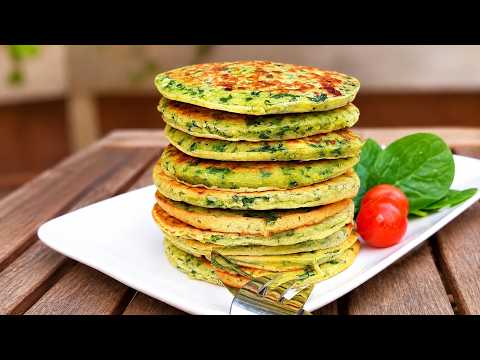
These spinach banana pancakes blend ripe banana, fresh spinach, oats, milk, and eggs into a soft, lightly sweet batter. The spinach gives them their cheerful green color, while the banana and vanilla keep the flavor familiar rather than savory.
This version works because the oats are finely blended and given a few minutes to absorb the liquid before cooking. That makes the batter easier to portion and the pancakes tender enough to flip. Serve them plain, with fruit, or with a favorite pancake topping.
Why This Recipe Works
Blending the spinach with the milk breaks the leaves into small pieces and spreads them throughout the batter. You get an even green color without noticeable leafy bits. Blending the oats separately first also helps them act more like flour, so the pancakes hold together instead of feeling like a bowl of cooked oatmeal.
Ripe banana contributes sweetness, moisture, and body. It does not replace the eggs completely: the eggs help bind the batter and set the pancakes as they cook. For a vegan version, flax eggs can provide binding, though the pancakes will be a little more delicate.
A short rest after blending lets the oats take up some of the milk. The batter thickens, making it less likely to spread too thinly on the pan. Cooking over moderate heat gives the centers time to set before the outsides get too dark. That matters with a green batter, where browning is less obvious than it is on a plain pancake.
Ingredients
- 1 ripe banana, peeled
- 1 cup fresh spinach leaves, washed and chopped
- 1 cup rolled oats, or 1 cup oat flour
- 1 cup milk, dairy or non-dairy
- 2 large eggs, or 2 flax eggs for a vegan option
- 1 teaspoon baking powder
- 1/2 teaspoon vanilla extract
- 1 pinch salt
- 1 to 2 teaspoons cooking oil or butter, for greasing the pan as needed
Ingredient Notes
Banana: Use a ripe banana with a sweet smell and plenty of brown speckles. It should mash easily. A green or barely ripe banana is firmer and less sweet, and can leave the pancakes tasting more starchy. There is no need to mash it first if you are blending the batter.
Spinach: Wash the leaves and shake or pat off excess water before chopping and measuring. Too much water clinging to the leaves can loosen the batter. Baby spinach works well, but mature spinach is fine if you remove tough stems.
Oats or oat flour: Rolled oats blend into a simple oat flour; quick oats also work, though they may absorb liquid a little faster. If you use oat flour, measure it by volume and avoid packing it firmly into the cup. For a gluten-free meal, choose oats and baking powder labeled gluten-free, since products can be subject to cross-contact during processing.
Milk: Dairy milk or an unsweetened non-dairy milk both work. A thicker milk may make the batter slightly thicker; a thin milk may make it looser. Start with the listed cup and adjust only after the batter has rested.
Eggs: Large eggs bind the ingredients and help the pancakes set. For two flax eggs, stir 2 tablespoons ground flaxseed with 6 tablespoons water and leave it for 5 to 10 minutes, until thick and gel-like. This option makes softer, more delicate pancakes; turn them carefully and allow them to cook through.
Baking powder, vanilla, and salt: Baking powder gives the pancakes some lift. Vanilla rounds out the banana flavor, while a pinch of salt keeps the batter from tasting flat. Check that your baking powder is fresh if your pancakes regularly turn out dense.
Instructions
- Prepare the pan and optional warming oven. If you want to keep batches warm, heat the oven to 200°F and set an oven-safe plate or baking sheet inside. Put a nonstick skillet or griddle over medium-low heat, aiming for a cooking surface around 350°F if using an electric griddle. Give the pan 3 to 5 minutes to heat evenly. A drop of water should sizzle gently, not vanish instantly; steady moderate heat helps the centers cook before the surfaces overbrown.
- Blend the oats. If using rolled oats, put them in a blender and blend for about 20 to 30 seconds, until they look like a coarse, even flour. A few tiny oat flecks are fine. If using oat flour, skip this step. Grinding the oats first helps prevent large chewy pieces in the finished pancakes.
- Make the batter. Add the banana, spinach, milk, eggs, vanilla, salt, and baking powder to the blender with the ground oats. Blend for about 30 to 45 seconds, stopping to scrape down the sides if needed, until no large spinach pieces remain and the batter is evenly green. It should pour slowly from a spoon. Avoid blending longer than necessary, since a smooth batter is useful but excessive blending can make it tougher.
- Rest and check the consistency. Leave the batter in the blender or pour it into a bowl and rest it for 5 to 10 minutes. It should thicken slightly as the oats absorb liquid. If it becomes too thick to pour, stir in milk 1 tablespoon at a time. If it still runs like milk, let it sit another 3 to 5 minutes before adding anything; oats often need a little time to hydrate.
- Cook the first side. Lightly grease the heated pan with oil or butter. Pour about 1/4 cup batter per pancake, leaving room between pancakes. Cook for 2 to 3 minutes. Look for the edges to turn less glossy and look set, with small bubbles or pinholes appearing on the surface. The green color can make browning hard to judge, so rely on these texture cues as well as the timing. If the batter spreads very thinly, lower the heat slightly and let it rest a little longer.
- Flip and finish. Slide a thin spatula under each pancake and flip once. Cook the second side for about 1 to 2 minutes, until the pancake feels set in the center and springs back lightly when pressed. The egg-based batter should be cooked through; if checking with a thermometer, the center should reach 160°F. Move finished pancakes to the warm oven for up to about 15 minutes while you cook the remaining batter. Add a little more fat to the pan between batches if it looks dry.
- Serve. Stack the pancakes and add toppings just before eating. They are tender while hot, so use a wide spatula when moving them. If serving a batch at the table, keep the stack loosely covered so steam does not make the surfaces damp.
Tips for Success
- Measure spinach after washing and chopping. Shake off excess water first. A very wet cup of spinach can thin the batter and make the first pancakes hard to turn.
- Use a blender with enough room. A small blender may need the ingredients divided into batches. Blend the spinach with the milk first if the leaves catch above the blades, then add the remaining ingredients.
- Let the batter rest before adjusting it. Oats absorb liquid gradually. Waiting 5 to 10 minutes gives you a truer sense of whether the batter needs extra milk.
- Make a small test pancake. Cook one pancake first to check heat and consistency. If it browns or darkens quickly while still wet on top, reduce the heat. If it barely sizzles and stays pale and loose, raise the heat a little.
- Keep the pancakes modest in size. About 1/4 cup batter makes a pancake that is easier to flip than a large one, especially when using flax eggs.
- Grease lightly, not heavily. A thin film of oil or butter helps prevent sticking. Too much can make the edges fry unevenly and can leave the surfaces greasy.
Troubleshooting
The batter is too thin. First give it another 5 minutes to rest. If it still spreads like liquid, blend or whisk in 1 tablespoon oat flour at a time, then wait a minute for it to absorb. Avoid adding a large amount at once; too much flour can make the pancakes heavy.
The batter is too thick. Stir in milk 1 tablespoon at a time until it pours slowly from a spoon. Oat flour can vary in how much liquid it takes up, and batter thickens as it sits, so check again between batches.
The pancakes fall apart when flipped. They may have been flipped too soon, be too large, or have a batter that is too loose. Wait until the edges look set and the top is no longer very glossy. Make smaller pancakes, lower the heat if the bottoms are cooking too fast, and add a tablespoon of oat flour if the batter remains loose. With flax eggs, handle the pancakes especially gently.
The outside is dark but the center is wet. Turn the heat down and give the pan a few minutes to settle at a lower temperature. A surface that is too hot cooks the outside before the center has time to set. Make smaller pancakes if needed.
The pancakes are dense. Check that the baking powder is fresh, and avoid letting the prepared batter sit for a long time before cooking. Also make sure the oats were blended finely; large oat pieces can make the texture seem heavier.
The spinach flavor is too noticeable. Measure the spinach rather than adding extra, use a fully ripe banana, and blend until the batter is evenly smooth. Vanilla helps balance the flavor. The pancakes are meant to taste gently of banana, not like a savory spinach fritter.
Variations
Make them vegan: Use two prepared flax eggs and non-dairy milk. Cook smaller pancakes and flip only when the edges are clearly set; flax-based batter is more fragile than egg-based batter. Use oil rather than butter to grease the pan.
Make them gluten-free: Use oat flour or rolled oats labeled gluten-free, and check the baking powder label. Oats themselves do not contain wheat, but they can come into contact with gluten-containing grains during growing or processing.
Add warm spices: Add 1/4 teaspoon ground cinnamon or a small pinch of ground nutmeg to the batter. Keep the amount modest so it complements rather than hides the banana and vanilla.
Add small mix-ins: Fold up to 1/4 cup mini chocolate chips or finely chopped walnuts into the finished batter. Do not blend them, and keep the pieces small so the pancakes remain easy to flip.
Use a different topping: Try sliced strawberries, blueberries, chopped banana, plain yogurt, nut or seed butter, or a little maple syrup. Add toppings at the table rather than stirring them into the batter if you want the pancakes to cook evenly.
What to Serve With It
For a simple breakfast, serve the pancakes with fresh berries or sliced fruit and a spoonful of yogurt. Nut or seed butter adds a creamy, savory contrast to the banana; maple syrup or a little honey makes the plate sweeter. For a more substantial meal, pair them with eggs cooked separately or with another breakfast side that suits your table. Keep toppings separate until serving so the pancakes stay tender rather than soggy.
Make-Ahead, Storage and Reheating
Make-ahead: The batter is best cooked soon after its short rest because baking powder starts working once it is mixed with liquid. For an easier morning, wash and chop the spinach, measure the dry ingredients, and refrigerate them separately from the milk, banana, and eggs. You can also blend the batter and refrigerate it covered overnight at 40°F or below, but it may thicken and lose some lift. Stir gently and add milk a tablespoon at a time if needed; cook a test pancake to check the texture.
Refrigerate cooked pancakes: Cool them promptly and refrigerate in a covered container within 2 hours of cooking. Keep the refrigerator at 40°F or below and use the pancakes within 3 to 4 days. Separate layers with parchment if you want to lift out individual pancakes easily.
Freeze cooked pancakes: Let the pancakes cool, arrange them in a single layer until firm, then stack with parchment between them in a freezer-safe container or bag. For best quality, use within 3 to 4 months. Thaw in the refrigerator or reheat from frozen.
Reheat: Warm refrigerated pancakes in a skillet over low heat for about 1 to 2 minutes per side, or use a toaster or microwave until hot throughout. Frozen pancakes can go straight into a toaster or a low oven; allow extra time and check that the center is hot. When reheating leftovers, bring them to 165°F. Do not leave cooked pancakes at room temperature for more than 2 hours.
Recipe Card
Servings: 3 to 4 (about 8 small pancakes) | Prep time: 10 minutes | Cook time: 15 minutes | Total time: 25 minutes
Ingredients
- 1 ripe banana, peeled
- 1 cup fresh spinach leaves, washed and chopped
- 1 cup rolled oats or 1 cup oat flour
- 1 cup dairy or non-dairy milk
- 2 large eggs, or 2 flax eggs
- 1 teaspoon baking powder
- 1/2 teaspoon vanilla extract
- 1 pinch salt
- 1 to 2 teaspoons cooking oil or butter, for the pan
Condensed steps
- Heat a skillet over medium-low, or an electric griddle to about 350°F. Set the oven to 200°F if you want to keep cooked pancakes warm.
- Blend rolled oats to a coarse flour. Add banana, spinach, milk, eggs, baking powder, vanilla, and salt; blend until evenly green and smooth.
- Rest the batter for 5 to 10 minutes. If it is too thick to pour, stir in milk 1 tablespoon at a time.
- Lightly grease the pan. Cook 1/4-cup portions for 2 to 3 minutes, until the edges look set and bubbles or pinholes appear.
- Flip and cook 1 to 2 minutes more, until set through; egg-based pancakes should reach 160°F if checked with a thermometer. Serve warm.
Frequently Asked Questions
Do these pancakes taste like spinach?
They have a mild spinach flavor, but ripe banana and vanilla keep it in the background. Blending the spinach thoroughly gives the batter an even flavor and color rather than leaving bites of leaf.
Can I use frozen spinach?
Fresh spinach is the simplest choice for the listed amount. If using frozen spinach, thaw it completely and squeeze out as much water as possible before measuring. The texture and color may differ, so add it gradually and check the batter consistency after it rests.
Can I make the batter without a blender?
A blender is the easiest way to break down the spinach and turn rolled oats into flour. Without one, use oat flour, mash the banana very well, and chop the spinach as finely as possible. Whisk the liquid ingredients together before mixing in the dry ingredients; expect a more textured pancake.
Can I use quick oats or steel-cut oats?
Quick oats can be blended and used in the same amount, though the batter may thicken sooner. Steel-cut oats are much harder and do not blend into a tender flour as readily, so they are not a good direct substitute here.
How do I know when to flip them?
Look for edges that are no longer glossy and a surface with small bubbles or pinholes. The bottom should release with a thin spatula. If the pancake resists, give it another 20 to 30 seconds rather than forcing the flip.
Can I make one large pancake instead of several small ones?
You can, but a large pancake is harder to turn and more likely to break, particularly with flax eggs. If you try it, use a wide pan, keep the heat low, and wait until the top is well set before turning. Smaller portions are more dependable.
Why is the batter green but the cooked pancake darker?
Heat changes the batter’s color, and the surface can darken as it cooks. That is normal. Use the set edges and cooked-through center as your main cues rather than expecting the cooked pancakes to stay bright green.
Can I double the recipe?
Yes. Blend in batches if your blender is not large enough, then combine the batter and rest it for 5 to 10 minutes. Cook a test pancake before making the full batch, since a larger amount of batter may sit longer and thicken; loosen it with a little milk if necessary.