
This spinach mushroom omelet is a simple stovetop breakfast: two eggs folded around tender spinach and savory mushrooms, with cheese or herbs if you like. It comes together in one skillet and makes one generous serving.
The key is cooking the mushrooms before the eggs, so they have time to brown and release moisture instead of watering down the omelet. The finished eggs should be soft and tender, the mushrooms lightly golden, and the spinach just wilted, with a mild earthy flavor in every bite.
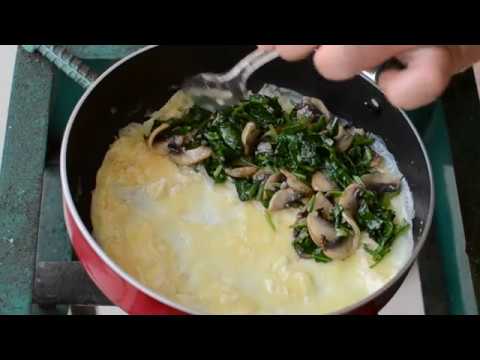
Why This Recipe Works
Mushrooms contain plenty of moisture. Cooking them first in a hot skillet gives that moisture time to evaporate and lets the slices develop a little color. If you add them to the eggs while they are still wet, the filling can turn watery and make the omelet harder to fold.
Spinach goes into the pan after the mushrooms because it needs far less time. A brief toss wilts it without leaving it limp or releasing a puddle of liquid. If the leaves are especially wet after washing, dry them well before chopping.
Two eggs make a manageable omelet for an 8-inch skillet. Beating them just until the whites and yolks are combined helps the omelet cook evenly; vigorous whisking adds foam that can make the texture less even. Starting over medium heat and lowering it once the eggs go in gives the bottom time to set without browning too quickly.
Finally, leaving the eggs undisturbed for a short time before gently moving the edges lets a thin layer of uncooked egg flow underneath. The result cooks through more evenly and stays tender. For food safety, cook egg dishes to 160°F; the omelet should have no liquid egg remaining.
Ingredients
- 2 large eggs
- 1 cup fresh spinach, chopped and loosely packed
- 1/2 cup sliced mushrooms, about 2 ounces
- 1 tablespoon olive oil or butter
- 1/8 teaspoon fine salt, divided, or to taste
- 1/8 teaspoon ground black pepper, or to taste
- 2 tablespoons shredded or crumbled cheese, optional
- 1 teaspoon chopped fresh herbs, optional
- 1/4 cup finely chopped additional vegetables, optional
Ingredient Notes
Eggs: Large eggs give the proportions here, but medium eggs will make a slightly smaller, thinner omelet. Take the eggs out of the refrigerator while you prepare the vegetables if convenient; there is no need to bring them fully to room temperature. Beat them with a fork until the yolks and whites are blended, but not frothy.
Spinach: Fresh baby spinach is easy to chop and wilts quickly. Mature spinach works too; remove tough stems and cut the leaves into bite-size pieces. If using frozen spinach, thaw it and squeeze it very dry, then measure about 1/2 cup. Frozen spinach is more compact and can make the filling wetter if excess water remains.
Mushrooms: Cremini or white button mushrooms both work. Wipe away visible dirt with a damp towel or rinse briefly and dry thoroughly. Slice them evenly so they cook at about the same rate. A small handful of sliced oyster or shiitake mushrooms can also be used, keeping the total amount close to 1/2 cup.
Olive oil or butter: Either coats the pan and helps cook the vegetables and eggs. Olive oil has a clean savory flavor; butter adds a familiar richness. If using butter, let it melt without allowing it to brown heavily before adding the eggs.
Salt and pepper: The amounts are a starting point, not a requirement. Salt the mushrooms lightly as they cook and adjust the eggs to taste. If your cheese is salty, use less salt overall and taste the filling before adding more.
Optional additions: Cheddar, Swiss, feta, or goat cheese all pair well with spinach and mushrooms. Soft herbs such as chives, parsley, or dill bring freshness; add them near the end. For extra vegetables, choose quick-cooking options such as diced bell pepper, scallions, or finely chopped tomato. Cook them with the mushrooms until tender and any excess moisture has evaporated.
Instructions
- Prepare the ingredients. Chop the spinach, slice the mushrooms, and measure any optional cheese or herbs. Crack the eggs into a small bowl, add a pinch of the salt and the pepper, and beat with a fork for about 20 seconds, just until no distinct streaks of white remain. Having everything ready matters because the eggs cook quickly once they enter the pan.
- Cook the mushrooms. Set an 8-inch nonstick or well-seasoned skillet over medium heat, about 350°F at the pan surface if measured with an infrared thermometer. Add the olive oil or butter. When the oil shimmers or the butter has melted, add the mushrooms in an even layer and season with a small pinch of salt. Cook for 4 to 5 minutes, stirring once or twice. Look for softened slices with most of their released liquid evaporated and some golden edges; this keeps the filling from making the eggs watery.
- Wilt the spinach. Add the chopped spinach and stir for 30 to 60 seconds, just until the leaves collapse and turn bright green. If using additional vegetables, cook them with the mushrooms first until tender before adding spinach. The pan should not have a pool of liquid; if it does, continue cooking for another 30 to 60 seconds so the moisture can evaporate.
- Add the eggs and lower the heat. Spread the vegetables into a thin, even layer, then reduce the burner to medium-low. Pour in the beaten eggs and tilt the skillet so they reach the edges. Cook undisturbed for about 30 seconds, until the edges begin to turn opaque. Lower heat helps the bottom set gently instead of becoming tough while the center is still raw.
- Set the eggs evenly. With a silicone spatula, gently draw the set egg at the edges toward the center while tilting the pan so uncooked egg runs into the open spaces. Repeat once or twice over about 1 to 2 minutes. Stop when the top is mostly set but still looks slightly glossy; it should not be liquid. This small amount of movement helps the center cook without stirring the omelet into curds.
- Add cheese, if using, and fold. Sprinkle the cheese over one half of the omelet. Once the eggs are set and no liquid egg remains, slide the spatula under the plain half and fold it over the filling. Cook for another 30 to 60 seconds, until the cheese begins to soften and the omelet holds its shape. The center of an egg dish should reach 160°F; if checking with an instant-read thermometer, insert it into the thickest part of the folded omelet.
- Serve promptly. Slide the omelet onto a plate and scatter herbs over it, if desired. Let it stand for about 1 minute so the filling settles, then serve while warm. A short rest makes it easier to cut without the filling spilling out.
Tips for Success
- Use the right-sized skillet. An 8-inch skillet makes a plump omelet that is easier to fold. A larger pan spreads two eggs too thinly, so they can set before you have time to shape them.
- Dry the spinach. Rinse leaves if needed, then dry them in a salad spinner or with a clean towel. Extra water can collect in the pan and interfere with the omelet’s texture.
- Give mushrooms room. Keep them in a single layer when possible. If they are crowded, they tend to steam; for a larger batch, cook them in batches or use a wider pan.
- Keep the heat moderate. If the eggs sizzle sharply or brown at the edges right away, the skillet is too hot. Move it off the burner briefly or lower the heat before continuing.
- Use a flexible spatula. A thin silicone spatula can loosen the edges and get underneath the omelet without tearing the tender eggs.
- Keep the filling modest. The amounts here leave room to fold two eggs neatly. If you add more vegetables or cheese, the omelet may be difficult to close; serve extra filling alongside instead.
Troubleshooting
The omelet is watery. The mushrooms or spinach likely carried too much moisture into the eggs. Cook the mushrooms until their liquid evaporates, dry the spinach, and let any added tomato or other wet vegetable cook until the pan is no longer watery before adding eggs.
The bottom is browned but the top is still runny. The pan is too hot. Reduce the heat to low, cover the skillet for 20 to 30 seconds if needed, and continue until the egg is set. Next time, lower the heat as soon as the eggs go in.
The eggs are rubbery or dry. They were probably cooked too long or over high heat. Remove the omelet as soon as it is set and reaches 160°F; avoid leaving it in the hot skillet while you prepare the plate.
The omelet tears when folded. It may still be too wet, or the filling may be too abundant. Let the eggs set a little longer, loosen the edges and underside gently, and fold with a wide spatula. If it breaks, serve it as a scramble; the flavor will be the same.
The mushrooms look pale and steamed. The pan may have been crowded or not hot enough. Cook them in a single layer over medium heat, and avoid stirring constantly so the slices have contact with the skillet.
The filling tastes bland. Season the mushrooms as they cook, then taste the finished omelet before serving. A little black pepper, fresh chives, or a small amount of tangy cheese can add contrast without changing the basic recipe.
Variations
Cheese and herb: Add 2 tablespoons shredded cheddar or Swiss before folding, then finish with chopped chives or parsley. For a sharper, saltier bite, crumble feta over the spinach instead.
Mediterranean-style: Use olive oil, add a few chopped sun-dried tomatoes, and finish with feta and parsley. If using tomatoes packed in oil, drain them well and use a small amount so the filling does not become greasy.
More vegetables: Add up to 1/4 cup diced bell pepper, scallion, or zucchini. Cook firm vegetables with the mushrooms until tender. Zucchini and tomato release moisture, so give them time to cook off their liquid before adding the eggs.
Different greens: Replace the fresh spinach with 1 cup chopped baby kale or tender chard leaves. These greens may need an extra minute in the skillet to soften. Remove thick kale or chard stems, or cook finely chopped stems along with the mushrooms.
Make it a scramble: If folding feels fiddly, pour in the eggs and stir slowly with a spatula until softly set. Cook until there is no liquid egg remaining and the dish reaches 160°F. A scramble is a practical option if the pan is larger than 8 inches or the filling is generous.
What to Serve With It
For a quick breakfast, serve the omelet with whole-grain toast, an English muffin, or warm tortillas. A small bowl of fresh fruit or sliced tomato adds a cool contrast to the warm, savory filling. For a more substantial brunch, pair it with roasted potatoes or a simple green salad dressed lightly with oil and vinegar.
If you are serving more than one person, make each omelet separately rather than trying to cook a large batch in one pan. The eggs set quickly, and separate portions are easier to fold while keeping the vegetables distributed evenly.
Make-Ahead, Storage and Reheating
This omelet is best cooked just before serving, but you can prepare the vegetables ahead. Cook the mushrooms and spinach, cool them promptly, and refrigerate in a covered container. Use within 3 to 4 days. Reheat the filling in a skillet until steaming, then add freshly beaten eggs and cook the omelet as directed.
For a cooked omelet, refrigerate leftovers in a covered container within 2 hours of cooking, or within 1 hour if the room temperature is above 90°F. Keep the refrigerator at 40°F or below and eat the leftovers within 3 to 4 days. These are standard USDA time limits for refrigerated leftovers and cooked egg dishes.
Reheat a leftover portion in a covered skillet over low heat, turning it once if needed, until hot throughout. You can also use a microwave in short bursts, turning or repositioning the portion between bursts so it warms evenly. Reheat leftovers to 165°F. Eggs can become firmer when reheated, so use gentle heat and stop once the safe temperature is reached.
Freezing is possible, but the texture of cooked eggs can become less tender and the spinach may release water after thawing. For best quality, freeze a cooled omelet tightly wrapped or in a freezer-safe container for up to 2 months. Thaw it in the refrigerator, then reheat to 165°F. Do not thaw it on the counter. If you plan to freeze portions, consider freezing the cooked mushroom-spinach filling separately and making fresh eggs when you are ready to eat.
Recipe Card
Servings: 1
Prep time: 5 minutes
Cook time: 7 minutes
Total time: 12 minutes
Ingredients
- 2 large eggs
- 1 cup fresh spinach, chopped and loosely packed
- 1/2 cup sliced mushrooms, about 2 ounces
- 1 tablespoon olive oil or butter
- 1/8 teaspoon fine salt, divided, or to taste
- 1/8 teaspoon ground black pepper, or to taste
- 2 tablespoons shredded or crumbled cheese, optional
- 1 teaspoon chopped fresh herbs, optional
- 1/4 cup finely chopped additional vegetables, optional
Condensed steps
- Beat eggs with a pinch of salt and the pepper until just blended.
- Heat oil or butter in an 8-inch skillet over medium heat. Cook mushrooms with a little salt for 4 to 5 minutes, until tender, their moisture has evaporated, and some edges are golden.
- Add spinach and cook for 30 to 60 seconds, until wilted and the pan is not watery. Cook any extra vegetables with the mushrooms first.
- Lower heat to medium-low. Pour in the eggs, tilt the pan, and cook about 30 seconds until the edges begin to set.
- Draw set egg toward the center so uncooked egg flows underneath. Continue for 1 to 2 minutes, until mostly set and no liquid egg remains.
- Add cheese if using, fold, and cook 30 to 60 seconds more. The egg dish should reach 160°F. Finish with herbs and serve warm.
Frequently Asked Questions
Can I make this with more than two eggs?
Yes. For a larger omelet, use a wider skillet and increase the vegetables and seasonings in proportion. A pan that is too small can make the eggs thick and slow to set, while a pan that is too large can spread them too thinly. For several servings, individual omelets are easier to cook evenly.
Do I need to add milk or water to the eggs?
No. Beating the eggs until the yolks and whites are combined is enough for this recipe. Added liquid is not necessary, and the spinach and mushrooms already contribute moisture to the filling.
Can I use frozen spinach?
Yes. Thaw it first and squeeze out as much water as you can, then use about 1/2 cup. Add it after the mushrooms and cook briefly to warm it and evaporate any remaining moisture.
What kind of mushrooms are best?
White button and cremini mushrooms are both reliable choices. Use whichever is fresh and slice it evenly. More strongly flavored varieties such as shiitake can work too, but their flavor will be more noticeable in a two-egg omelet.
How can I tell when the omelet is done?
The surface should be set with no liquid egg remaining, and the folded center should be hot. USDA guidance is to cook egg dishes to 160°F; check the thickest part with an instant-read thermometer if practical. Avoid cooking far beyond that point, which can make the eggs dry.
Can I make it without cheese?
Absolutely. The cheese is optional and the omelet will fold and cook without it. Fresh herbs, black pepper, or a little extra seasoning can add flavor in its place.
Can I prepare the entire omelet ahead of time?
You can cook it ahead and refrigerate it, but freshly cooked eggs usually have a more tender texture. Refrigerate within 2 hours, keep at 40°F or below, and use within 3 to 4 days. Reheat leftovers to 165°F, knowing they may firm up a little.