
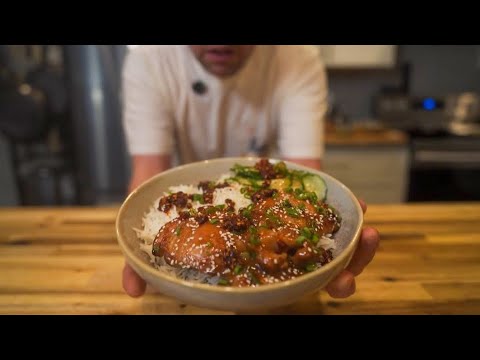
This teriyaki chicken rice bowl brings tender chicken, fluffy jasmine rice, and a mix of broccoli, red pepper, and snap peas together with a glossy, savory-sweet sauce. It is a complete, flexible dinner made from familiar ingredients, with enough fresh vegetables to keep every bite crisp and colorful.
For a sauce that clings instead of pooling at the bottom, the chicken is cooked first and the teriyaki mixture is thickened briefly in the pan. The vegetables are cooked just until bright and tender-crisp, so they keep their texture beside the rice. Expect salty-sweet chicken, a little ginger and garlic, and fresh, crunchy edges from the vegetables and green onions.
Why This Recipe Works
Cutting the chicken into evenly sized pieces helps it cook at a similar rate and gives more surface area for the sauce to coat. A hot skillet browns the outside before the chicken releases too much moisture; cooking in batches, if needed, keeps the pieces from steaming in a crowded pan. Chicken is done when the thickest pieces reach 165°F (74°C) on an instant-read thermometer.
The sauce balances salty soy sauce with mirin, brown sugar, and a small amount of honey. Garlic and fresh ginger add savory fragrance, while a cornstarch slurry thickens the sauce quickly at the end. Adding the slurry only after the chicken is cooked lets you control the consistency without leaving the chicken to overcook while the sauce reduces.
Broccoli, bell pepper, and snap peas need different amounts of time to become tender. Giving the broccoli a short head start, then adding the quicker-cooking vegetables, helps preserve their color and a little bite. They finish in the same pan, so the sauce can lightly coat them without turning them limp.
Ingredients
- 1 pound boneless, skinless chicken thighs or breasts
- 1 cup uncooked jasmine rice, or rice of your choice
- 2 cups broccoli florets, cut into bite-size pieces
- 1 red bell pepper, sliced into strips
- 1 cup snap peas, trimmed if needed
- 2 green onions, thinly sliced
- 2 tablespoons sesame seeds, optional, for garnish
- 1 tablespoon neutral cooking oil, such as canola or avocado oil
- 1/3 cup soy sauce
- 1/4 cup water, plus 2 tablespoons for the vegetables
- 2 tablespoons mirin
- 2 tablespoons packed brown sugar
- 1 tablespoon honey
- 2 cloves garlic, finely minced or grated
- 1 teaspoon finely grated fresh ginger
- 1 tablespoon cornstarch
- 1 tablespoon cold water, for the cornstarch slurry
- 1/4 teaspoon freshly ground black pepper
Ingredient Notes
Chicken: Thighs stay juicy and are forgiving if they cook a little longer; breasts are leaner and work well when cut into evenly sized pieces. Either way, use a thermometer and cook to 165°F. If the chicken is frozen, thaw it in the refrigerator before cutting and cooking.
Rice: Jasmine rice has a soft, lightly fragrant texture that suits the sauce, but long-grain white rice, brown rice, or another preferred rice can work. Water amounts and cooking times vary, especially for brown rice, so follow the package directions for your chosen rice. Cook it separately while you prepare the chicken and vegetables.
Vegetables: Broccoli, red pepper, and snap peas provide different textures and cook quickly. You can replace one with thinly sliced carrots, green beans, or mushrooms; cut vegetables to similar, bite-size dimensions and adjust the cooking time to match their firmness.
Soy sauce and mirin: Soy sauce provides the sauce’s salty, savory base. Use reduced-sodium soy sauce if you prefer a less salty result, but taste before adding any extra salt. Mirin contributes mild sweetness and acidity; if you do not have it, use an equal amount of water and a little extra sugar. For a gluten-free bowl, use certified gluten-free tamari and check the labels on the other sauce ingredients.
Sweeteners, aromatics, and thickener: Brown sugar and honey give the sauce a rounded sweetness. You can use 3 tablespoons of brown sugar in place of the honey, adjusting to taste. Fresh ginger and garlic give the sauce a brighter aroma than dried seasonings; in a pinch, use 1/4 teaspoon ground ginger and 1/2 teaspoon garlic powder. Cornstarch thickens the sauce, but arrowroot starch can be used in the same amount.
Instructions
- Cook the rice. Rinse the jasmine rice in a fine-mesh strainer until the water runs mostly clear, if desired. Combine it with the amount of water specified on its package and cook according to the package directions; for many jasmine rices, that is about 15 minutes of covered simmering followed by 5 to 10 minutes of resting off the heat. The rice is ready when the grains are tender and the water is absorbed. Keep it covered while you cook the rest of the meal so it stays warm and fluffy.
- Prepare the chicken and sauce ingredients. Pat the chicken dry and cut it into roughly 1-inch pieces. In a small bowl, whisk together the soy sauce, 1/4 cup water, mirin, brown sugar, honey, garlic, ginger, and black pepper. In a separate small cup, stir the cornstarch with 1 tablespoon cold water until smooth. Keeping the slurry separate prevents the starch from clumping before it goes into the hot sauce.
- Brown the chicken. Heat the oil in a large skillet over medium-high heat until it shimmers. Add the chicken in a single layer, working in batches if the pan is crowded. Cook for about 3 to 4 minutes without moving it much, then stir and cook another 3 to 5 minutes. The pieces should have browned patches and no raw-looking centers; check the thickest pieces with a thermometer and continue cooking until they reach 165°F (74°C). Transfer the cooked chicken to a clean plate.
- Cook the vegetables. Add the broccoli and 2 tablespoons water to the same skillet. Cover and cook over medium heat for 2 to 3 minutes, until the broccoli is bright green and beginning to soften. Remove the lid, add the bell pepper and snap peas, and cook for 2 to 3 minutes, stirring often. The vegetables should be hot and bright, with a little firmness left; that texture holds up when the sauce is added. Transfer them to the plate with the chicken, or push them to the edges of the pan.
- Thicken the teriyaki sauce. Pour the soy mixture into the skillet and bring it to a gentle simmer over medium heat, stirring to lift any browned bits. Stir the cornstarch slurry once more, then pour it into the simmering sauce while stirring. Cook for 1 to 2 minutes, until the sauce looks glossy and lightly coats the back of a spoon. If it becomes too thick, stir in water 1 tablespoon at a time.
- Coat and serve. Return the chicken and vegetables to the skillet and toss for about 1 minute, just until everything is coated and hot. Spoon rice into bowls and top with the chicken and vegetables. Finish with green onions and sesame seeds, if using. Serve while warm, with any extra sauce from the pan drizzled over the bowls.
Optional oven method for the chicken: For hands-off cooking, heat the oven to 425°F (220°C). Arrange the chicken pieces in a single layer on a lightly oiled, rimmed baking sheet and bake for about 15 to 20 minutes, turning once, until the thickest pieces reach 165°F (74°C). Piece size and oven differences affect the timing, so use the temperature rather than the clock as the final doneness check. Make the sauce in a skillet as directed, then toss in the baked chicken and cooked vegetables.
Tips for Success
- Dry the chicken before it hits the pan. Patting it dry helps the surface brown instead of releasing water and steaming.
- Avoid crowding the skillet. The chicken needs room for moisture to evaporate. Cook in two batches if the pieces touch or the pan cools down noticeably.
- Cut pieces evenly. Similar-sized chicken pieces finish at about the same time, and bite-size vegetables are easier to cook and serve.
- Keep the sauce at a gentle simmer. A hard boil can make a sugary sauce reduce too quickly or stick. Stir as it thickens and take it off the heat once it coats the ingredients.
- Make the slurry with cold water. Mixing cornstarch with cold water first helps it blend smoothly into the hot sauce without lumps.
- Cook rice according to its package. Different rice varieties need different water ratios and cooking times. Resting covered after cooking helps the grains finish steaming.
- Season at the end. Soy sauce varies in saltiness, and the sauce reduces slightly as it simmers. Taste before adding more soy sauce or salt.
Troubleshooting
The chicken is pale and watery. The skillet may be crowded, the chicken may have been wet, or the pan may not have been hot enough. Move the chicken to a plate, let excess liquid evaporate, then brown the next batch in a single layer. A little browning adds flavor, but the chicken must still reach 165°F.
The sauce is too thin. Mix another 1 teaspoon cornstarch with 1 tablespoon cold water, stir it into the simmering sauce, and cook briefly until it thickens. Do not sprinkle dry cornstarch directly into the pan.
The sauce is too thick or sticky. Take the pan off the heat and stir in water 1 tablespoon at a time until it loosens. Add the chicken and vegetables promptly; a thick sauce can tighten further as it cools.
The sauce tastes too salty. Stir in a splash of water and serve it over unsalted rice. Next time, choose reduced-sodium soy sauce or use a little less soy sauce and replace that amount with water.
The vegetables are soft. They were likely cooked too long or left covered after cooking. For a crisper result, shorten the covered broccoli step and cook the peppers and snap peas only until heated through. Add the sauce-coated mixture to the bowls soon after tossing.
The rice is gummy or wet. Too much water, frequent stirring, or skipping the covered rest can affect the texture. Use the package ratio, keep the lid on while it cooks, and fluff gently with a fork after resting.
Variations
Make it spicy: Add red pepper flakes to the sauce or serve bowls with chili crisp or a little hot sauce. Start with a small amount so the ginger, garlic, and teriyaki flavor remain distinct.
Swap the protein: Use boneless pork or firm tofu in place of the chicken. Cook pork to 145°F (63°C) followed by a 3-minute rest, or cook tofu until hot and browned to your liking. If using seafood, cook it separately and follow the USDA-safe temperature guidance for that specific seafood; shrimp should be opaque and reach 145°F (63°C).
Change the vegetables: Thin carrot slices, sliced mushrooms, zucchini, or green beans can replace some of the listed vegetables. Add firm vegetables earlier and quick-cooking ones later so the mix finishes evenly.
Adjust the sweetness: Reduce the brown sugar or honey if you like a less-sweet sauce. Taste the simmered sauce before thickening and adjust gently; once the cornstarch is added, it is harder to blend in a large change without altering the texture.
Use another grain: Serve the chicken and vegetables with brown rice, quinoa, or noodles. Cook the alternative separately according to its package directions; the bowl topping does not need to change.
What to Serve With It
This bowl is a full meal as written, so extra sides are optional. For a little more freshness, serve it with cucumber slices, a simple cabbage salad, or a wedge of lime. If you want a heartier spread, add miso soup or another light soup, keeping the portions modest so the rice bowl remains the center of the meal.
Set out extra green onions, sesame seeds, and a small dish of chili flakes so everyone can finish their own bowl. If serving the sauce separately, keep it hot and use a clean spoon rather than one that has touched raw chicken.
Make-Ahead, Storage and Reheating
Make ahead: Cook the rice and chop the vegetables up to a day ahead, storing them separately in covered containers in the refrigerator. You can also whisk the sauce ingredients together ahead of time, but keep the cornstarch slurry separate and mix it just before cooking. For the freshest texture, cook the chicken and vegetables close to serving time.
Refrigerate leftovers: Refrigerate cooked chicken, rice, and vegetables within 2 hours of cooking, using shallow, covered containers so they cool promptly. Keep leftovers refrigerated at 40°F (4°C) or below and use them within 3 to 4 days. Do not leave cooked rice or chicken at room temperature for longer than 2 hours; if the room is above 90°F (32°C), refrigerate within 1 hour.
Freeze: Freeze leftovers in airtight, freezer-safe containers. For best quality, use within 3 to 4 months. Thaw in the refrigerator before reheating. Rice and vegetables may soften after freezing, but the dish remains useful for a quick meal when reheated thoroughly.
Reheat safely: Reheat only the amount you plan to eat, in a covered skillet over medium-low heat with a splash of water, stirring until steaming hot. A microwave also works: cover loosely, heat in short intervals, and stir between intervals so the center warms evenly. Reheat leftovers to 165°F (74°C). Avoid repeatedly cooling and reheating the same portion.
Recipe Card
Servings: 4
Prep time: 15 minutes
Cook time: 25 minutes, depending on rice variety
Total time: About 40 minutes
Ingredients
- 1 pound boneless, skinless chicken thighs or breasts
- 1 cup uncooked jasmine rice, or rice of your choice
- 2 cups broccoli florets
- 1 red bell pepper, sliced
- 1 cup snap peas
- 2 green onions, sliced
- 2 tablespoons sesame seeds, optional
- 1 tablespoon neutral cooking oil
- 1/3 cup soy sauce
- 1/4 cup water, plus 2 tablespoons for the vegetables
- 2 tablespoons mirin
- 2 tablespoons packed brown sugar
- 1 tablespoon honey
- 2 cloves garlic, minced
- 1 teaspoon grated fresh ginger
- 1 tablespoon cornstarch mixed with 1 tablespoon cold water
- 1/4 teaspoon black pepper
Condensed steps
- Cook rice according to its package directions; keep covered and warm.
- Cut chicken into 1-inch pieces. Whisk soy sauce, 1/4 cup water, mirin, brown sugar, honey, garlic, ginger, and pepper in a bowl.
- Heat oil in a large skillet over medium-high. Brown chicken in a single layer, in batches if needed, cooking about 6 to 9 minutes total until the thickest pieces reach 165°F (74°C). Transfer to a plate.
- Add broccoli and 2 tablespoons water to the skillet. Cover and cook 2 to 3 minutes. Add bell pepper and snap peas; stir-fry 2 to 3 minutes until bright and just tender.
- Simmer the sauce mixture in the skillet. Stir in the cornstarch slurry and cook 1 to 2 minutes until glossy and lightly thickened.
- Return chicken and vegetables to the skillet and toss until hot and coated. Serve over rice with green onions and sesame seeds.
Frequently Asked Questions
Can I make the teriyaki sauce without mirin?
Yes. Replace the 2 tablespoons of mirin with 2 tablespoons water and add a little extra brown sugar if you want to maintain the sweetness. The flavor will be slightly different, but the sauce will still coat the chicken and vegetables.
Should I use chicken thighs or chicken breasts?
Both work. Thighs are more forgiving and tend to stay moist; breasts are leaner and cook well when cut evenly. In either case, check the thickest piece with a thermometer and cook until it reaches 165°F (74°C).
Can I use frozen vegetables?
Yes, although they may release more moisture and have a softer texture. Thaw and drain them first when possible, then cook briefly until hot. Add them after the broccoli step, and avoid covering the skillet for long.
Can I make this gluten-free?
Use certified gluten-free tamari instead of soy sauce, and check that the mirin and other packaged ingredients are labeled gluten-free. Serve with rice that is free of cross-contact if that is a concern.
Can I make the sauce ahead?
Whisk the soy sauce, water, mirin, sweeteners, garlic, and ginger together and refrigerate in a covered container for up to a day. Keep the cornstarch and cold water separate; make the slurry just before thickening the sauce.
How do I keep the vegetables crisp?
Cut them into bite-size pieces, cook the broccoli only until it starts to soften, and add the pepper and snap peas near the end. Toss everything with the thickened sauce briefly and serve right away.
Can I prepare this bowl completely ahead?
Yes. Cook the components, cool and refrigerate them promptly, then reheat portions until they reach 165°F (74°C). For the best vegetable texture, store the rice and topping separately and combine them after reheating.
Can I use brown rice?
Yes. Brown rice takes longer to cook than jasmine rice, and its water needs vary by type. Start it first and follow its package directions; the chicken and vegetables can be prepared while it cooks.