
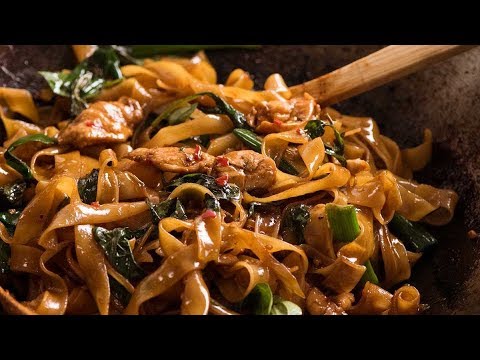
Thai drunken noodles, or pad kee mao, are wide rice noodles stir-fried with chicken, vegetables, basil, and a savory, lightly sweet sauce. They’re usually spicy, but the heat is easy to adjust at home by changing how much bird’s eye chili you use.
This version keeps the prep manageable: soak the noodles until pliable, mix the sauce before you start, and cook the chicken and vegetables over high heat before briefly tossing everything together. Expect chewy noodles, tender chicken, crisp-tender broccoli and pepper, and a bold sauce finished with fragrant basil.
Why This Recipe Works
Stir-frying moves quickly, so getting the ingredients ready first matters. Mixing the soy sauce, oyster sauce, water, sugar, and optional fish sauce in advance means you can season the noodles evenly without pausing while something overcooks.
Soaked noodles should be flexible but still a little firm before they go into the pan. They finish cooking in the sauce, where they can absorb flavor without spending so long over heat that they turn soft or break apart. If your noodles are already fully tender after following the package directions, add them near the end and toss gently.
Cooking the chicken before the vegetables gives it direct contact with the hot pan and makes it easier to check for doneness. Keep the pan hot and avoid crowding it; if the chicken or vegetables release a lot of liquid, they’ll steam instead of quickly browning. Basil goes in last so its aroma stays fresh.
Ingredients
- 8 oz (225 g) dried wide rice noodles
- 1 lb (450 g) boneless, skinless chicken breast, sliced thinly across the grain
- 2 tbsp vegetable oil, divided
- 4 cloves garlic, minced
- 1–2 Thai bird’s eye chilies, thinly sliced; use less or remove the seeds for milder heat
- 1 medium red bell pepper, about 1 cup (150 g), thinly sliced
- 1 cup (about 90 g) small broccoli florets
- 1 cup (about 20 g) loosely packed Thai basil leaves, or regular basil
- 3 tbsp (45 ml) soy sauce
- 1 tbsp (15 ml) oyster sauce
- 2 tbsp (30 ml) water
- 1 tsp (4 g) granulated sugar
- 1 tsp (5 ml) fish sauce, optional
Ingredient Notes
Wide rice noodles: Dried wide rice noodles are convenient and take on the sauce well. Brands and thicknesses vary, so use the package’s soaking or cooking directions as your guide. The goal is noodles that bend without snapping but still feel slightly firm. Fresh wide rice noodles can also work; separate them gently and add them late, since they need little cooking.
Chicken breast: Slice across the grain into thin, similarly sized pieces so the chicken cooks quickly and evenly. Boneless, skinless chicken thighs are a good substitute; they may need a little longer to cook, so check their temperature rather than relying only on time.
Soy and oyster sauces: Soy sauce gives the dish its salty, savory base, while oyster sauce adds a rounder, slightly sweet savoriness. Regular or reduced-sodium soy sauce is fine. Oyster sauce is not vegetarian; for a vegetarian version, use a vegetarian mushroom-based stir-fry sauce and check its label.
Fish sauce and sugar: Fish sauce is optional, but a small amount adds another savory note. The sugar balances the salty sauces rather than making the noodles sweet. If you leave out fish sauce, no replacement is necessary.
Chili and basil: Thai bird’s eye chilies can be very hot. Start with one, or use a small amount of another fresh hot chili. Thai basil has a distinctive peppery, anise-like aroma; regular basil is an accessible substitute, though the flavor will be different. Add either kind at the end.
Vegetables: Cut the broccoli into small florets so it cooks in the short stir-fry. The red pepper contributes sweetness and color. Keep the pieces fairly thin and similar in size for even cooking.
Instructions
- Soak the noodles. Prepare the 8 oz of dried rice noodles according to the package directions, usually by soaking in warm or room-temperature water. Begin checking early. Drain when the noodles are pliable but still slightly firm in the center; they should not be fully soft. This leaves room for them to finish in the pan without becoming mushy. If your package calls for boiling, follow its timing and drain promptly.
- Mix the sauce and prepare the pan ingredients. In a small bowl, stir together the soy sauce, oyster sauce, water, sugar, and optional fish sauce until the sugar dissolves. Set it beside the stove. Slice the chicken and vegetables, mince the garlic, and slice the chili. Stir-frying takes only a few minutes, so having everything ready prevents overcooking.
- Heat the pan. Set a large wok or wide skillet over high heat for about 1–2 minutes, until it is thoroughly hot. Add 1 tablespoon of the vegetable oil and swirl it to coat the cooking surface. A hot pan helps sear the chicken; if the oil begins to smoke heavily, lower the heat slightly.
- Cook the chicken. Add the chicken in a single layer, working in two batches if the pan is crowded. Stir-fry for about 3–5 minutes, turning the pieces until they are opaque and lightly browned. Check the thickest pieces with an instant-read thermometer: chicken is safe at 165°F (74°C). Transfer cooked chicken to a clean plate. Cooking in batches helps the meat brown instead of releasing liquid and steaming.
- Stir-fry the aromatics and vegetables. Add the remaining 1 tablespoon oil to the pan. Add the garlic and chili and stir for about 15–30 seconds, just until fragrant; don’t let the garlic brown. Add the broccoli and bell pepper and stir-fry for 2–3 minutes. The broccoli should turn bright green and be crisp-tender, while the pepper should soften slightly but retain some bite.
- Add noodles, chicken, and sauce. Return the chicken to the pan and add the drained noodles. Pour the sauce over everything and toss with tongs for about 1–2 minutes, lifting and turning the noodles until they are coated and hot. The noodles should be tender but still chewy. If they stick or the pan looks dry before they soften, add water 1 tablespoon at a time; too much liquid can make the dish soupy.
- Finish with basil and serve. Turn off the heat, add the basil, and toss just until the leaves wilt, about 15–30 seconds. Taste a noodle and adjust only if needed: a little extra soy sauce can add saltiness, while a splash of water can loosen a sauce that tastes too concentrated. Serve right away for the best noodle texture.
Tips for Success
- Read the noodle package. Rice noodles vary in thickness and preparation. Stop soaking when they are flexible but not fully soft, and drain them well so excess water doesn’t dilute the sauce.
- Make the chicken slices even. Thin pieces cook quickly; uneven chunks can leave small pieces dry before larger ones reach a safe temperature.
- Use a wide pan and cook in batches. A crowded pan loses heat and traps moisture. If your skillet is small, cook the chicken in two batches and keep the vegetables in a single layer as much as possible.
- Keep the sauce close at hand. Garlic can go from fragrant to burnt quickly over high heat. Have the sauce and noodles ready before the garlic hits the pan.
- Use small broccoli florets. Large pieces may remain hard while the noodles finish. If your florets are large, cut them smaller or give them an extra minute in the pan.
- Adjust chili carefully. Start with one chili if you’re unsure. You can add heat at the table, but you can’t take it back out of the pan.
Troubleshooting
The noodles are sticking together. They may be over-soaked, insufficiently drained, or sitting while you prepare the rest. Toss them with a few drops of oil if they must wait briefly, then loosen them gently before adding. In the pan, add a tablespoon of water and lift the noodles with tongs rather than stirring hard.
The noodles are too firm. Add water 1 tablespoon at a time and keep tossing over medium-high heat until they soften. Covering the pan briefly can help, but check often; prolonged steaming can make them gummy.
The dish tastes too salty. Add a small splash of water and toss. Next time, use reduced-sodium soy sauce or omit the optional fish sauce. Avoid adding more oyster sauce to correct the flavor, since it also contributes salt.
The chicken or vegetables are watery rather than browned. The pan may be crowded or not hot enough. Cook in smaller batches, let moisture evaporate before adding the next ingredient, and avoid adding wet vegetables straight from rinsing.
The noodles are mushy or broken. They were likely too soft before stir-frying or were tossed too long. Start checking the noodles early, drain as soon as they are pliable, and use a lifting motion when combining them with the sauce.
Variations
Make it hotter: Use two bird’s eye chilies or add another sliced chili at the table. For a gentler version, use one chili with the seeds removed, or leave it out.
Change the protein: Thinly sliced boneless chicken thighs can replace the breast. Shrimp or thin strips of beef can also be used, but cook them separately until done and check seafood or meat with an instant-read thermometer where appropriate. Shrimp should be pearly and opaque; food-safety guidance is 145°F (63°C) for seafood. For beef, whole cuts have a minimum safe temperature of 145°F (63°C) followed by a three-minute rest.
Make it vegetarian: Replace chicken with firm tofu and use vegetarian mushroom-based stir-fry sauce instead of oyster sauce. Press and pat the tofu dry, then brown it before cooking the vegetables. Leave out fish sauce. Check sauce labels, since ingredients vary.
Use other vegetables: Thinly sliced carrots, snap peas, or mushrooms can replace some of the pepper or broccoli. Keep the total amount moderate so the pan stays hot and the noodles remain the focus.
What to Serve With It
Pad kee mao is a complete meal with noodles, chicken, and vegetables, so it needs little alongside it. Serve with lime wedges for a bright squeeze at the table, or add sliced cucumber or a simple leafy salad for a cool contrast to the chili. If serving a group, steamed rice is usually unnecessary because the noodles are already substantial; a small side of extra vegetables is a better complement.
Make-Ahead, Storage and Reheating
Make ahead: Slice the chicken and vegetables, mince the aromatics, and mix the sauce up to a day ahead. Keep raw chicken covered in the refrigerator, separate from ready-to-eat ingredients, and prepare the noodles close to cooking time. Once soaked, rice noodles can stick together, so drain them well and avoid leaving them out at room temperature.
Refrigerate: Refrigerate leftovers within 2 hours of cooking, or within 1 hour if the temperature is above 90°F (32°C). Store in a shallow, airtight container and use within 3–4 days. Keep the refrigerator at 40°F (4°C) or below.
Freeze: You can freeze portions in airtight, freezer-safe containers. For best quality, use within 3–4 months; noodles may soften after thawing. Keep the freezer at 0°F (-18°C). Thaw in the refrigerator, not on the counter, and reheat promptly.
Reheat: Warm a portion in a skillet over medium heat with 1–2 tablespoons of water, tossing gently until steaming hot. A microwave also works: cover loosely, heat in short intervals, and stir between intervals. Reheat leftovers to 165°F (74°C). Add a little water if the noodles have tightened in the refrigerator.
Recipe Card
Servings: 4
Prep time: 25 minutes, including noodle soaking (package directions may vary)
Cook time: 12 minutes
Total time: About 37 minutes. No oven is needed.
Ingredients
- 8 oz (225 g) dried wide rice noodles
- 1 lb (450 g) boneless, skinless chicken breast, thinly sliced
- 2 tbsp vegetable oil, divided
- 4 cloves garlic, minced
- 1–2 Thai bird’s eye chilies, sliced
- 1 medium red bell pepper (about 1 cup or 150 g), sliced
- 1 cup (about 90 g) small broccoli florets
- 1 cup (about 20 g) loosely packed Thai basil leaves, or regular basil
- 3 tbsp (45 ml) soy sauce
- 1 tbsp (15 ml) oyster sauce
- 2 tbsp (30 ml) water
- 1 tsp (4 g) granulated sugar
- 1 tsp (5 ml) fish sauce, optional
Condensed Instructions
- Soak or cook the noodles according to the package directions; drain when pliable but still slightly firm.
- Mix soy sauce, oyster sauce, water, sugar, and optional fish sauce. Prepare all chicken, vegetables, garlic, and chili.
- Heat a wok or wide skillet over high heat for 1–2 minutes. Add 1 tablespoon oil and stir-fry chicken, in batches if needed, for 3–5 minutes, until the thickest pieces reach 165°F (74°C). Transfer to a clean plate.
- Add remaining oil, garlic, and chili; stir for 15–30 seconds. Add broccoli and pepper and stir-fry for 2–3 minutes, until bright and crisp-tender.
- Return chicken to the pan. Add noodles and sauce and toss for 1–2 minutes until coated and hot. Add water a tablespoon at a time if the noodles need loosening.
- Turn off the heat, toss in basil until just wilted, and serve immediately.
Frequently Asked Questions
Does pad kee mao contain alcohol?
No alcohol is needed for this recipe. The name is commonly translated as “drunken noodles,” but the dish can be made with the ingredients listed here and no wine or spirits.
How spicy is this recipe?
The heat depends mostly on the bird’s eye chilies, which can vary in strength. Start with one chili or use less, then increase the amount on a later batch if you want more heat. Removing the seeds and inner ribs can make the chili less intense.
Can I use fresh rice noodles?
Yes. Fresh wide rice noodles are often already soft, so separate them gently and add them near the end with the sauce. Toss just until hot and coated; extended cooking can make them break apart.
Can I prepare the noodles ahead?
It’s best to prepare them shortly before stir-frying because soaked noodles can stick together. If you need to do it ahead, drain them thoroughly, keep them covered in the refrigerator, and loosen gently before adding to the pan.
What can I use instead of Thai basil?
Regular basil works and is listed as an alternative, though it has a different aroma. Add it after turning off the heat so it wilts gently instead of cooking down.
Can I make this without oyster sauce?
For a vegetarian version, use a vegetarian mushroom-based stir-fry sauce in its place and omit the optional fish sauce. If you simply don’t have oyster sauce, a little extra soy sauce can season the dish, but the result will be less rounded and may taste saltier.
How do I know the chicken is safe to eat?
Check the thickest pieces with an instant-read thermometer. Poultry should reach 165°F (74°C). Color alone is not a reliable way to determine its temperature.
Can I double the recipe?
Yes, but stir-fry in batches rather than doubling everything in one pan. Crowding a home skillet makes the ingredients release moisture and steam. Keep cooked batches warm while you finish, then toss them together briefly with the basil.