
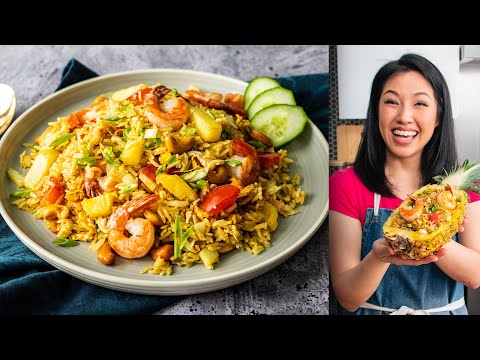
Thai pineapple fried rice brings together fragrant jasmine rice, juicy pineapple, crisp vegetables, and a savory, lightly spiced sauce. This version is designed for a home stovetop: the ingredients cook quickly in a clear sequence, so the rice browns instead of turning soft and the pineapple stays distinct.
Expect a lively balance of sweet, salty, tangy, and gently savory, with curry powder for warm color and flavor, lime for a fresh finish, and toasted nuts for crunch. Choose shrimp, chicken, or tofu, and have everything chopped and measured before you heat the pan.
Why This Recipe Works
Cold, cooked rice is the foundation. Chilling firms the grains and dries their surface, which helps them separate and take on a little color in a hot pan. Freshly cooked, steamy rice tends to clump and can make the finished dish heavy. Break up any cold clumps with your fingers before cooking.
The ingredients go into the pan in stages rather than all at once. Protein gets cooked first and moved to a plate; vegetables and aromatics follow; then the rice gets direct contact with the hot pan. This avoids overcrowding and keeps delicate shrimp from overcooking while the rice fries.
Pineapple is added after the rice has started to heat through. Patting it dry and briefly cooking it at the end reduces excess moisture while preserving its bright, juicy character. The soy sauce and fish sauce season the rice, while lime is added at the table so its fresh acidity remains vivid.
Ingredients
- 1 cup (about 7 oz) uncooked jasmine rice, cooked and chilled to make about 3 cups
- 8 oz peeled, deveined shrimp, boneless skinless chicken cut into ½-inch pieces, or firm tofu cut into ½-inch cubes
- 1½ cups fresh pineapple, cut into bite-size pieces and patted dry
- ½ cup red bell pepper, diced
- ½ cup frozen green peas, thawed
- ½ cup carrot, peeled and finely diced
- 2 large eggs
- 2 tbsp neutral cooking oil, divided
- ½ cup yellow onion, finely diced
- 2 cloves garlic, finely minced
- 1 tbsp soy sauce
- 1 tsp fish sauce
- 1 tsp curry powder
- ¼ tsp fine salt, plus more as needed
- ⅛ tsp ground black pepper
- ¼ cup roasted cashews or peanuts, roughly chopped
- 1 lime, cut into wedges
- 2 tbsp sliced scallions, optional, for serving
Ingredient Notes
Jasmine rice: Its fragrance and tender texture suit this dish, but another long-grain rice works if that is what you have. Cook the rice according to its package directions, then chill it before frying. The 1 cup dry amount is an estimate; use about 3 cups cooked rice for the recipe.
Pineapple: Fresh pineapple gives the most defined pieces and a clean sweet-tart flavor. Canned pineapple also works: drain it very well and pat it dry, since its extra liquid can soften the rice. Cut large pieces small enough to mix easily.
Protein: Shrimp, chicken, and firm tofu are all suitable. Use raw chicken or shrimp and cook it fully before returning it to the pan. Press tofu to remove excess water; this helps it brown. For a vegetarian version, choose tofu and omit the fish sauce, replacing it with another teaspoon of soy sauce.
Vegetables and aromatics: Bell pepper, peas, and carrots give the rice contrasting color and texture. Dice the carrot small so it softens quickly. Yellow onion is mellow and sweet when cooked; a shallot can stand in. Fresh garlic is best here, though a small amount of garlic paste is convenient.
Eggs: Scrambled egg adds tender pieces throughout the rice. Whisk them just before cooking and remove them while still soft-set; they will warm again when folded back in. For food safety, cook egg dishes to 160°F.
Soy sauce, fish sauce, and curry powder: Soy sauce brings salt and savory depth; fish sauce contributes a concentrated savory note. Curry powder adds warm spice and golden color, so measure it rather than pouring freely. Use tamari for a gluten-free soy sauce alternative, checking that the other ingredients are also suitable for your needs.
Nuts and lime: Cashews are buttery and peanuts are more robust; either adds a crisp finish. Keep nuts separate until serving so they stay crunchy. Lime wedges let each person adjust the final acidity.
Instructions
- Cook and chill the rice. Cook 1 cup jasmine rice according to its package directions. Spread the cooked rice in a shallow container to help it cool quickly, then refrigerate it promptly. For best frying, use cold rice; gently break apart clumps before you start. Cooked rice should not sit at room temperature for more than 2 hours (or 1 hour when the temperature is above 90°F). Look for: separate, cool grains rather than a warm, steamy mass. Why: drier, chilled grains fry more cleanly.
- Prepare the ingredients. Dice the vegetables and onion, mince the garlic, pat the pineapple dry, and measure the sauces and curry powder. Whisk the eggs in a small bowl. Keep the protein separate from ready-to-eat ingredients, and wash hands and utensils after handling raw meat or seafood. Look for: everything within reach before the pan heats. Why: stir-frying moves quickly, and advance prep prevents overcooking.
- Cook the protein. Heat 1 teaspoon oil in a large skillet or wok over medium-high to high heat until the oil shimmers. Add the chosen protein in a single layer, working in batches if needed. Cook shrimp for about 2–3 minutes per side, chicken for about 5–7 minutes total depending on piece size, or tofu for about 5–7 minutes, turning to brown several sides. Move cooked protein to a clean plate. Look for: shrimp opaque and pearly, chicken with no pink center, or tofu with golden edges. Verify shrimp reaches 145°F and chicken reaches 165°F with a food thermometer. Tofu should be hot and browned. Why: cooking the protein separately gives it room to brown and keeps it from overcooking during the rice step.
- Scramble the eggs. Add 1 teaspoon oil to the same pan. Pour in the eggs and cook over medium-high heat, gently pushing the setting edges toward the center for about 1–2 minutes. Transfer them to the plate with the protein when just set. Look for: no liquid egg remains; the curds should still look tender, not browned or dry. For food safety, the eggs should reach 160°F. Why: setting them separately keeps recognizable, soft pieces in the finished rice.
- Soften the vegetables and aromatics. Add the remaining 4 teaspoons oil to the pan. Add onion, carrot, and bell pepper and stir-fry for 2–3 minutes over medium-high to high heat. Add garlic and curry powder and stir for about 30 seconds, just until fragrant. Add the peas and cook for another minute. Look for: the onion beginning to turn translucent, the carrot losing its raw edge but still offering a little bite, and garlic that smells fragrant rather than browned. Why: the vegetables need a brief head start, while garlic and curry powder can scorch if left in the hot pan too long.
- Fry the rice. Add the cold rice, breaking up any remaining clumps. Spread it across the pan and let it sit undisturbed for 30–45 seconds, then toss and repeat for about 3–4 minutes. If the pan is small, fry the rice in two batches. Look for: separated grains that are hot throughout, with a few lightly toasted spots and no wet clumps. Why: contact with the hot pan helps the rice dry and develop flavor instead of steaming.
- Season and finish. Stir together the soy sauce, fish sauce, salt, and pepper, then drizzle over the rice while tossing. Add the pineapple, cooked protein, and eggs; stir-fry for 1–2 minutes, just until everything is hot. Check the center of the dish is steaming hot; if using leftover ingredients, reheat leftovers to 165°F. Taste and adjust with a little more soy sauce or salt if needed. Look for: the pineapple warmed through but still in distinct pieces, and the rice evenly seasoned without pooling sauce. Why: adding pineapple late preserves its texture, and a final taste check accounts for differences in sauce saltiness.
- Serve. Divide the rice among bowls or plates. Top with cashews or peanuts and scallions if using, and serve lime wedges alongside. Look for: crisp nuts and fresh lime added at the last moment. Why: keeping the toppings separate protects their texture and lets diners balance the sweetness with lime.
Tips for Success
- Plan for cold rice. Cook it earlier in the day or the night before, cool it quickly in a shallow container, and refrigerate. If you must cook rice just before dinner, spread it thinly on a tray and refrigerate until cool; avoid leaving it out to cool for hours.
- Use a broad, hot pan. A wok or large skillet gives moisture room to evaporate. If ingredients mound up, cook in batches rather than forcing everything into a crowded pan.
- Keep the pineapple dry. Excess juice makes the rice wet. Blot fresh pineapple with a clean towel or drain canned pineapple thoroughly before measuring.
- Cut ingredients evenly. Small, similar-sized pieces cook at a similar pace and distribute more easily through the rice. Keep the carrot especially fine because it takes longer to soften than peas.
- Season gradually. Soy and fish sauces vary in saltiness. Start with the listed amounts, taste after tossing, and add more in small increments.
- Do not stir constantly. A short pause lets the rice touch the pan and brown. Toss it to prevent sticking, then give it another moment of contact.
- Keep the garnish out of the pan. Add nuts and lime at serving, not during the fry. Nuts stay crisp, and lime tastes brighter when freshly squeezed over the dish.
Troubleshooting
The rice is soggy or clumped. It may have been warm, wet, or crowded in the pan. Spread it out and continue cooking over high heat in a broad pan, tossing occasionally to let moisture escape. For the next batch, chill the rice first and cook in smaller batches.
The rice tastes bland. Add soy sauce a teaspoon at a time, or add a small splash of fish sauce for more savory depth. A squeeze of lime can also make existing flavors seem more distinct. Taste before adding salt because the sauces already contain it.
The dish is too salty. Toss in a little extra plain cooked rice or unsalted vegetables if available, then finish with lime. Avoid adding more sauce or salt. The next time, reduce the soy sauce slightly and season only after everything is combined.
The pineapple makes the pan watery. Remove visible juice, blot the pieces dry, and add them only after the rice is hot. If liquid has already collected, spread the mixture out and cook briefly until the excess evaporates.
The protein is tough. Shrimp may have cooked too long, or chicken pieces may have been small and left in the pan. Cook protein separately, check chicken with a thermometer, and return it only at the end. Shrimp should be opaque and reach 145°F; do not rely on prolonged cooking to fix under-seasoning.
The garlic tastes bitter. It likely browned or scorched. Add garlic after the firmer vegetables, stir only until fragrant, and then add the rice promptly. If it is badly burnt, wipe out the pan and restart the aromatics.
Variations
Make it vegetarian: Use tofu and omit fish sauce. Replace it with an additional teaspoon of soy sauce, or use a vegetarian mushroom-based seasoning if you already keep one on hand. Choose roasted cashews or peanuts to finish.
Change the protein: Shrimp gives a quick-cooking option; chicken is mild and filling; firm tofu makes a meat-free version. You can also use cooked leftover chicken, but add it near the end and reheat it to 165°F.
Adjust the vegetables: Swap in diced green or yellow bell pepper, corn, or finely chopped green beans. Keep the total volume close to the listed amount so the pan does not become crowded, and cut vegetables small enough to cook quickly.
Make it spicier: Add sliced fresh chili or a small amount of chili flakes with the garlic. Add a little at a time; heat is easier to increase than to remove.
Use a different nut or omit it: Cashews and peanuts both work, but leave them off for a nut-free serving. The rice remains flavorful without them; add scallions or extra lime for a fresh finishing touch.
What to Serve With It
This fried rice can be a complete meal on its own, especially with shrimp, chicken, or tofu. For a larger spread, pair it with a crisp cucumber salad, simply dressed greens, or steamed vegetables. A light soup also works well alongside a generous portion.
Serve lime wedges at the table so each person can adjust the acidity. If offering chili sauce or sliced chilies, keep them on the side so the sweet-savory balance stays easy to customize.
Make-Ahead, Storage and Reheating
Make ahead: Cook and chill the rice, chop the vegetables, and measure the sauces ahead. Keep raw protein covered and refrigerated separately from ready-to-eat ingredients. For food safety, refrigerate perishable ingredients promptly and do not leave them at room temperature for more than 2 hours, or 1 hour above 90°F.
Refrigerate: Transfer cooked fried rice to shallow airtight containers and refrigerate within 2 hours of cooking. Use refrigerated leftovers within 3–4 days. Rice should be cooled and stored promptly rather than left out on the counter.
Freeze: Freeze cooled fried rice in airtight, freezer-safe portions. For best quality, use within 3–4 months. Thaw overnight in the refrigerator, or reheat from frozen in a covered skillet with a splash of water, stirring as it loosens.
Reheat: Reheat only the portion you plan to eat. In a skillet, add a splash of water, cover, and heat over medium, stirring occasionally until steaming hot throughout. In a microwave, cover loosely, stir halfway through, and continue heating until steaming hot. Reheated leftovers should reach 165°F. Do not repeatedly cool and reheat the same batch.
Recipe Card
Servings: 4 Prep time: 20 minutes, plus time to cook and chill rice Cook time: 20 minutes Total time: about 40 minutes, not including rice chilling
Ingredients
- 1 cup (about 7 oz) uncooked jasmine rice, cooked and chilled to make about 3 cups
- 8 oz shrimp, boneless skinless chicken cut into ½-inch pieces, or firm tofu cut into ½-inch cubes
- 1½ cups fresh pineapple, bite-size and patted dry
- ½ cup diced red bell pepper
- ½ cup thawed frozen green peas
- ½ cup peeled, finely diced carrot
- 2 large eggs
- 2 tbsp neutral cooking oil, divided
- ½ cup finely diced yellow onion
- 2 cloves minced garlic
- 1 tbsp soy sauce
- 1 tsp fish sauce
- 1 tsp curry powder
- ¼ tsp fine salt, plus more as needed
- ⅛ tsp ground black pepper
- ¼ cup chopped roasted cashews or peanuts
- 1 lime, cut into wedges
- 2 tbsp sliced scallions, optional
Condensed steps
- Cook the rice according to package directions, cool it quickly in a shallow container, and refrigerate until cold. Break up clumps.
- Heat 1 teaspoon oil in a large skillet over medium-high to high heat. Cook the protein until done: shrimp to 145°F, chicken to 165°F, or tofu until browned. Transfer to a plate.
- Add 1 teaspoon oil and scramble the eggs until set and at least 160°F. Transfer to the plate.
- Add the remaining 4 teaspoons oil. Stir-fry onion, carrot, and bell pepper for 2–3 minutes. Add garlic and curry powder for 30 seconds, then peas for 1 minute.
- Add cold rice and stir-fry for 3–4 minutes, allowing it to contact the pan between tosses. Stir in soy sauce, fish sauce, salt, and pepper.
- Add pineapple, protein, and egg; toss for 1–2 minutes until hot throughout. Serve with chopped nuts, lime wedges, and scallions if desired.
Frequently Asked Questions
Can I use freshly cooked rice?
Yes, but it is more likely to clump because it is warm and moist. Spread it in a shallow layer and refrigerate it until cool before frying. Handle cooked rice promptly and do not leave it at room temperature for hours.
Can I use canned pineapple?
Yes. Drain it thoroughly and pat it dry before measuring. Add it near the end of cooking so it warms without releasing too much liquid into the rice.
Do I have to use fish sauce?
No. It adds a concentrated savory flavor, but you can omit it. For a vegetarian version, use tofu and replace the fish sauce with an extra teaspoon of soy sauce.
How do I know the chicken or shrimp is safe to eat?
Check chicken with a food thermometer; it should reach 165°F. Shrimp should reach 145°F and look opaque and pearly. Cook them separately, then add them back near the end.
Can I make the fried rice ahead?
You can prepare the chilled rice and cut vegetables in advance, then fry the dish shortly before serving. You can also refrigerate cooked fried rice promptly for 3–4 days or freeze it for best quality within 3–4 months.
Can I make this without a wok?
Yes. Use the largest skillet you have and avoid crowding it. If the rice and vegetables do not fit in a loose layer, fry them in batches so moisture can escape.
Is this recipe spicy?
As written, it is gently spiced rather than hot. Curry powder gives warmth and color, but not necessarily chili heat. Add fresh chili or chili flakes at the table if you want more heat.
What is the best way to reheat leftovers?
Reheat a portion in a covered skillet with a splash of water or in a covered microwave-safe dish. Stir as it heats and make sure it is steaming hot throughout and reaches 165°F.