
This Thai red curry chicken is a one-pan stovetop meal of tender chicken, crisp-tender green beans, and red bell pepper in a creamy coconut curry sauce. It is a practical dinner for serving with rice, and the ingredients come together without a long simmer.
The method builds flavor by briefly frying the curry paste before adding coconut milk and broth, then finishes the sauce with fish sauce, brown sugar, and lime. Expect a savory, gently sweet sauce with citrus brightness; the heat depends on the curry paste you choose.
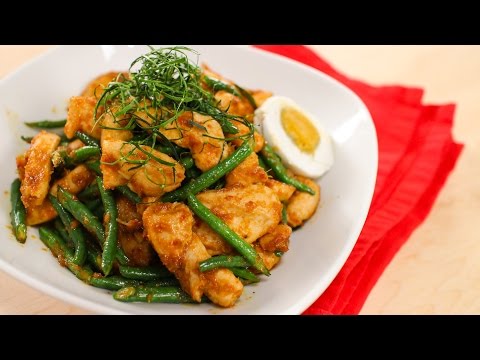
Why This Recipe Works
Cooking the curry paste in oil for a short time releases its aroma and deepens its flavor before it is diluted by the liquids. Keep it moving and use moderate heat: the paste should smell fragrant, not scorched. This quick step gives the sauce a fuller base without needing a separate spice blend.
A brief sear gives the chicken a little color, but the pieces finish cooking gently in the coconut sauce. That helps keep the meat tender while letting its juices season the curry. Cut the chicken into similarly sized pieces so they cook at about the same rate, and use a thermometer rather than color alone to confirm doneness.
The vegetables go in stages. Green beans need longer than sliced bell pepper, so adding the pepper later helps it stay bright and slightly firm. Fish sauce and brown sugar balance the curry paste, while lime juice goes in at the end so its fresh, tart flavor remains noticeable.
Ingredients
- 1 pound boneless, skinless chicken thighs or chicken breasts, cut into roughly 1-inch bite-sized pieces
- 1 tablespoon vegetable oil
- 2 tablespoons Thai red curry paste
- 1 can (13.5 ounces) unsweetened coconut milk, stirred or shaken before opening
- 1 cup chicken broth, preferably lower-sodium so you can adjust the final seasoning
- 2 cups fresh green beans, trimmed and cut into 2-inch pieces
- 1 medium red bell pepper, seeds and stem removed, thinly sliced
- 1 tablespoon fish sauce
- 1 tablespoon brown sugar
- 1 lime, juiced (about 1 to 2 tablespoons juice, depending on the lime)
- 1/4 teaspoon fine salt, optional and to taste
- 2 tablespoons chopped fresh cilantro or Thai basil, optional, for serving
Ingredient Notes
Chicken: Thighs stay especially forgiving if they simmer for an extra minute or two; breast meat works well when cut evenly and not overcooked. Either way, cook poultry to an internal temperature of 165°F, checked in the thickest piece with an instant-read thermometer.
Red curry paste: Paste varies by brand in saltiness and heat, so two tablespoons is a starting point, not a guarantee of a particular spice level. If yours is very hot, begin with 1 tablespoon and add more after tasting. Curry paste may contain shrimp or other seafood ingredients, so check the label if that matters for your meal.
Coconut milk: Use canned, unsweetened coconut milk, not a sweetened coconut beverage from the refrigerated section. Full-fat coconut milk makes a richer sauce; light coconut milk gives a thinner, less rich result. The can may separate, so stir or shake it before measuring.
Chicken broth: Broth loosens the coconut milk into a spoonable sauce. Lower-sodium broth leaves more room to adjust the salt at the end, since both curry paste and fish sauce can be salty. Water can replace the broth in a pinch, though the sauce will taste less savory.
Green beans and bell pepper: Fresh green beans give the curry a pleasant bite. If substituting frozen green beans, add them straight from the freezer and allow a few extra minutes for the sauce to return to a simmer. Add the bell pepper near the end so it does not become overly soft.
Fish sauce, sugar, and lime: Fish sauce brings salty, savory depth; brown sugar rounds its sharpness and the curry paste’s heat; lime keeps the finished sauce lively. If you do not use fish sauce, substitute an equal amount of soy sauce, knowing the result will have a different flavor. Add lime gradually and taste before adding more.
Instructions
- Prepare the ingredients. Cut the chicken into even, bite-sized pieces; trim and cut the beans; slice the pepper; and juice the lime. Set the fish sauce and brown sugar beside the stove. This takes about 10 to 15 minutes and makes it easier to add vegetables at the right time. Keep raw chicken and its utensils separate from ready-to-eat ingredients.
- Sear the chicken. Heat the vegetable oil in a large, deep skillet or sauté pan over medium-high heat for about 1 minute, until the oil shimmers. Add the chicken in one layer, working in batches if the pan is crowded. Cook for 2 to 3 minutes, turning once, until the pieces have a little golden color on the outside but are not necessarily cooked through. Transfer them to a clean plate. A light sear adds flavor; crowding would make the chicken release moisture and steam instead.
- Fry the curry paste. Reduce the heat to medium. Add the red curry paste to the same pan and stir for 30 to 60 seconds, scraping up the browned bits. It should become fragrant and loosen in the oil. If it starts sticking or darkening quickly, lower the heat; scorching can make the sauce taste bitter.
- Make the sauce. Pour in the coconut milk and chicken broth, stirring until the curry paste is evenly mixed in. Stir in the fish sauce and brown sugar. Bring the sauce to a gentle simmer over medium heat, about 2 to 3 minutes; look for small bubbles around the edge rather than a hard, rolling boil. A gentle simmer helps the sauce stay smooth.
- Simmer the chicken and green beans. Return the chicken and any juices on the plate to the pan. Add the green beans and stir to coat. Lower the heat as needed to maintain a gentle simmer and cook for 5 minutes. The beans should be beginning to soften but still hold their shape. Stir once or twice so the chicken and beans cook evenly in the sauce.
- Add the pepper and finish cooking. Stir in the sliced bell pepper and simmer for another 3 to 5 minutes. Check a thick piece of chicken with an instant-read thermometer; it must reach 165°F. The beans should be crisp-tender and the pepper tender but not limp. If the chicken is not yet at temperature, continue simmering in 1-minute increments and check again.
- Balance and serve. Turn off the heat and stir in the lime juice. Taste the sauce before adding the optional salt: if it tastes flat, add a little more lime or fish sauce; if it is too sharp, stir in a small pinch of brown sugar. Serve hot, with cilantro or Thai basil if desired.
Tips for Success
- Cut evenly. Pieces close to 1 inch cook more predictably than a mix of large and small chunks. Very small pieces can overcook while the vegetables finish.
- Do not crowd the pan for the sear. If the chicken covers the skillet in a thick layer, brown it in two batches. The goal is a little surface color, not a fully cooked center.
- Use a gentle simmer. Once the coconut milk is in the pan, avoid boiling the curry vigorously. Steady small bubbles are enough to cook the chicken and vegetables.
- Mind the curry paste’s salt and heat. Start with the listed amount if you know your paste; otherwise, use less and add more to the sauce after tasting. Salt levels differ, so wait until the end to decide whether extra salt is needed.
- Keep vegetables crisp-tender. Add the bell pepper after the beans have had a head start. If you like softer beans, simmer them a little longer before adding the pepper.
- Finish with lime off the heat. Stirring it in at the end keeps its fresh, tangy flavor distinct from the simmered sauce.
- Have rice ready. The curry cooks quickly once the sauce is simmering. Start rice first, or use another prepared grain, so dinner is ready at the same time.
Troubleshooting
The curry is too spicy: Stir in a little extra coconut milk, if available, or serve it with plenty of plain rice. A small pinch of brown sugar can soften the impression of heat, but it will not remove the spice. Next time, use less curry paste and add more after tasting.
The sauce tastes bland or flat: First check whether it needs salt. Add fish sauce a teaspoon at a time, or add a little more lime juice for brightness. Curry paste varies, so adjust in small amounts and taste between additions.
The sauce is too thin: Simmer it uncovered for a few minutes after the chicken is safely cooked, stirring gently, until it reduces slightly. Keep the heat low enough that the coconut sauce does not boil hard. Remember that it will also seem thinner while very hot.
The sauce looks separated: Lower the heat and stir gently. A little surface oil can come from coconut milk or the curry paste and does not necessarily mean the dish is spoiled. Avoid a vigorous boil; if needed, stir in a small splash of broth to bring the sauce together.
The vegetables are too soft: They have simmered longer than needed. There is no way to restore their crunch, but the curry is still usable. For the next batch, add the beans later or cut them a little larger, and add the pepper only for the final few minutes.
The chicken is not done when the vegetables are ready: Simmer the curry gently in 1-minute increments and check the thickest chicken piece again. If the vegetables are already at your preferred tenderness, lift them out temporarily with a slotted spoon and return them just before serving.
Variations
- Adjust the heat: Use 1 tablespoon curry paste for a milder starting point, then taste the sauce and add more if wanted. For more heat, add extra paste in small increments rather than adding a large amount at once.
- Change the vegetables: Replace some or all of the green beans with broccoli florets, sliced carrots, zucchini, or snow peas. Add firm vegetables earlier and quick-cooking vegetables near the end; cut them to similar sizes for more even cooking.
- Use another protein: Boneless pork or peeled shrimp can be used, but their safe cooking times differ. Cook pork to 145°F followed by a 3-minute rest; cook shrimp until opaque and firm. Keep raw proteins separate from cooked food and use a clean thermometer or utensils as appropriate.
- Make it vegetarian: Replace the chicken with cubed firm tofu and use vegetable broth. Replace fish sauce with soy sauce or a suitable vegetarian fish-sauce alternative. Add tofu after the sauce simmers and heat it through; tofu does not need the poultry temperature target.
- Use a different garnish: Thai basil, cilantro, or thinly sliced scallions add a fresh finish. They are optional and do not need to be cooked into the sauce.
What to Serve With It
Steamed jasmine rice is a natural partner because it absorbs the coconut curry sauce. Long-grain white rice or brown rice also works; follow the package directions, since cooking times vary. For a lighter plate, serve the curry with cauliflower rice or spoon it over cooked rice noodles.
A simple cucumber salad or lightly dressed greens can add a cool, fresh contrast. Keep sides mild and uncomplicated so they do not compete with the curry’s salty, sweet, tart, and spicy balance. If serving a group, offer extra lime wedges and chopped herbs at the table.
Make-Ahead, Storage and Reheating
Make ahead: You can trim and cut the beans, slice the pepper, and prepare the chicken earlier in the day. Store cut vegetables covered in the refrigerator and keep raw chicken sealed separately on the lowest shelf. For the best texture, cook the curry close to serving time rather than fully cooking the vegetables far in advance.
Refrigerate: Refrigerate leftovers within 2 hours of cooking, or within 1 hour if the temperature is above 90°F. Use shallow, covered containers so the curry cools promptly. Keep refrigerated leftovers for 3 to 4 days at 40°F or below.
Freeze: Freeze leftovers in airtight, freezer-safe containers for 3 to 4 months for best quality. Coconut-based sauces may look slightly separated after thawing; stir gently as they reheat. Thaw in the refrigerator, or reheat from frozen over low heat with a splash of broth, stirring as the curry loosens.
Reheat: Warm only the portion you plan to eat in a covered saucepan over medium-low heat, stirring occasionally, until steaming throughout and at least 165°F. Add a splash of broth or water if the sauce has thickened. In a microwave, cover loosely, stir partway through, and check the temperature in more than one spot. Avoid repeatedly cooling and reheating the full batch.
Recipe Card
Servings: 4 Prep time: 15 minutes Cook time: 20 minutes Total time: 35 minutes
Ingredients
- 1 pound boneless, skinless chicken thighs or breasts, cut into bite-sized pieces
- 1 tablespoon vegetable oil
- 2 tablespoons Thai red curry paste
- 1 can (13.5 ounces) unsweetened coconut milk
- 1 cup chicken broth
- 2 cups fresh green beans, trimmed and cut into 2-inch pieces
- 1 medium red bell pepper, sliced
- 1 tablespoon fish sauce
- 1 tablespoon brown sugar
- 1 lime, juiced
- 1/4 teaspoon fine salt, optional
- 2 tablespoons chopped cilantro or Thai basil, optional
Condensed Instructions
- Cut the chicken and vegetables. Heat oil in a large skillet over medium-high heat and sear chicken for 2 to 3 minutes, in batches if needed; transfer to a plate.
- Lower heat to medium. Stir-fry curry paste for 30 to 60 seconds, until fragrant. Add coconut milk, broth, fish sauce, and brown sugar; bring to a gentle simmer.
- Return chicken and juices to the pan with green beans. Simmer gently for 5 minutes, then add bell pepper and cook 3 to 5 minutes more, until the chicken reaches 165°F and vegetables are tender but not limp.
- Turn off the heat and stir in lime juice. Taste and adjust with optional salt or more lime. Garnish if desired and serve hot.
Frequently Asked Questions
Can I use chicken breast instead of thighs?
Yes. Cut breast meat into even pieces and check it as the curry finishes, since leaner breast meat can become dry if it simmers longer than necessary. Cook all chicken to 165°F in the thickest piece.
How can I make the curry less spicy?
Begin with 1 tablespoon of red curry paste instead of 2, then taste the sauce before adding more. Curry pastes vary in heat. Serving the curry with plain rice also makes each bite milder.
Can I use light coconut milk?
Yes. Light coconut milk works, but the sauce will be less rich and may be thinner. Simmer it gently and, if needed, let it reduce uncovered for a few minutes after the chicken is cooked.
Can I use frozen green beans?
Yes. Add them from frozen and allow a few extra minutes for the curry to return to a simmer and for the beans to heat through. Their texture may be softer than fresh green beans.
What can I use instead of fish sauce?
Use the same amount of soy sauce for a practical substitute. It will provide salt and savory flavor but will not taste exactly like fish sauce. Taste before adding optional salt because soy sauce and curry paste can both be salty.
Can I make this curry ahead?
Yes. You can cook it ahead and refrigerate it promptly, but the vegetables will soften more as the dish sits and reheats. For the freshest texture, prepare the ingredients ahead and cook the curry shortly before serving.
Why did my coconut curry sauce separate?
Coconut milk can separate when heated vigorously, and some coconut milk naturally releases a little oil. Keep the sauce at a gentle simmer and stir it; if it looks uneven, lower the heat and add a small splash of broth while stirring.
How do I know the chicken is safely cooked?
Check the thickest chicken piece with an instant-read thermometer. Poultry is safely cooked when it reaches 165°F. If it is below that temperature, continue simmering briefly and check again.