
Baba ghanoush is a smooth, savory eggplant dip made with tahini, lemon, garlic, and olive oil. It works as a snack with warm pita, a spread for sandwiches, or part of a mezze-style meal.
This version builds flavor by roasting the eggplants until their insides are soft and their skins are blistered, then draining the pulp before mixing. The finished dip is creamy and lemony, with nutty tahini, a gentle smoky edge, and just enough garlic to keep each bite lively.
Why This Recipe Works
Roasting whole eggplants is straightforward and gives the flesh time to soften all the way through. A hot oven blisters the skin while the inside collapses into tender pulp. Turning the eggplants once helps them cook more evenly, and the visible cues matter more than an exact minute: the skins should be wrinkled and charred in spots, and a knife should pass easily through the thickest part.
Draining the cooked pulp is the key step for a dip that tastes creamy rather than watery. Eggplants hold a lot of moisture; letting that liquid drip away for a few minutes concentrates the flavor and keeps the tahini mixture from thinning out. Mash or pulse the drained pulp gently so the dip stays lush, not gluey.
Mixing the tahini with lemon juice and garlic before adding the eggplant distributes those strong flavors evenly. A little cold water can loosen the mixture if the tahini thickens, while olive oil adds roundness. You can adjust the lemon, salt, and water at the end, when the eggplant’s own flavor is clear.
Ingredients
- 2 medium eggplants (about 1½–2 lb total)
- ¼ cup tahini
- 2–3 garlic cloves, minced or finely grated
- 2–3 tbsp fresh lemon juice, from about 1 large lemon
- 2 tbsp olive oil, plus 1 tbsp or more for drizzling
- 1 tsp fine salt, or to taste
- ½ tsp ground cumin, optional
- 2–4 tbsp cold water, as needed
- 2 tbsp chopped fresh parsley, for garnish
- 2 tbsp pomegranate seeds, optional, for garnish
Ingredient Notes
Eggplant: Medium globe eggplants are easy to find and roast well. Choose ones that feel firm and heavy for their size, with smooth, taut skin and no soft spots. The recipe uses two medium eggplants because the amount of pulp can vary from one to another. If yours are especially small, start with less lemon and salt, then adjust after mixing.
Tahini: Tahini is ground sesame paste, and it gives the dip its nutty richness. Stir the jar thoroughly before measuring; the oil can separate and collect on top during storage. If the tahini is very thick, whisk it with the lemon juice and a spoonful of cold water first. Sunflower seed butter can stand in if sesame is unavailable, though the flavor will be different. Check its label for added salt or sugar before seasoning the dip.
Garlic and lemon: Fresh garlic and lemon make the dip taste bright rather than heavy. Finely mince or grate the garlic so it does not leave large raw pieces. Begin with 2 tablespoons of lemon juice, then add more to taste. Bottled lemon juice is a possible substitute, but fresh juice usually has a cleaner, more aromatic flavor.
Olive oil and salt: Olive oil smooths the texture and adds a fruity finish. Use a flavor you enjoy, since a little is also drizzled over the top. Fine salt dissolves easily; if using coarse salt, add it gradually and taste as you go.
Cumin, parsley, and pomegranate: Cumin is optional and adds a warm, earthy note. Parsley brings a fresh, herbal contrast. Pomegranate seeds are optional too; they add tart-sweet pops and color, but the dip is complete without them.
Instructions
- Heat the oven and prepare the eggplants. Set a rack in the center of the oven and heat it to 450°F (232°C). Line a rimmed baking sheet with foil or parchment for easier cleanup. Rinse and dry the eggplants, then prick each one several times with the tip of a knife. Pricking gives steam a way to escape as they roast. Put them on the baking sheet with a little space between them.
- Roast until very tender. Roast for 40–55 minutes, turning the eggplants once after about 25 minutes. They are ready when the skins are deeply wrinkled and blistered in places, the eggplants have softened and slumped, and a knife slides into the flesh without resistance. Larger eggplants may need more time. If the skins are not very charred, that is fine; tenderness is the important cue. Let them cool until easy to handle, about 15 minutes.
- Separate and drain the pulp. Split each eggplant lengthwise and scoop the soft flesh into a fine-mesh sieve set over a bowl. Avoid scraping in large pieces of tough, heavily charred skin. Let the pulp drain for 10–15 minutes, stirring once or twice. You should see liquid collect below; draining keeps the finished dip thick and concentrated. Discard the liquid.
- Mix the tahini base. In a medium bowl, stir together the tahini, 2 tablespoons lemon juice, minced garlic, salt, cumin if using, and 2 tablespoons olive oil. The mixture may tighten or look thick at first; whisk in cold water 1 tablespoon at a time until it is smooth and creamy. This makes it easier to combine evenly with the eggplant.
- Combine and adjust the texture. Add the drained eggplant pulp to the tahini mixture. Mash with a fork or potato masher for a rustic texture, or pulse briefly in a food processor for a smoother dip. Stop as soon as it is combined; prolonged processing can make eggplant pasty. Taste and add more lemon juice, salt, or a spoonful of water as needed. The dip should hold softly on a spoon, not run like a sauce.
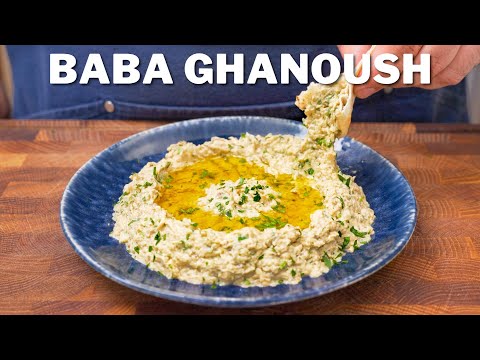
- Finish and serve. Spoon the baba ghanoush into a shallow bowl and make a few swirls on top. Drizzle with olive oil and scatter over parsley and pomegranate seeds, if using. Serve at room temperature or slightly chilled with pita, vegetables, or other dippers.
Tips for Success
- Use tenderness as the doneness test. Eggplant size and oven behavior vary, so check that a knife slips easily through the flesh instead of relying only on the timer.
- Give the pulp time to drain. Skipping this step is the most common reason homemade baba ghanoush turns loose. Drain longer if the eggplant looks especially wet.
- Stir the tahini jar well. If the sesame solids and oil are separated, a scoop from the top can be unusually oily and a scoop from the bottom can be dense. Mix the jar before measuring.
- Start modestly with garlic and lemon. Raw garlic becomes more noticeable as the dip sits. Add gradually, taste, and remember you can add more but cannot take it out.
- Use a light hand with the food processor. A few short pulses are enough for a smooth texture. For a more traditional, slightly textured feel, mash by hand.
- Season after combining. Eggplants differ in size and flavor, and tahini varies in bitterness and thickness. Taste the finished mixture before adding the final salt and lemon.
- Let the flavors settle if you have time. A short rest in the refrigerator gives the garlic, lemon, and tahini time to mingle. Bring it back toward room temperature before serving for a softer texture and fuller flavor.
Troubleshooting
The dip is watery. The eggplant likely needed more draining. Set the mixture in a fine-mesh sieve for a few minutes, or stir in a little more tahini. Next time, drain the pulp before mixing and avoid adding all the water at once.
The dip tastes bitter. Tahini can vary in bitterness, and deeply charred skin can add a bitter edge. Mix in a little more lemon juice and olive oil, then taste again. When scooping the pulp, leave behind any tough, blackened skin.
The texture is too thick. Stir in cold water a teaspoon or tablespoon at a time until it loosens. Water is easier to control than adding more oil, and it helps the tahini and eggplant blend smoothly.
The garlic is too sharp. Give the dip 20–30 minutes to rest; the flavor often settles as the ingredients mingle. If it is still too strong, fold in a little more drained eggplant or tahini, if available.
The dip tastes flat. Add salt a pinch at a time, then brighten it with lemon juice. Eggplant and tahini both benefit from enough seasoning, but make each adjustment gradually and taste between additions.
Variations
- Smokier flavor: For a more pronounced smoky note, char the eggplant skins briefly under the broiler after roasting. Watch closely and turn as needed; broilers can blacken the skin quickly. Let the eggplants cool before scooping.
- Extra-smooth dip: Use a food processor and pulse only until smooth. Add cold water in small amounts if needed, and avoid running the machine continuously.
- Chunkier, rustic dip: Mash the drained pulp with a fork and fold it into the tahini by hand. This keeps some soft pieces of eggplant in every bite.
- More herbs: Stir in an extra tablespoon of chopped parsley, or add a small amount of chopped mint for a cool, fresh note.
- Spiced finish: Keep the cumin in the base and finish with a light sprinkle of ground paprika or sumac, if you have it. Use the spice as a finishing accent so it does not cover the eggplant.
- Without pomegranate: Leave it off, or use a few chopped olives or toasted sesame seeds as a garnish. These change the finish but keep the dip simple.
What to Serve With It
Warm pita wedges are a natural choice, as are pita chips, flatbread, or crisp crackers. For fresh dippers, serve cucumber rounds, carrot sticks, bell pepper strips, radishes, or celery. Cut vegetables into pieces that are sturdy enough to scoop without snapping.
Baba ghanoush also works as part of a larger spread with hummus, olives, chopped salad, and grilled vegetables. Spoon it into a sandwich or wrap with crunchy vegetables and greens, or serve it alongside roasted vegetables, rice, or grilled chicken. Add the pomegranate and parsley just before serving so they stay fresh and colorful.
Make-Ahead, Storage and Reheating
You can roast and drain the eggplant a day ahead, then cover and refrigerate the pulp until you are ready to mix the dip. The finished baba ghanoush can also be made ahead. Its flavor often settles after chilling, so taste it again before serving and adjust the lemon or salt if needed.
Refrigerate leftovers promptly in a covered container, within 2 hours of serving. Keep them refrigerated at 40°F (4°C) or colder and use within 3–4 days. The dip is best served cold or brought briefly toward room temperature; it does not need reheating. Do not leave it at room temperature for more than 2 hours, or more than 1 hour when the surrounding temperature is above 90°F (32°C).
Baba ghanoush can be frozen in an airtight freezer-safe container for about 2–3 months for best quality. Leave a little room at the top for expansion. Thaw it in the refrigerator, then stir thoroughly; some separation or a softer texture is normal after freezing. If it seems watery, drain off excess liquid or stir in a little tahini. Add fresh parsley and pomegranate after thawing rather than before freezing.
Recipe Card
Servings: 6 as a dip Prep time: 15 minutes Cook time: 45–55 minutes Total time: about 1 hour 15 minutes, including cooling and draining
Ingredients
- 2 medium eggplants (about 1½–2 lb total)
- ¼ cup tahini
- 2–3 garlic cloves, minced or finely grated
- 2–3 tbsp fresh lemon juice
- 2 tbsp olive oil, plus 1 tbsp or more for topping
- 1 tsp fine salt, or to taste
- ½ tsp ground cumin, optional
- 2–4 tbsp cold water, as needed
- 2 tbsp chopped fresh parsley
- 2 tbsp pomegranate seeds, optional
Condensed Instructions
- Heat the oven to 450°F (232°C). Prick the eggplants several times and place them on a lined baking sheet.
- Roast 40–55 minutes, turning once, until the skins are wrinkled and blistered and a knife passes easily through the flesh. Cool about 15 minutes.
- Scoop the pulp into a fine-mesh sieve and drain for 10–15 minutes. Discard the drained liquid.
- Mix tahini, 2 tablespoons lemon juice, garlic, salt, cumin if using, and 2 tablespoons olive oil. Add cold water gradually until smooth.
- Mash or briefly pulse in the drained eggplant. Taste and adjust with more lemon, salt, or water.
- Serve with an olive-oil drizzle, parsley, and optional pomegranate seeds.
Frequently Asked Questions
Can I make baba ghanoush without a food processor?
Yes. A fork or potato masher works well, especially if you want a slightly textured dip. Mix the tahini base in a bowl first, then mash in the drained eggplant until it reaches the consistency you like.
Do I need to peel the eggplant?
No. Roast the eggplants whole, then scoop out the soft flesh and leave behind the skin. You do not need to peel them before roasting; the skin helps hold the eggplant together while it cooks.
Can I cook the eggplant on a grill?
Yes. Grill whole, pricked eggplants over medium-high heat, turning them as the skins blister, until the flesh is completely soft and a knife passes through easily. Exact timing depends on the grill and the size of the eggplants. Cool, scoop, and drain as directed.
How do I make the dip less smoky?
Roast the eggplants in the oven without adding extra charring under the broiler or over a flame. When scooping, leave behind blackened skin. The dip will still have a roasted eggplant flavor without a strong charred note.
Can I make it ahead for a gathering?
Yes. Make it up to a day ahead, cover, and refrigerate. Before serving, stir it, taste for lemon and salt, and let it sit out briefly so it is not very cold. Add the oil, parsley, and pomegranate at the last moment.
Why is my tahini mixture thick or stiff?
Tahini can thicken when mixed with lemon juice, which is normal. Whisk in cold water a little at a time until the mixture is smooth and creamy, then combine it with the eggplant.
Is cumin required?
No. Cumin is optional and adds an earthy, warm flavor. Leave it out if you prefer the eggplant, tahini, lemon, and garlic to stand on their own.
Can I freeze baba ghanoush?
Yes, though the texture may be softer or slightly separated after thawing. Freeze it in an airtight container, thaw it in the refrigerator, and stir well before serving. Add fresh garnishes after thawing.