
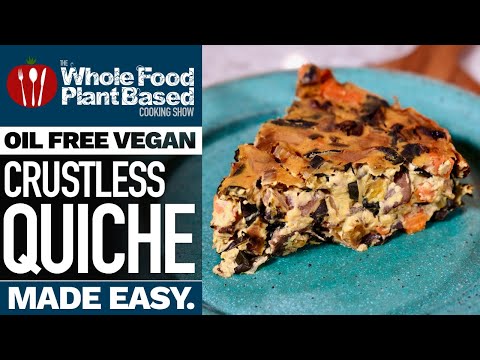
This vegan crustless quiche is a savory, sliceable bake made with chickpea flour, silken tofu and vegetables—no pastry or eggs required. It works well for brunch, lunch or a simple dinner, and the naturally gluten-free batter goes straight into a greased pie plate.
Silken tofu makes the center creamy, while chickpea flour gives it body as it bakes. Nutritional yeast brings a rounded, savory flavor; sautéing the vegetables first keeps excess moisture from making the quiche watery. Expect tender slices with lightly browned edges and a mild, gently earthy taste.
Why This Recipe Works
Chickpea flour and silken tofu do different jobs in the batter. The flour thickens and sets as it cooks, while blended tofu helps the interior stay smooth rather than dry or crumbly. Together they make a filling that can be cut into wedges after it has rested. Because chickpea flour absorbs liquid as it sits, a short rest before baking also helps the batter become more even.
Blending the tofu with the liquid ingredients breaks up any soft lumps before the flour goes in. The finished mixture should be thick but pourable. If you blend it until completely smooth, each slice will have a consistent texture, and the seasonings will be distributed throughout instead of collecting in one spot.
The vegetables are cooked before they meet the batter. Mushrooms, onion and spinach all release water as they heat; sautéing them first evaporates some of that moisture and concentrates their flavor. Letting the cooked vegetables cool briefly before folding them in also helps avoid warming the batter unevenly.
Finally, the quiche gets time to settle after baking. The center may look slightly soft when it comes out, but it firms as it cools. Cutting too soon can make a properly baked quiche seem loose, so allow at least 20 minutes of resting time before slicing.
Ingredients
- 1 tablespoon olive oil, for sautéing
- 1 cup diced yellow onion
- 1 cup chopped mushrooms
- 1/2 cup diced red bell pepper
- 2 cups packed baby spinach
- 1 clove garlic, finely minced
- 12 ounces silken tofu, drained of any excess liquid
- 1/2 cup unsweetened, unflavored plant milk
- 1 tablespoon olive oil, for the batter
- 1 tablespoon lemon juice
- 1/4 cup nutritional yeast
- 1 cup chickpea flour
- 1 teaspoon baking powder
- 1 teaspoon fine salt
- 1/2 teaspoon ground black pepper
- 1/2 teaspoon ground turmeric, optional
- 1/4 teaspoon kala namak, optional, in place of some of the fine salt
- 1 teaspoon olive oil, for greasing the pie plate
Ingredient Notes
Chickpea flour: This is the main setting ingredient, so use chickpea flour rather than swapping in an equal amount of a different flour. It has a distinct legume flavor when raw, but that mellows as it bakes. If you need the dish to be gluten-free, check the package for cross-contact information that suits your needs. Chickpea flour can also be labeled gram flour or besan, though products and grinds may vary; a finely milled flour gives the smoothest batter.
Silken tofu: Silken tofu blends easily and gives the filling a creamy texture. Use the full 12-ounce amount; firm tofu is much denser and will not produce the same batter if substituted cup for cup. If silken tofu is unavailable, a soft tofu may work, but the mixture may be less smooth and may need an extra splash of plant milk to blend. Avoid sweetened or flavored tofu.
Nutritional yeast: It adds savory, cheese-like depth without dairy. It is not the same as baking yeast, so do not substitute active dry or instant yeast. If you do not have nutritional yeast, leave it out and season to taste; the quiche will still set, but its flavor will be less rounded.
Plant milk and oil: Choose unsweetened, unflavored plant milk so it does not add sweetness. Soy, oat or almond milk can work; for a reliably gluten-free dish, check the oat milk label. The small amount of oil in the batter helps keep the filling from tasting dry, while the separate sautéing oil cooks the vegetables.
Vegetables and seasonings: The onion, mushrooms, pepper and spinach make a balanced, savory filling, but you can change the mix as long as you cook out excess moisture first. Turmeric is optional and mainly adds a warm yellow color. Kala namak, also called black salt, has a distinctive sulfurous aroma; use it sparingly and reduce the fine salt if adding it.
Instructions
- Heat the oven and prepare the dish. Set a rack in the center of the oven and preheat it to 375°F (190°C). Grease a 9-inch pie plate with 1 teaspoon olive oil, coating the base and sides. A well-greased plate makes it easier to lift out clean wedges; do not use a smaller dish unless it is deep enough to hold the batter without approaching the rim.
- Sauté the vegetables. Warm 1 tablespoon olive oil in a large skillet over medium heat. Add the onion, mushrooms and bell pepper, and cook for 7 to 9 minutes, stirring occasionally, until the onion is translucent and the mushrooms have released their liquid and most of it has evaporated. Add the garlic and cook for 30 seconds, just until fragrant. Stir in the spinach and cook for 1 to 2 minutes, until wilted. The pan should not have a puddle of liquid; if it does, keep cooking briefly. Take the skillet off the heat and let the vegetables cool while you make the batter.
- Blend the tofu mixture. Put the silken tofu, plant milk, 1 tablespoon olive oil, lemon juice, nutritional yeast, fine salt, black pepper and turmeric, if using, in a blender. Blend until smooth, scraping down the sides if needed. The mixture should look creamy with no visible tofu pieces. If using kala namak, add it now and reduce the fine salt to suit your taste.
- Add the dry ingredients and rest the batter. Add the chickpea flour and baking powder to the blender. Pulse just until no dry pockets remain, scraping the sides once if necessary. The batter should be thick but pourable, similar to a heavy pancake batter. Let it stand for 10 minutes so the chickpea flour can absorb some of the liquid. If it becomes too thick to pour after resting, blend in plant milk 1 tablespoon at a time; it should still hold its shape around the vegetables rather than run like water.
- Combine and fill the plate. Scrape the batter into a bowl and fold in the cooled vegetables, distributing them evenly. Pour the mixture into the prepared pie plate and smooth the top. Look for vegetables spread throughout rather than piled in the middle; even distribution helps the quiche bake at a consistent rate and makes each wedge easier to serve.
- Bake until set. Bake at 375°F (190°C) for 45 to 55 minutes. The edges should look firm and lightly golden, and the top should feel set rather than wet when gently touched. The center can have a small, soft wobble, but it should not ripple like liquid when you move the plate. If the top browns before the center is set, loosely cover it with foil and continue baking in 5-minute intervals.
- Cool before slicing. Set the pie plate on a heat-safe surface and let the quiche rest for at least 20 minutes. The center will become firmer as it cools. Run a thin knife around the edge, then cut into wedges with a sharp knife. If the first slice seems soft, give the rest of the quiche a few more minutes to cool rather than assuming it needs a long extra bake.
Serves: 6; Prep time: 20 minutes; Cook time: 55 minutes; Total time: 1 hour 35 minutes, including resting time.
Tips for Success
- Measure the flour accurately. Stir chickpea flour in its container, spoon it into the measuring cup and level the top. Scooping and packing it can add more flour than intended, making the baked center dense or dry.
- Cook vegetables until their pan is nearly dry. This matters most with mushrooms and spinach. Moisture that goes into the batter can leave a damp layer around the vegetables or make slices slump when served.
- Do not skip the batter rest. Ten minutes gives the flour time to hydrate. If the batter thickens noticeably, loosen it with a small amount of plant milk rather than adding a large splash all at once.
- Use a blender for the tofu. A whisk can leave small tofu lumps, especially if the tofu is very soft and cold. Blend the liquid ingredients until smooth before adding the chickpea flour.
- Let the quiche cool before cutting. A warm quiche is more delicate. Resting makes cleaner wedges and gives the flour-based filling time to finish firming up.
- Check the top and the center, not only the timer. Ovens and pie plates vary. A shallow metal plate may bake faster than a thick ceramic one, so begin checking around 45 minutes and continue until the center is no longer liquid.
- Season the vegetables as you cook. The recipe includes salt in the batter, but a small pinch added to the vegetables can bring out their flavor. Go lightly if using kala namak, which has a strong taste.
Troubleshooting
The middle is wet or loose. It may need more baking time, or the vegetables may have carried too much water into the batter. Return the dish to the oven for 5 to 10 minutes and check again for a set center. For the next bake, cook the mushrooms until their liquid has evaporated and squeeze or drain especially wet cooked vegetables before folding them in.
The quiche is dry or crumbly. Too much chickpea flour, a long bake or a very hot oven can dry the filling. Measure the flour without packing it, check the oven temperature if this happens repeatedly, and start checking at 45 minutes. A little softness in the center is expected before resting; it should firm as it cools.
The quiche tastes strongly of chickpeas. Chickpea flour has a characteristic flavor, especially if it is underbaked. Bake until the center is set, and make sure the batter is seasoned well with salt, pepper, nutritional yeast and lemon juice. Do not taste the raw batter as a guide to the finished flavor.
The edges stick to the dish. Grease the pie plate thoroughly, including the sides, and allow the quiche to rest before loosening it. If the plate is not reliably nonstick, line the base with a round of parchment as well as greasing it.
The top is browning too quickly. Cover the quiche loosely with foil once it has reached the color you want, then keep baking until the center is set. Avoid pressing the foil against the surface.
Variations
For a different vegetable combination, replace the mushrooms and pepper with cooked broccoli florets, zucchini or chopped asparagus. Cook watery vegetables first, and cut everything into small pieces so it disperses evenly through the filling. For zucchini, sauté until its released liquid has mostly cooked away. Frozen spinach can also be used: thaw it completely, squeeze out as much water as you can, and use about 1 cup after draining.
Change the seasoning to suit the meal. A pinch of smoked paprika or dried thyme works well with mushrooms; chopped fresh herbs such as parsley or chives can be folded in after the vegetables cool. For a little heat, add a pinch of red pepper flakes to the skillet with the garlic. Keep additions modest so the batter can still hold the filling together.
You can make individual portions in a greased muffin tin, but the baking time will be shorter and depends on the size of the wells. Fill them about three-quarters full and begin checking after 20 minutes; look for set edges and centers that no longer appear wet. Let them cool in the tin before lifting them out. A full-size quiche is easier to judge and gives the most tender center.
What to Serve With It
Serve a wedge warm or at room temperature with a crisp green salad dressed with lemon or vinegar. The acidity and crunch balance the soft, savory filling without requiring another rich dish. Roasted tomatoes, cucumber salad or lightly dressed greens are also good choices.
For brunch, pair it with roasted potatoes or a bowl of fresh fruit. For dinner, serve it alongside a vegetable soup or steamed green beans. The quiche is filling enough to be the main dish, so simple sides usually work better than several heavy accompaniments.
Make-Ahead, Storage and Reheating
The best make-ahead approach is to cook the vegetables a day in advance. Cool them promptly, cover and refrigerate, then blend the batter and bake the quiche the next day. You can also bake the whole quiche ahead; allow it to cool, cover it and refrigerate it. Avoid leaving the assembled uncooked batter for a long time, because the chickpea flour continues to absorb liquid and the vegetables can release moisture.
Refrigerate leftovers within 2 hours of cooking, or within 1 hour if the room temperature is above 90°F. Store them covered in a refrigerator at 40°F or below and use within 3 to 4 days. For easier reheating, cut the quiche into portions before storing. Do not leave slices at room temperature for extended serving; return leftovers to the refrigerator promptly.
To freeze, cool the baked quiche completely, wrap individual portions or the whole quiche tightly, and freeze. For best quality, use within 2 to 3 months. Thaw in the refrigerator, not on the counter. A thawed slice can be warmed in a 325°F oven until hot throughout; a microwave also works, though it may soften the edges. When reheating leftovers, heat them to 165°F. If reheating from frozen, allow extra time and check the center of a portion before serving.
Frequently Asked Questions
Is this quiche gluten-free?
The ingredients in the recipe are naturally gluten-free when sourced appropriately, and there is no pastry crust. Chickpea flour is made from chickpeas, but packaging and processing can involve cross-contact. If gluten avoidance is important for you, choose ingredients labeled in a way that meets your needs, including the plant milk and baking powder.
Can I make the batter without a blender?
A blender gives the smoothest result, but you can use an immersion blender in a tall container. If neither is available, mash the silken tofu very thoroughly and whisk it with the liquid ingredients, then whisk in the dry ingredients gradually. The texture may have small tofu flecks, but the quiche can still bake successfully.
Can I use firm tofu instead of silken tofu?
Firm tofu is not a direct substitute by weight because it contains less free moisture and blends into a denser mixture. Silken tofu is the better choice for a creamy filling. If you use soft tofu instead, blend it thoroughly and add plant milk a tablespoon at a time until the batter is thick but pourable.
Can I prepare this without nutritional yeast?
Yes. Leave it out if needed; it contributes savory, cheese-like flavor but is not what sets the quiche. Taste the cooked vegetables and batter before baking, and adjust the salt, pepper and lemon juice to keep the flavor balanced.
How can I tell when an egg-free quiche is done?
Look for firm edges, a lightly golden surface and a center that does not ripple like liquid when the plate is moved gently. A slight wobble is fine because the filling continues to firm during its rest. If the center still looks wet, bake in short increments and check again.
Can I make the quiche the day before serving?
Yes. Bake it, cool it, cover it and refrigerate it. Reheat it in a 325°F oven until hot throughout, or serve it chilled or at room temperature if you prefer a firmer slice. For the neatest wedges, cut it after it has cooled.
Can I add other vegetables?
Yes, provided you cook them first when they release moisture. Small pieces of cooked broccoli, zucchini, asparagus or drained frozen spinach can replace some of the vegetables listed. Keep the total amount close to the recipe so there is enough batter to bind the filling.