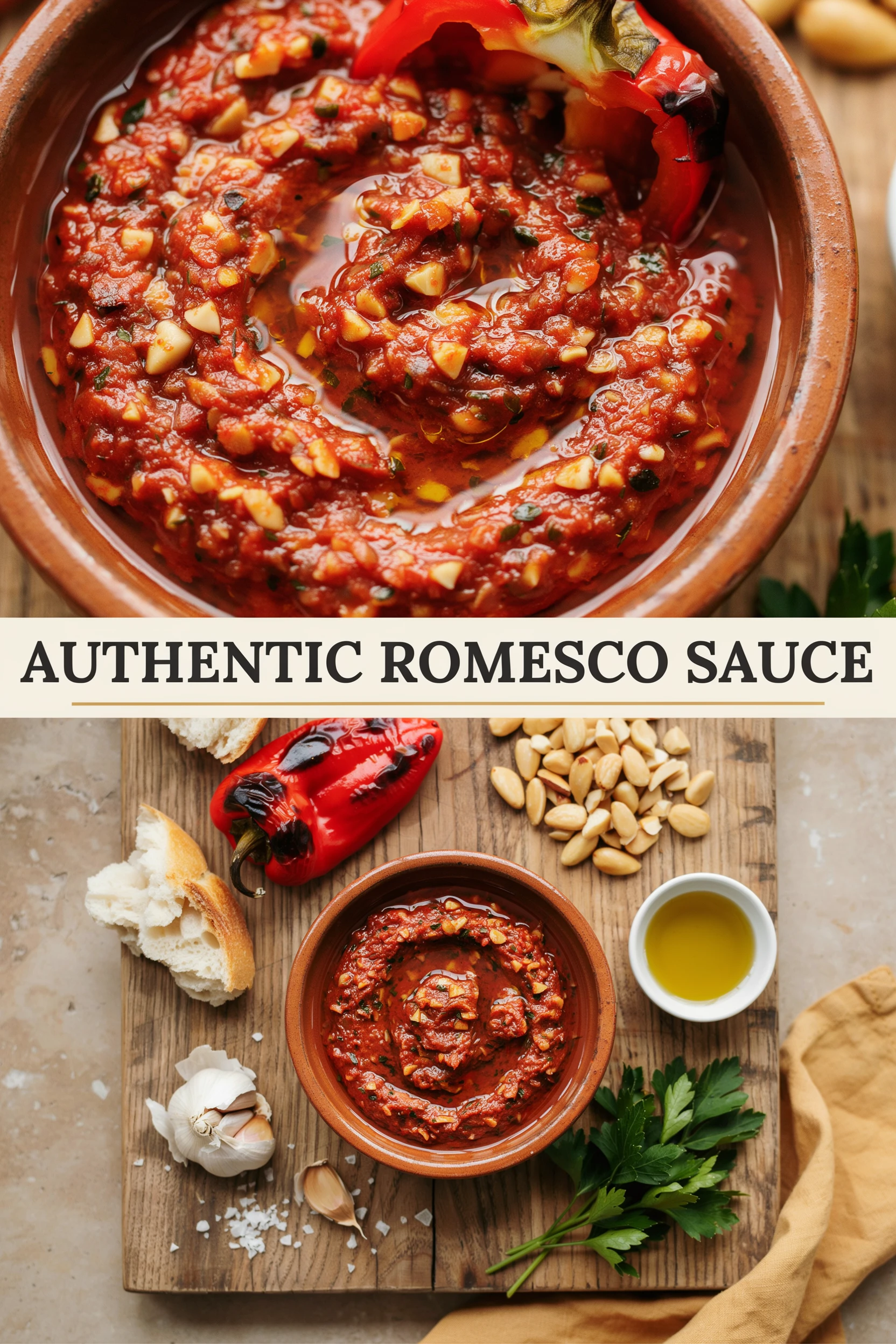
Romesco is a rich Catalan sauce made with roasted peppers, tomatoes, nuts, bread, olive oil, and vinegar. Its balance of smoky sweetness, toasted nuttiness, and gentle acidity makes it as welcome alongside grilled vegetables as it is spooned over fish. This version uses a dried ñora pepper for a traditional flavor, with a practical substitute if you cannot find one.
Ingredients
- 2 medium red bell peppers
- 2 medium ripe tomatoes
- 3 whole garlic cloves, unpeeled
- 1 whole dried ñora pepper, or 1 dried ancho chile as a substitute
- 1/3 cup blanched or skin-on almonds
- 1/4 cup hazelnuts
- 1 slice sturdy country bread, about 1 ounce
- 1/3 cup extra-virgin olive oil, plus 1 teaspoon for toasting the bread if needed
- 1 tablespoon sherry vinegar or red wine vinegar
- 1/2 teaspoon sweet paprika
- 1/2 teaspoon fine salt, plus more to taste
- 1/8 teaspoon cayenne pepper, optional
This makes about 1 1/2 cups, depending on the size of the vegetables and how much oil you add. The sauce is intentionally thick enough to cling to food; you can loosen it later with a little water or extra oil.
Instructions
- Soak the dried pepper. Put the ñora in a small heatproof bowl and cover it with boiling water. Leave it to soften for 20 to 30 minutes while you prepare the other ingredients. If using an ancho chile, soak it the same way. Once soft, split the pepper, discard its stem and seeds, and scrape the softened flesh from the skin with a small spoon. Set the flesh aside and discard the skin. A ñora contributes deep, rounded pepper flavor rather than much heat.
- Heat the oven and prepare the vegetables. Heat the oven to 425°F. Set the bell peppers and tomatoes on a rimmed baking sheet. Add the unpeeled garlic cloves. Roast for 25 to 35 minutes, turning the peppers once, until their skins are blistered and dark in spots and the tomatoes have collapsed and softened. The tomatoes may finish before the peppers, so remove them when tender and continue roasting the peppers if needed. Do not worry if the pepper skins are unevenly charred; the flesh should be soft, not burnt through.
- Steam and peel the peppers. Transfer the hot peppers to a bowl and cover it with a plate or a clean kitchen towel. Let them steam for about 10 minutes, which loosens the skins. When cool enough to handle, peel away the skins, remove the stems and seeds, and let excess liquid drain away. Peel the tomatoes if their skins are loose, and remove any tough stem pieces. Squeeze the roasted garlic from its skins. A little pepper liquid is fine, but draining excess helps keep the sauce from becoming watery.
- Toast the nuts and bread. While the vegetables roast, toast the almonds and hazelnuts in a dry skillet over medium-low heat for 4 to 6 minutes, stirring often, until fragrant and lightly golden. Transfer them to a plate so they stop cooking. Toast the bread in the same skillet until crisp and golden on both sides, using up to 1 teaspoon of olive oil if the bread needs it. Alternatively, toast it on the baking sheet for the last several minutes of roasting, watching closely so it does not scorch.
- Blend the sauce. Put the toasted nuts and bread in a food processor or blender and pulse until coarsely ground. Add the roasted peppers, tomatoes, garlic, ñora flesh, vinegar, paprika, salt, and cayenne if using. Pulse until the mixture is mostly smooth but still has a little texture. With the motor running, pour in the 1/3 cup olive oil in a slow stream. Stop once or twice to scrape down the bowl. If using a standard blender, work in short pulses and avoid blending hot vegetables straight from the oven; let them cool first.
- Taste and adjust. Taste the romesco after blending. Add a little more salt if it tastes flat, or another teaspoon of vinegar if the roasted vegetables make it seem too sweet. For a looser sauce, blend in water a teaspoon at a time; for a richer, silkier finish, add olive oil a tablespoon at a time. Let it stand for 10 minutes before serving so the bread and nuts can absorb some moisture and the flavors settle.
Tips
- Choose the right pepper substitute. Ñora peppers are small, round dried peppers used in Spanish cooking and are prized for their mild, savory flavor. If you cannot source one, a dried ancho gives a similar gentle fruitiness, though the result will not taste exactly the same. Smoked paprika can add smoke, but it is not a full replacement for the dried pepper.
- Keep the texture in your control. Pulse rather than running the processor continuously from the start. Romesco can be rustic, with small flecks of nuts and bread, or smoother and more spoonable. Add liquid gradually: roasted vegetables release varying amounts of juice, and it is easier to thin a thick sauce than to fix one that is too loose.
- Watch the nuts as they toast. Nuts can go from fragrant to bitter quickly, especially in a hot skillet. Keep the heat moderate and stir frequently. If the hazelnuts have skins, rub them in a clean towel after toasting to remove some of the loose skins; removing every bit is unnecessary.
- Do not skip the final taste. The sweetness of peppers and tomatoes changes with the produce, and the vinegar helps balance it. Adjust salt and acidity only after blending. If the sauce tastes harsh, let it rest for a few minutes before adding more vinegar; the toasted bread and nuts soften the flavor as they hydrate.
Serving Suggestions
Serve romesco at room temperature or slightly cool, rather than refrigerator-cold, so its olive oil and roasted flavors are easy to taste. Put it beside grilled or roasted vegetables such as asparagus, cauliflower, eggplant, potatoes, or zucchini. It is also a classic-style partner for grilled fish and works well with shrimp, chicken, or simply cooked white beans. For a simple meal, spread a spoonful on toasted bread and top it with sliced vegetables or a fried egg.
For a shared meal, place the sauce in a shallow bowl and finish it with a small drizzle of olive oil. Use it as a dip for crisp vegetables or warm bread, or serve a spoonful under grilled food rather than pouring it over the whole plate. That keeps the sauce’s texture distinct and lets diners choose how much they want. If serving it with a dish that already has a sharp dressing or marinade, start with a modest amount; romesco is flavorful enough to stand on its own.
Variations
Romesco recipes vary by cook and region, so the proportions of pepper, tomato, nuts, bread, and vinegar are not fixed. For a more pronounced nut flavor, replace some of the almonds with additional hazelnuts. For a lighter, less rich sauce, reduce the oil to 1/4 cup and add a tablespoon of water if needed. You can also leave out the cayenne entirely; the sauce should be flavorful without needing to be hot.
For a smoky version, use smoked paprika in place of the sweet paprika, or roast the bell peppers over a grill until blistered and tender before peeling them. For a gluten-free variation, omit the bread and begin with a smaller amount of oil; add a splash of water if the blended sauce needs loosening. The bread traditionally helps thicken the mixture, so the texture will be a little different. A pinch of extra ground almonds can help give it body, but add it gradually to avoid a pasty result.
If you have no dried pepper, make the sauce with the roasted vegetables, nuts, bread, vinegar, and paprika. It will still be a satisfying roasted pepper sauce, though it will lack some of the depth associated with dried ñora. Avoid adding lots of smoked paprika to compensate, since too much can overwhelm the tomatoes and nuts.
Storage and Reheating
Transfer romesco to a clean, airtight container and refrigerate it promptly. It keeps well for about 4 days in the refrigerator. The olive oil may firm up when cold, and the sauce may thicken as the bread absorbs moisture; both are normal. Stir it well and let the portion you plan to serve sit at room temperature for about 15 to 20 minutes. If it remains too thick, mix in a teaspoon of water or olive oil at a time.
Romesco is generally served cool or at room temperature, so it does not need reheating. If you want it gently warm, place the amount you need in a small saucepan over low heat and stir just until it loses its chill. Do not boil it or heat it aggressively, since that can dull the fresh acidity and cause the oil to separate. For food safety, do not leave the sauce at room temperature for more than 2 hours, or more than 1 hour when the temperature is above 90°F. Freezing is possible, though the texture may separate or become grainy after thawing; stir or briefly reblend it before serving.
Frequently Asked Questions
What is romesco sauce made of?
Romesco is a Spanish sauce associated with Catalonia. Common ingredients include roasted peppers and tomatoes, garlic, almonds or other nuts, bread, olive oil, and vinegar. Dried ñora or similar peppers appear in many traditional versions, but recipes differ from household to household. The bread and nuts give the sauce body, while the vinegar balances the sweetness of the roasted vegetables.
Is romesco sauce spicy?
It is usually more savory and gently sweet than hot. Ñora peppers are mild, and the cayenne in this recipe is optional. Ancho chiles are also generally used for flavor rather than intense heat, but individual dried peppers can vary. If you are sensitive to spice, omit the cayenne and taste the sauce before deciding whether to add any.
Can I make romesco without a food processor?
Yes. A blender works, especially if you chop the roasted vegetables first and blend in batches if the jar is small. For a more rustic result, finely chop the vegetables, garlic, and nuts, then mash them together with the bread in a mortar and pestle before stirring in the oil and vinegar. This takes more effort but gives you direct control over the texture.
Why is my romesco sauce bitter?
Overtoasted nuts, scorched garlic, or pepper flesh that has burned can make the sauce bitter. Toast nuts over moderate heat and remove them as soon as they smell fragrant. When roasting peppers, aim for blistered skins and tender flesh, not blackened flesh throughout. If the sauce is only slightly bitter, a small amount of extra roasted tomato or olive oil may soften the taste, but it cannot fully undo badly burnt ingredients.
Can I make romesco ahead?
Yes. Making it a day ahead gives the flavors time to mingle, and it keeps refrigerated in an airtight container for about 4 days. Before serving, stir it and let it lose some of its refrigerator chill. Check the texture and add a little water or oil if it has thickened. Avoid leaving the whole container out while serving; take out what you need and return the rest to the refrigerator promptly.