
This homemade cherry amaretto jam pairs ripe cherries with lemon, vanilla, and a measured splash of almond-scented liqueur. It cooks on the stovetop and is stored in the refrigerator or freezer, so you can make a small batch without canning equipment.
The method keeps some cherry pieces intact and uses powdered pectin for a quicker, more predictable set. The finished jam is bright and fruity, with a gentle almond note and enough lemon to keep the sweetness in check. Choose a powdered pectin labeled for reduced- or low-sugar recipes to suit the amount of sugar here.
Why This Recipe Works
Cherries bring plenty of flavor but are not especially rich in natural pectin. Powdered pectin helps the jam set without a long reduction, which also keeps the fruit tasting fresh rather than cooked down and dull. Because pectin products differ, use one whose package directions support this fruit-and-sugar ratio; standard pectin may require more sugar and should not be substituted blindly.
Crushing part of the fruit gives the pectin a juicy base to work with, while leaving the rest in halves gives the finished jam a pleasant, spoonable texture. Lemon juice contributes a clean tart flavor and works with the pectin. A full rolling boil after adding the sugar activates the pectin; adding the amaretto and vanilla after cooking helps preserve their aroma.
This is a refrigerator and freezer jam, not a shelf-stable canning recipe. The recipe’s modest sugar level and liqueur addition are not a tested basis for storing filled jars at room temperature.
Ingredients
- 4 cups fresh cherries, pitted and halved
- 2 cups granulated sugar
- 1/4 cup Amaretto liqueur
- 1/4 cup fresh lemon juice, about 2 lemons
- 1 tablespoon finely grated lemon zest
- 1 teaspoon vanilla extract
- 1 package (1.75 ounces) powdered fruit pectin, labeled for reduced- or low-sugar recipes
Ingredient Notes
Cherries: Sweet cherries make a mellow jam; tart cherries give it a sharper edge. Either works, though tart fruit may need a little more sugar for your taste. Weigh or measure the prepared fruit after pitting. Frozen pitted cherries can also work: thaw them, include their juices, and measure 4 cups of fruit and juice together.
Sugar and pectin: Sugar sweetens the fruit and contributes to texture, but pectin types are formulated for different sugar levels. Use a package specifically intended for reduced-sugar recipes and check its directions before starting. If it does not support this amount of sugar and fruit, use its matching recipe ratios rather than assuming the result will set. Do not replace it with liquid pectin by equal volume.
Amaretto: The liqueur adds a rounded almond aroma that complements cherries. Keep the amount measured; extra liquid can make a soft-set jam softer. For an alcohol-free batch, omit it rather than adding an untested amount of water. A few drops of almond extract can provide an almond note, but it is concentrated and is not a direct volume-for-volume substitute.
Lemon juice and zest: Fresh juice gives a lively flavor, and zest adds fragrant citrus oils. Bottled lemon juice can be used in the same measured amount for flavor, but this refrigerator recipe is not designed for canning. Avoid reducing the lemon juice, since it contributes to the flavor balance and helps the pectin work as intended.
Vanilla: Pure or imitation vanilla extract both work. Add it at the end so its aroma stays noticeable. Do not use vanilla bean paste as a tablespoon-for-teaspoon swap without checking its label; some products are much sweeter or thicker.
Instructions
- Prepare the fruit and containers. Pit and halve the cherries, then measure 4 cups. Set out clean, dry, heat-safe jars or freezer containers; have lids ready. If you plan to freeze some jam, use freezer-safe containers and leave room at the top for expansion. This recipe does not include a canning process, so choose containers meant for cold storage.
- Crush part of the cherries. Put the cherries in a large, heavy-bottomed saucepan. Use a potato masher to crush about 1 cup of them, leaving the rest mostly in halves. Stir in the lemon juice and zest. The crushed fruit releases juice for an even cook, while the uncrushed pieces give the jam texture.
- Mix in the pectin. Sprinkle the reduced-sugar powdered pectin evenly over the fruit while stirring. Break up any visible clumps and scrape the bottom and corners of the pan. Let the mixture stand for the brief time specified on the pectin package, if its directions call for it; dispersed pectin is less likely to form lumps.
- Bring the fruit to a full boil. Set the pan over medium-high heat and stir frequently until the mixture reaches a full rolling boil that continues bubbling while stirred. At sea level, water boils at about 212°F; the boiling temperature is lower at higher elevations. Follow the pectin package’s cooking directions if they differ. This stage usually takes 6 to 10 minutes, depending on the pan and fruit temperature.
- Add the sugar and boil as directed. Add all 2 cups of sugar at once, stirring until dissolved. Bring the mixture back to a full rolling boil, stirring constantly to prevent scorching. Once it is boiling vigorously across the surface, boil for 1 minute, unless the package for your specific low-sugar pectin gives a different time. The mixture should look glossy and slightly thickened, but it will still be looser than finished cold jam.
- Finish with amaretto and vanilla. Remove the pan from the heat. Stir in the amaretto and vanilla until evenly distributed. Adding them off the heat protects their aroma; do not add extra liqueur, which can interfere with the set. If foam covers the surface, skim it off with a clean spoon.
- Fill and cool. Ladle the hot jam into the prepared containers, leaving about 1/2 inch of headspace in containers that will be frozen. Wipe the rims, close the lids, and let the containers cool briefly. Refrigerate them within 2 hours; do not leave the jam at room temperature for extended storage. The jam may look loose while hot.
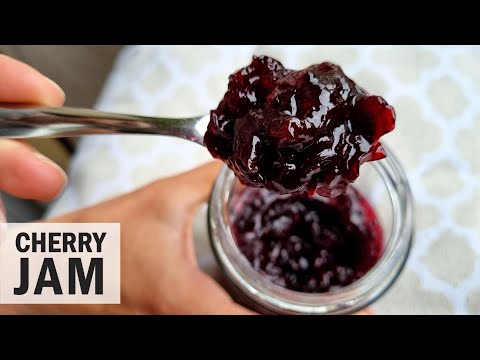
- Allow time for the set. Chill the jam for at least 12 hours, preferably overnight, before judging its final texture. A properly set batch should mound softly on a spoon and hold fruit pieces in a thick, spreadable syrup. Some low-sugar jams remain softer than traditional high-sugar preserves.
Tips for Success
- Check the pectin label before measuring: Look for a reduced- or low-sugar powdered pectin and confirm that its directions accommodate 4 cups of fruit with 2 cups of sugar. Pectin formulas are not interchangeable.
- Measure fruit after pitting: Whole-cherry volume includes pits and can leave you short on fruit. Measure the prepared cherries, including any juice from thawed fruit.
- Use a roomy saucepan: Jam foams as it boils. A wide, heavy pan gives the fruit room to bubble and makes it easier to stir without spilling over.
- Stir thoroughly at the start: Pectin can clump if it lands in one wet spot. Sprinkle it over the fruit while stirring, then scrape the pan well.
- Keep the sugar and boil time precise: With pectin, small changes to the formula or cooking time can affect the set. Measure the sugar rather than estimating, and use the pectin label’s directions for its particular product.
- Do not judge hot jam: Jam thickens as it cools and chills. Wait overnight before deciding that it is too runny.
- Use clean storage containers: Wash containers and lids with hot, soapy water and dry them before filling. Refrigeration or freezing—not a sealed lid alone—is what keeps this recipe safely stored.
Troubleshooting
The jam is still runny after chilling. First give it a full 24 hours in the refrigerator. If it remains syrupy, the pectin may not match the sugar level, the rolling boil may have been too short, or the fruit-to-sugar amount may have changed. Keep it chilled and use it as a sauce for yogurt, pancakes, or ice cream. Re-cooking with more pectin is possible, but follow that pectin’s re-cook directions rather than adding powder directly to cold jam.
The jam is too firm or rubbery. It may have boiled too long, or the pectin amount may be too high for the product and fruit amount. For this batch, stir a spoonful with a little warm water when serving if you want a looser texture. For the next batch, use a pectin product whose reduced-sugar recipe matches the quantities and boil time precisely.
The jam has pectin lumps. Pectin likely was not dispersed before the mixture boiled. Stir it into the fruit gradually, whisking or stirring continuously, and scrape the pan before heating. Small lumps are mostly a texture issue; they do not mean the jam should be stored outside the refrigerator.
The jam tastes too sweet or too tart. Cherries vary in sweetness, but changing sugar or lemon in a pectin recipe can affect the set. For this batch, balance each serving with plain yogurt, soft cheese, or an unsweetened baked good. Adjust the fruit or sugar only with a pectin formula designed for the new proportions.
There is a foamy layer on top. Skim the foam while the jam is hot, just before filling. A little foam is harmless, but removing it gives the jars a clearer appearance and a smoother surface.
Variations
More pronounced citrus: Add a little extra lemon zest, but keep the measured lemon juice unchanged so the liquid and pectin balance stays consistent.
Warm spice: Stir in a small pinch of ground cinnamon or cardamom with the vanilla. Start lightly; strong spices can cover the cherry and almond flavors.
Less almond flavor: Reduce the amaretto to 2 tablespoons. The jam may set a little more firmly because there is less added liquid, though the pectin package remains the guide for the set.
Chunkier or smoother jam: For a chunkier result, crush fewer cherries. For a smoother spread, mash more fruit before heating. Do not blend hot jam in a sealed blender, since hot liquid can build pressure and splatter.
Frozen cherries: Use thawed, pitted cherries and include their juice in the measured fruit. The cooking time may be a little longer because the fruit starts colder; use the full-boil cues rather than relying on the clock alone.
What to Serve With It
Spread the jam on toast, scones, biscuits, or warm pancakes. Its almond note also works well with plain yogurt, oatmeal, waffles, and a bowl of vanilla ice cream. For a simple dessert, spoon it over pound cake or cheesecake, or serve it beside a mild cheese and crackers. A little goes a long way on sweet foods, so taste before adding more.
Make-Ahead, Storage and Reheating
Make the jam up to a day ahead and let it chill overnight so the set can develop. Store it in a covered container in a refrigerator at 40°F or below and use it within 3 weeks. Always use a clean spoon, and return the container to the refrigerator after serving.
For longer storage, freeze the jam in freezer-safe containers at 0°F or below, leaving about 1/2 inch of headspace for expansion. For best quality, use within 1 year. Thaw a container in the refrigerator and use it within 3 weeks; do not refreeze a thawed portion. Freezing can soften the texture somewhat.
This recipe is not intended for pantry storage. Do not treat a hot fill, tight lid, or water-bath process as a substitute for a tested canning recipe. If you want to serve the jam warm, spoon out only what you need and heat it gently in a small pan or microwave-safe dish, stirring until just warm. Avoid repeatedly heating the storage jar.
Recipe Card
Yield: About 3 cups
Prep time: 20 minutes
Cook time: 15 to 20 minutes
Total time: About 35 to 40 minutes active, plus at least 12 hours to chill and set
Ingredients
- 4 cups fresh cherries, pitted and halved
- 2 cups granulated sugar
- 1/4 cup Amaretto liqueur
- 1/4 cup fresh lemon juice, about 2 lemons
- 1 tablespoon lemon zest
- 1 teaspoon vanilla extract
- 1 package (1.75 ounces) powdered fruit pectin for reduced- or low-sugar recipes
Condensed Instructions
- Measure the pitted cherries. Crush about 1 cup in a large saucepan; leave the rest in halves. Stir in lemon juice and zest.
- Sprinkle in the pectin while stirring. Follow any brief standing directions on its package.
- Bring the fruit to a full rolling boil over medium-high heat, stirring often.
- Add the sugar, stir until dissolved, and return to a full rolling boil. Boil for 1 minute, or follow the directions for the specific reduced-sugar pectin used.
- Remove from the heat. Stir in amaretto and vanilla, then skim foam if needed.
- Ladle into clean storage containers, leaving 1/2 inch of headspace for freezing. Cool briefly and refrigerate within 2 hours.
- Chill at least 12 hours before serving. Refrigerate and use within 3 weeks, or freeze for best quality within 1 year.
Frequently Asked Questions
Can I use frozen cherries?
Yes. Thaw pitted cherries first, measure 4 cups including their juices, and use them in place of fresh cherries. Since they may be cold when they go into the pan, allow extra time to reach a boil and follow the visual cues.
Can I use regular powdered pectin?
Only if its package directions support this amount of fruit and sugar. Conventional pectin often uses a different sugar ratio from reduced-sugar pectin. Using a standard product with only 2 cups of sugar may give an unreliable set, so check the package before cooking.
Will the jam taste strongly of alcohol?
The amaretto is stirred in after the jam is removed from the heat, so its almond aroma remains noticeable and some alcohol may remain. The flavor is a supporting note rather than the main taste. For an alcohol-free version, omit it; do not replace it with the same amount of water.
Why does the jam look thin when it is hot?
Hot jam is much looser than chilled jam. Pectin needs time to cool and form its final texture, so refrigerate the filled containers overnight before assessing the set. Avoid adding extra pectin based only on how the jam looks in the saucepan.
Can I reduce the sugar?
Do not reduce it unless the pectin product’s directions provide a formula for that lower amount. Sugar level affects texture and the way pectin sets. Choose a pectin designed for the sugar quantity you want to use and follow its matching recipe.
Can I make this jam shelf-stable?
This recipe is intended for refrigerator or freezer storage only. Do not store it at room temperature or improvise a water-bath canning process. Shelf-stable canning requires a tested recipe with specified ingredients, proportions, and processing instructions.
How do I know if the jam has spoiled?
Discard it if you see mold, notice an unusual odor, or see other signs of spoilage. Do not taste jam to decide whether it is safe when it appears spoiled. Keep the container refrigerated, use a clean utensil, and follow the storage period above.