
This microwave baked potato recipe makes a tender, fluffy russet in a fraction of the time an oven takes. The microwave cooks the potato quickly, while a short oven finish is an option if you want a drier, crisper skin. Use the timing as a guide and check the potato for tenderness, since size and microwave power both affect how long it needs.
Ingredients
- 1 large russet potato, about 10 to 12 oz (285 to 340 g)
- 1 tsp olive oil or neutral cooking oil, optional
- 1/8 tsp fine salt, or to taste
- 1 tbsp unsalted butter, optional for serving
- 2 tbsp sour cream, optional for serving
- 1 tbsp sliced scallions, optional for serving
- 2 tbsp shredded cheddar cheese, optional for serving
Instructions
- Wash and dry the potato. Scrub it under cool running water to remove dirt, then dry it well with a clean towel. Dry skin is easier to handle and will take oil more evenly if you choose to use it. Do not wrap the potato in foil; foil is not suitable for microwave cooking.
- Pierce the skin. Use a fork to prick the potato 6 to 8 times, spacing the holes around the sides. This gives steam a way to escape as the potato heats. Set it on a microwave-safe plate. If you want, rub the skin with the oil and sprinkle on the salt; oil is for flavor and a little surface sheen, not for making the microwave skin crisp.
- Microwave the first side. Cook on high for 5 minutes. These directions are a starting point for a large potato in a typical microwave; the exact wattage and potato shape vary. The plate may become hot, so use an oven mitt or towel when handling it.
- Turn and continue cooking. Carefully flip the potato with tongs or a fork, then microwave for 3 minutes. Check by pressing the sides gently through a towel or mitt, or inserting a fork into the thickest part. If the fork meets resistance or the center still feels firm, continue in 1-minute increments, turning again if needed.
- Check for doneness and rest. The potato is ready when a fork slides into the center easily and the sides give when gently squeezed. A large potato may need 8 to 10 minutes total or longer, while a smaller one may finish sooner. Let it rest for 2 minutes before cutting; the center continues to soften and the steam is very hot.
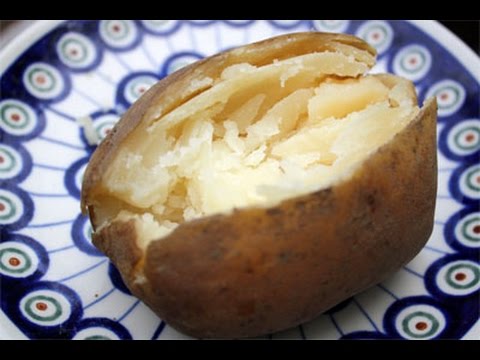
- Open and serve. Cut a lengthwise slit through the top, then gently press the ends inward to open the potato. Fluff the inside with a fork and add butter, sour cream, scallions, cheese, or other toppings. Serve promptly while hot.
- Optional crisp-skin finish: If you want a drier skin, heat the oven to 425°F (220°C) while the potato rests. Transfer the cooked potato to a baking sheet and bake for 10 to 15 minutes, until the skin feels drier and firmer. This step is optional; the microwave alone cooks the potato but does not produce the same crisp exterior as an oven.
Tips
- Choose a potato of even thickness. Russets are a dependable choice because their starchy flesh becomes fluffy and their shape is easy to split and top. A potato that is unusually long or thick may cook unevenly, so check its center rather than relying only on the clock. If you have several potatoes, cook similar-sized ones together and allow extra time for the larger batch.
- Use short bursts near the end. Adding several minutes without checking can leave the outside overcooked while the center is still firm, or make the flesh dry. Once the potato has had its initial cooking, use one-minute increments and test the thickest area each time. Take care when turning it, since steam escaping through the fork holes and the plate can be hot.
- Adjust the seasoning to suit the topping. A little salt on the skin is optional, and you can leave out the oil if you prefer a plain potato or want to reduce added fat. If the finished potato will have salty cheese, bacon, or a seasoned sauce, start with less salt and let each person season their portion at the table.
- Do not expect microwave skin to crisp. Oil and salt can season the outside, but they will not reproduce the dry, crisp skin of a traditionally oven-baked potato. For that texture, use the brief oven finish in the instructions. If speed matters most, skip it and enjoy the softer-skinned potato straight from the microwave.
Serving Suggestions
For a simple side, split the potato and add butter, a pinch of salt, and black pepper. Sour cream and sliced scallions bring a cool, tangy contrast, while shredded cheddar melts into the hot center. Add toppings after cooking rather than microwaving them on top: this keeps delicate garnishes fresh and makes it easier to judge when the potato itself is done.
To make the potato more substantial, serve it with cooked vegetables, a green salad, or a bowl of soup. Steamed broccoli and cheese, sautéed mushrooms, or leftover cooked vegetables are easy additions. If using cooked meat, beans, or other leftovers as toppings, heat them separately until steaming hot and spoon them over the split potato just before serving. Keep wet toppings in moderation if you want the fluffy interior to remain distinct rather than turning soupy.
Variations
Cheddar and broccoli: Top the opened potato with cooked broccoli florets and shredded cheddar. The potato’s residual heat will soften a small amount of cheese, but if you want it fully melted, microwave the topped potato briefly on a microwave-safe plate and check it often. Add a spoonful of sour cream if you like a creamy finish.
Loaded-style: Add sour cream, cheddar, scallions, and a few spoonfuls of cooked, crumbled bacon. Use bacon that has already been cooked; the potato’s cooking time is not intended to cook raw meat. For a meat-free version, use extra scallions, sautéed mushrooms, or a spoonful of cooked beans instead.
Herb and garlic: Stir chopped chives or parsley into softened butter and add a small amount of finely grated garlic. A little goes a long way, so start with a modest amount and taste the butter before topping. This is a useful option when you want more flavor without adding a heavy sauce.
Olive oil and vegetables: Skip the butter and add a drizzle of olive oil, black pepper, and cooked vegetables such as spinach or mushrooms. Drain watery vegetables before adding them so the potato does not become soggy. You can also use a dairy-free butter alternative or omit the dairy toppings entirely.
Storage and Reheating
For the best texture, serve the potato as soon as it is cooked. If you have leftovers, remove any foil or wrapping, let the potato stop steaming heavily, and refrigerate it in a covered container within 2 hours of cooking. Refrigerate toppings separately when practical, especially sour cream or fresh garnishes. Use refrigerated cooked potato within 3 to 4 days. Do not leave a cooked potato at room temperature for an extended period.
Reheat a whole potato or cut portions in the microwave on a microwave-safe plate. Cover loosely with a microwave-safe cover to reduce splattering, leaving room for steam to escape. Heat in 1-minute intervals, turning or rearranging pieces as needed, until the potato is hot throughout. For leftovers, reheat to 165°F (74°C), checking the center with a food thermometer when possible. Add fresh toppings after reheating. The skin will soften in storage and will not become crisp again in the microwave; a brief oven finish can dry it, though the interior may become less fluffy if reheated for too long.
Frequently Asked Questions
How long does a baked potato take in the microwave?
For one large russet weighing about 10 to 12 oz, start with 5 minutes, turn it, then cook for 3 minutes more. Check the center and continue in 1-minute increments until a fork slides in easily. A smaller potato may take less time, and a larger one or a lower-powered microwave may need more. Treat the clock as a guide, not a guarantee.
Should I wrap the potato in a paper towel?
You can microwave a potato directly on a microwave-safe plate, which is all this recipe requires. A damp paper towel is sometimes used to help keep the skin from drying, but it is not necessary and will not make the skin crisp. If you use one, make sure it is plain and labeled microwave-safe, and do not use foil or any metal wrapping.
Why do I need to poke holes in the potato?
Pricking the skin provides small openings for steam to escape during cooking. Use a fork to make several holes around the potato before microwaving. This simple step is preferable to cooking an unpierced potato, and it also makes the potato easier to open after it rests.
Can I microwave more than one potato at a time?
Yes, provided they fit in a single layer with space between them so they can heat more evenly. Start with the same initial timing, then check each potato individually; they may not all finish together, especially if they are different sizes. Add time in short increments and remove each potato when it is tender. A crowded microwave or a larger quantity will generally need more cooking time than one potato.
Can I use a different kind of potato?
Yes. Yukon Gold and other waxier potatoes can be cooked in the microwave, but their texture tends to be creamier and firmer rather than as fluffy as a russet. Smaller potatoes usually cook more quickly, so begin checking them earlier. Whichever variety you use, wash it, pierce it, and judge doneness by tenderness at the thickest point.
Can I make the potato ahead of time?
You can cook it ahead and refrigerate it, but the freshly cooked texture is best. Cool and refrigerate it promptly in a covered container, then reheat until hot throughout, reaching 165°F (74°C) for leftovers. For a crispier skin after reheating, use a short oven finish, watching closely so the flesh does not dry out. Add sour cream, scallions, and other fresh toppings after reheating.