
This guide shows you how to microwave a sweet potato until it is tender, then turn it into a quick meal or side with one of ten specific topping combinations. It is for busy cooks, students, and anyone who wants a baked-potato-style dinner without waiting for the oven to heat up.
Basic Microwave Method
Microwaves vary in power, and sweet potatoes vary in size, so use tenderness rather than a fixed cooking time as your guide. A medium potato commonly takes several minutes, but checking in short bursts helps prevent overcooking and leaves you with a soft center rather than a dried-out one.
Ingredients
- 1 medium sweet potato, about 8 oz
- 1 tsp olive oil, optional
- 1/8 tsp kosher salt, optional
Instructions
- Scrub the sweet potato under running water and pat it dry. Pierce it several times with a fork so steam can escape during cooking; do not wrap it in foil or put foil in the microwave.
- Set the potato on a microwave-safe plate and cook on high for 5 minutes. Turn it over carefully, then continue in 1-minute bursts until a fork slides into the thickest part with little resistance.
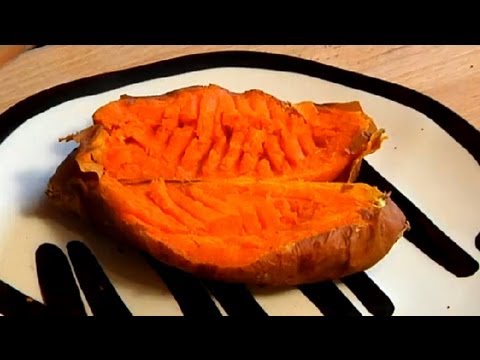
- Let it stand for 2 minutes before handling, since the inside continues to cook and can be very hot. Split it lengthwise, fluff the flesh with a fork, and add oil and salt if using.
- For a drier, more browned skin, transfer the cooked potato to a baking sheet and finish it in an oven preheated to 425°F for about 10 minutes. This optional step is useful when you want more oven-baked texture but do not want to wait for the potato to cook from raw in the oven.
1. Butter, Salt, and Black Pepper
This classic finish lets the sweet potato taste like itself: split the cooked potato and work a small pat of butter into the hot flesh with a fork. Add a pinch of salt and a few grinds of black pepper, tasting before adding more because salted butter can make extra salt unnecessary. It is worth choosing when you want a simple side dish, or when you plan to pair the potato with a strongly seasoned main course and do not want competing flavors.
2. Cinnamon and Maple
For a sweet, warm-spiced version, stir a little butter into the flesh, then add ground cinnamon and a light drizzle of maple syrup. The cinnamon brings fragrance without making the potato taste like dessert, while maple adds sweetness that complements the potato’s natural flavor. Keep the syrup modest at first; a generous pour can pool in the center and make an otherwise filling side taste cloying.
3. Black Beans, Salsa, and Lime
Top the split potato with drained, rinsed black beans, spoonfuls of salsa, and a squeeze of lime for a quick Southwestern-style meal. The beans add substance, salsa contributes acidity and seasoning, and lime brightens the sweetness of the potato without requiring a separate sauce. Warm the beans before adding them if you prefer a hot filling, and choose mild or hot salsa to control the heat.
4. Broccoli and Cheddar
Use small broccoli florets that have been steamed or microwaved until tender, then scatter them over the potato with shredded cheddar. The residual heat may soften a thin layer of cheese, but for a fully melted top, microwave the assembled potato in short bursts and check between them. This combination works particularly well as a substantial lunch; cut the broccoli small enough to sit securely on the potato instead of tumbling off as you eat.
5. Greek Yogurt, Chives, and Black Pepper
A spoonful of plain Greek yogurt gives the potato a cool, tangy topping similar in spirit to sour cream, while chopped chives add a mild onion note. Choose unsweetened yogurt, since vanilla or fruit-flavored varieties clash with the savory potato. Add the yogurt after cooking rather than microwaving it on top, and finish with black pepper for a neat, quick option when you want something creamy but do not have sour cream.
6. Tahini, Lemon, and Chickpeas
Combine cooked chickpeas with a spoonful of tahini and lemon juice, then pile the mixture into the potato; loosen thick tahini with a little water until it can be drizzled. The nutty sesame flavor and lemon’s sharpness balance the sweet flesh, and chickpeas make this a more filling plant-based topping. Season the chickpeas with a pinch of salt, and add chopped parsley if you have it, though the potato is good without an extra garnish.
7. Pesto and White Beans
Spoon white beans, such as cannellini beans, over the hot potato and finish with a small amount of basil pesto. The creamy beans are mild enough not to overpower the pesto, whose herbs, oil, and cheese bring concentrated flavor to each bite. Pesto can be salty, so taste before adding salt; this is a convenient combination when you have a partly used jar of pesto and canned beans in the pantry.
8. Avocado, Lime, and Chili Flakes
Add diced ripe avocado to the potato after cooking, then squeeze lime over it and scatter on chili flakes to taste. Avocado contributes a soft, rich texture, while lime keeps the topping lively and chili gives it a little heat without requiring a cooked sauce. This is best assembled just before eating because cut avocado can discolor; if you have leftover avocado, store it separately with the cut surface covered and use it promptly.
9. Spinach and Feta
Wilt a handful of spinach in a separate microwave-safe bowl or pan, squeeze away excess liquid, and add it to the potato with crumbled feta. Feta brings a salty, tangy contrast that means you may not need any additional salt, while removing excess water keeps the potato from becoming soggy. A little olive oil can help the spinach coat the potato flesh, and this combination makes a useful side for grilled vegetables or a simple grain bowl.
10. Peanut Butter and Banana
Spread a thin layer of peanut butter over the hot potato, then add sliced banana for a quick breakfast or snack with contrasting creamy and soft textures. A pinch of cinnamon is an easy extra, but the pairing needs no syrup because both the potato and ripe banana are naturally sweet. Use smooth or crunchy peanut butter according to preference, and let the potato cool briefly before topping so the nut butter softens without becoming excessively runny.
How to Choose
Start with the potato itself: choose one that feels firm, has no soft or leaking areas, and is a size that will fit comfortably on your microwave-safe plate. Similar-sized potatoes are more likely to cook at a similar pace; if you cook more than one at once, leave space between them and expect to check each potato individually. Scrubbing and piercing are practical basics, not optional decoration, and a short standing period helps the heat distribute after the microwave stops.
Next, decide what job the potato needs to do. Butter and pepper, broccoli and cheddar, or spinach and feta are easy sides, while beans, chickpeas, or white beans add a more substantial filling. For a breakfast-style option, peanut butter and banana are quick to assemble; for a brighter savory bowl, lime, salsa, or yogurt can keep the topping from feeling too rich. Use the ten combinations as starting points rather than strict formulas, adjusting salt, heat, and acidity to suit the other food on the plate.
Finally, think about texture and timing. Watery toppings such as salsa or cooked spinach are best added in amounts that will not flood the potato, while crunchy additions should go on just before serving. If browned skin matters, use the short oven finish; if speed matters most, serve directly from the microwave. Cooking time is not an exact promise because wattage, potato size, and shape all affect how quickly the center softens.
Frequently Asked Questions
Do I need to pierce a sweet potato before microwaving it?
Yes. Pierce the skin several times with a fork before cooking so steam can escape. Use a plate and handle the potato carefully after cooking because it and its trapped steam can be hot.
How long does a sweet potato take in the microwave?
There is no single time that works for every microwave and potato. Start with 5 minutes for a medium potato, turn it, then check in 1-minute bursts until a fork enters the thickest part easily.
Can I microwave more than one sweet potato at a time?
Yes, if they fit in a single layer with space around them. They may need more time than one potato, and they may finish at different rates, so test each one and remove it when tender.
Can I eat the skin?
Yes, the skin is edible. Scrub the potato well under running water before cooking, and leave the skin on if you like its texture; the optional oven finish can make it drier.
How should I store and reheat a cooked sweet potato?
Refrigerate leftovers within 2 hours in a covered container and use them within 3 to 4 days. Reheat leftovers until they reach 165°F, checking the center with a food thermometer when practical, and discard food that has been left out too long.
Final Thoughts
A microwave makes a tender sweet potato practical for a weeknight meal, while a quick oven finish can add a drier skin if you have a few extra minutes. Choose a topping based on whether you want savory, sweet, creamy, or filling, and add it after cooking so the potato stays easy to customize.