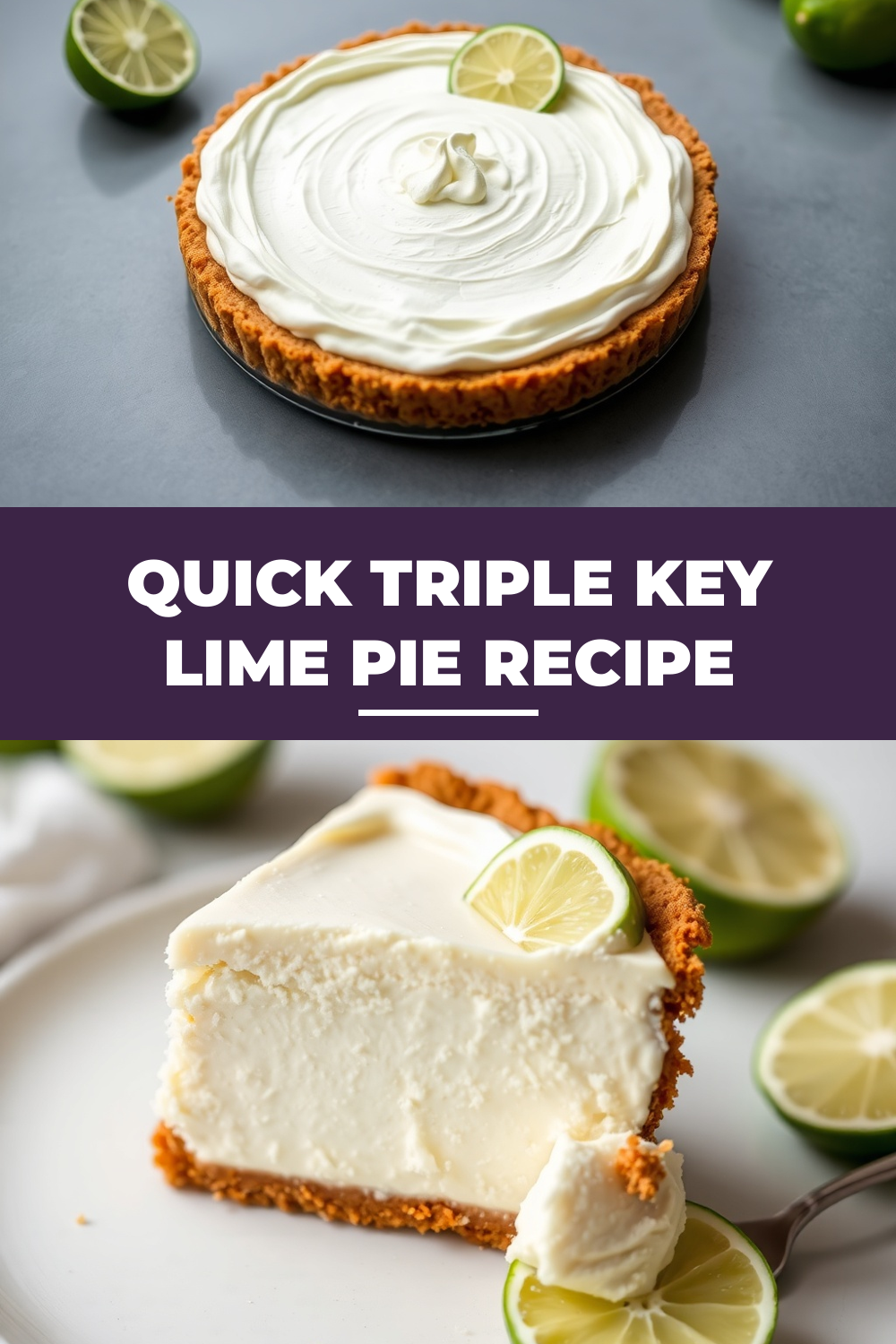
This quick triple key lime pie layers lime zest into a crisp graham-cracker crust, stirs fresh lime juice and zest into a creamy baked filling, and finishes with lime-scented whipped cream. The hands-on work is brief, and a short bake gives the pie a sliceable texture; allow time for it to cool and chill before serving.
Ingredients
- For the crust: 1 1/2 cups graham-cracker crumbs, finely crushed. About 10 to 12 full graham-cracker sheets usually make this amount, but measure the crumbs for a crust that holds together.
- 5 tablespoons unsalted butter, melted. It binds the crumbs without making the crust greasy.
- 2 tablespoons granulated sugar.
- 1 teaspoon finely grated key lime zest, from washed fruit. Zest only the green outer peel; the white pith underneath is bitter.
- For the filling: 1 can (14 ounces) sweetened condensed milk. Do not substitute evaporated milk, which is thinner and unsweetened.
- 4 large egg yolks, preferably at room temperature for easier mixing.
- 1/2 cup fresh key lime juice, strained to remove seeds and pulp. The number of limes needed varies, so measure the juice rather than relying on a count.
- 1 tablespoon finely grated key lime zest.
- For the topping: 1 cup cold heavy whipping cream.
- 2 tablespoons powdered sugar.
- 1/2 teaspoon vanilla extract.
- 1 teaspoon finely grated key lime zest, plus 1 additional teaspoon for garnish if desired.
Instructions
- Heat the oven and prepare the pan. Set a rack in the middle of the oven and heat it to 350°F (175°C). Have a 9-inch pie plate ready. If you are juicing the limes by hand, roll each one firmly on the counter first; this can help release the juice. Zest the fruit before cutting and juicing it.
- Make and shape the crust. Stir the graham crumbs, granulated sugar, and 1 teaspoon zest together in a bowl. Pour in the melted butter and mix until the crumbs look evenly damp. Tip them into the pie plate and press them firmly over the bottom and up the sides. Use the flat bottom of a measuring cup to compact the base, then press the sides with your fingers. An even, tightly packed crust is less likely to crumble when sliced.
- Prebake the crust. Bake it for 8 minutes, then set the plate on a rack while you mix the filling. The crust should smell toasted and look set, not dark brown. Leave the oven on. A warm crust is fine when the filling goes in.
- Mix the filling gently. In a medium bowl, whisk the egg yolks until smooth. Whisk in the sweetened condensed milk until blended, then add the lime juice and 1 tablespoon zest. Mix only until the filling is uniform. It will begin to thicken as the acidic juice combines with the milk; vigorous, prolonged beating is unnecessary and can add air bubbles.
- Fill and bake. Pour the filling into the warm crust and smooth the surface. Bake for 15 to 18 minutes. The edges should look set, while the center may still have a small, gentle wobble when the plate is nudged. Avoid waiting for the whole surface to look firm, since the filling continues to set as it cools. For an egg-safety check, the center should reach 160°F (71°C); insert a clean instant-read thermometer carefully without touching the crust.
- Cool, then chill. Transfer the pie plate to a rack and cool the pie at room temperature for about 1 hour. Cover it without letting the cover touch the filling, then refrigerate for at least 3 hours, or until thoroughly cold and firm. Chilling is important: cutting a warm pie can make the center seem loose even when it has been baked properly.
- Whip and finish the topping. Just before serving, put the cold cream, powdered sugar, and vanilla in a chilled bowl. Beat with a whisk or mixer until soft-to-medium peaks form: the cream should hold a shape but still look smooth. Fold in 1 teaspoon zest, spoon or pipe the cream over the chilled pie, and scatter on the optional extra zest. For neat slices, use a sharp knife wiped clean between cuts.
Tips
- Measure the juice. Key limes vary in size and juiciness, and their small size can make a lime count misleading. Juice enough fruit to reach 1/2 cup. If fresh key limes are unavailable, regular Persian lime juice works; the pie will taste a little less floral but will still be tangy and creamy.
- Use zest carefully. Wash and dry the limes before zesting, and stop when you reach the white pith. A microplane makes fine zest that distributes evenly through the crust, filling, and cream. Keep the zest portions separate so each layer gets its measured amount.
- Do not overbake the filling. A fully rigid center in the oven can turn into a dry or slightly curdled texture after cooling. Look for set edges and a modest wobble in the middle, while using the 160°F center temperature as the food-safety target.
- Plan for the chill. This is quick to assemble, but it is not a last-minute pie: it needs several hours in the refrigerator to become cleanly sliceable. Make it earlier in the day or the evening before, and add the whipped cream near serving time for the freshest texture.
Serving Suggestions
Serve the pie cold, cut into wedges, with a little extra lime zest or a thin lime wheel on each piece. The filling is rich and sweet-tart, so modest slices are satisfying. For a simple dessert plate, add fresh berries such as raspberries or blueberries; their fruitiness complements the citrus without competing with it. A few lightly crushed graham crackers over the whipped cream echo the crust and add a bit of crunch.
If you are serving the pie after a large meal, keep the topping light and avoid adding extra sweet sauces. For a more generous dessert, offer additional whipped cream on the side so guests can choose their own amount. Take the pie from the refrigerator shortly before cutting, but return any uneaten portions to the refrigerator promptly.
Variations
- Use regular limes. Replace the key lime juice and zest with the same measured quantities of Persian lime juice and zest. The flavor will be familiar and bright, though key limes are generally more aromatic and have a distinct tartness.
- Make a smoother topping. Leave the zest out of the whipped cream and use it only as a garnish. This keeps the topping especially smooth while preserving the pie’s three lime accents in the crust, filling, and finish.
- Try a different crumb crust. Substitute finely crushed vanilla wafers for the graham crumbs, keeping the same 1 1/2-cup crumb quantity. Since cookies can vary in sweetness and fat, mix in the butter gradually and stop when the crumbs hold together when pressed; you may not need every drop.
- Add a toasted finish. Instead of lime-scented cream, top the chilled pie with plain whipped cream and a small amount of finely grated zest. Do not put the assembled whipped-cream topping under the broiler; it is meant to be served cold.
Storage and Reheating
Because this pie contains eggs and dairy, refrigerate it at 40°F (4°C) or colder. Keep it covered and use it within 3 to 4 days for best quality. If the whipped cream is already on the pie, it may soften or lose volume during storage, but the pie should still be kept refrigerated. For the neatest appearance, store the chilled pie without its topping and whip the cream shortly before serving.
You can prepare the crust and filling, bake the pie, and chill it a day ahead. Keep it covered in the refrigerator; add the topping on the day you serve it. Do not leave the pie at room temperature for more than 2 hours, or more than 1 hour if the temperature is above 90°F (32°C). This dessert is served chilled and should not be reheated. Freezing is possible, but it can change the texture of the custard and whipped cream; if you freeze it, wrap the un-topped pie well, thaw it in the refrigerator, and add fresh cream after thawing.
Frequently Asked Questions
Can I use bottled key lime juice?
Yes, if it is pure key lime juice and has been stored according to its label. Fresh juice and zest usually give the pie a brighter aroma, so bottled juice may make the filling taste less fragrant. Keep the measured amount at 1/2 cup, and do not add extra juice to make the filling more tart because that can affect its texture.
Why is my filling still soft after baking?
The center should have a small wobble when the pie leaves the oven, but it should not look liquid. The filling firms as it cools and chills, so give it the full refrigeration time before judging the set. If it remains loose after several hours, check that the oven was fully preheated and that the pie was baked for the stated time; oven temperatures can vary.
Can I make this pie without a mixer?
Yes. A whisk is enough to combine the yolks, condensed milk, juice, and zest. You can also whip the cream by hand with a balloon whisk, though it takes more effort. Stop once the cream holds soft-to-medium peaks; whipping until it looks grainy can turn it into butter.
Can I make the pie a day ahead?
Yes. Bake and chill it, then keep it covered in the refrigerator overnight. Add the whipped cream and final zest shortly before serving so the topping stays fluffy. If the pie is already topped, keep it refrigerated and avoid pressing plastic wrap directly onto the cream.
What should I do if I do not have a 9-inch pie plate?
A similar-capacity pie plate is the best substitute. A substantially smaller plate may overflow, while a wider, shallower plate can make the filling layer thinner and shorten the baking time. If using another size, leave some space at the rim, watch for the same set-edge and slight-wobble cues, and verify the center temperature rather than relying on time alone.