
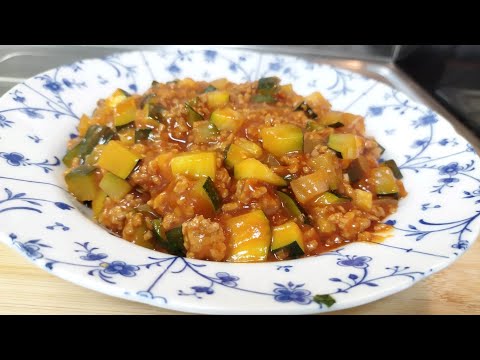
This zucchini tomato ground beef casserole brings browned beef, tender zucchini, tomatoes, and a golden layer of mozzarella and Parmesan together in one comforting bake. It is a practical dinner for using fresh zucchini, and the ingredients are easy to find.
The key to a casserole that is hearty rather than watery is to give the zucchini a brief roast and let the tomato-beef mixture simmer until it thickens. The finished dish tastes savory and gently sweet from the tomatoes, with fragrant Italian seasoning and a salty, bubbling cheese top.
Why This Recipe Works
Zucchini contains plenty of water, which can seep into a casserole as it bakes. Roasting the slices first drives off some moisture and gives their edges a little color. That extra step helps the finished portions hold together instead of sitting in a pool of liquid.
The beef is browned before the tomatoes go in, so it develops deeper savory flavor rather than simply stewing. Onion softens in the same pan, picking up the browned bits, while garlic and Italian seasoning bloom briefly in the warm oil. A short simmer reduces excess tomato liquid before the ingredients meet the baking dish.
Finally, the casserole bakes uncovered. Steam can escape, the cheese melts evenly, and the top gets lightly golden. Resting the casserole before serving lets the juices settle, making it easier to lift out neat portions.
Ingredients
- 1 pound ground beef, preferably lean or moderately lean
- 2 medium zucchinis, sliced into rounds about 1/4 inch thick
- 2 cups diced tomatoes, canned or fresh; drain canned tomatoes if especially juicy
- 1 medium onion, chopped
- 2 cloves garlic, minced
- 1 teaspoon Italian seasoning
- 1/2 teaspoon fine salt, plus more to taste
- 1/4 teaspoon black pepper, plus more to taste
- 1 cup shredded mozzarella cheese
- 1/2 cup grated Parmesan cheese
- 2 tablespoons olive oil, divided
Ingredient Notes
Ground beef: Beef with some fat has good flavor, but a very fatty blend can leave the casserole greasy. If the pan collects a lot of fat after browning, carefully spoon or drain off most of it before adding the tomatoes. Ground turkey can replace the beef, though it will taste milder and may need a little extra seasoning.
Zucchini: Choose firm zucchini with smooth skin. There is no need to peel it; the skin helps the slices keep their shape. Yellow summer squash works in the same way. Slice the vegetables evenly so they roast at about the same rate.
Tomatoes: Canned diced tomatoes are convenient and consistent. Drain them if they seem very watery, but keep a little of their juice for the sauce. Fresh ripe tomatoes are also good; chop them and simmer the mixture until it is thick enough to cling to the beef. If fresh tomatoes are pale or bland, canned tomatoes may give a fuller tomato flavor.
Cheese: Mozzarella melts into a stretchy, mild topping, while Parmesan brings saltiness and a sharper savory note. Low-moisture mozzarella is less likely to release water than fresh mozzarella. Pecorino Romano can stand in for Parmesan, but it is saltier, so taste the filling before adding extra salt.
Olive oil and seasoning: The oil coats the zucchini for roasting and helps the onion soften in the skillet. Italian seasoning provides a balanced dried-herb flavor. If needed, use a small pinch each of dried oregano and basil in its place.
Instructions
- Heat the oven and prepare the pan. Heat the oven to 425°F. Lightly oil a rimmed baking sheet and a 9-by-13-inch baking dish, or use a similar-sized casserole dish. Having the dish ready makes it easy to transfer the hot filling later, and the rimmed sheet keeps the zucchini from sliding or dripping while it roasts.
- Roast the zucchini. Toss the zucchini slices with 1 tablespoon of the olive oil, a pinch of the measured salt, and a little pepper. Arrange them in a single layer on the baking sheet; use two sheets if they overlap. Roast for 12 to 15 minutes, turning the slices once, until they are tender at the edges and show a few golden spots but are not collapsing. Roasting removes some moisture and adds flavor. Set the zucchini aside.
- Brown the beef and soften the onion. While the zucchini roasts, warm the remaining tablespoon of oil in a large skillet over medium-high heat. Add the ground beef and chopped onion. Break the beef into small crumbles and cook for about 7 to 9 minutes, stirring occasionally, until the beef is browned throughout and the onion is soft. If there is a substantial pool of fat, drain off most of it carefully. Browning builds flavor; leaving a little fat helps the filling stay moist.
- Add garlic, seasoning, and tomatoes. Stir in the garlic and Italian seasoning and cook for about 30 seconds, just until fragrant. Add the diced tomatoes, remaining salt, and pepper. Bring the mixture to a gentle simmer and cook uncovered for 5 to 8 minutes, stirring now and then, until it looks thick and saucy rather than watery. This reduction is important: the filling should coat a spoon, not run freely across the skillet. Taste and adjust the salt and pepper.
- Assemble the casserole. Lower the oven to 375°F. Spread about half of the roasted zucchini in the prepared dish. Spoon the beef-tomato mixture over it, then arrange the remaining zucchini on top. Sprinkle the mozzarella and Parmesan evenly over the surface. Layering spreads the zucchini through the casserole so each serving gets both vegetables and filling.
- Bake until bubbling. Bake uncovered for 15 to 20 minutes, until the sauce bubbles around the edges and the cheese is fully melted with a few golden patches. If the cheese is melted but not browned, leave the dish in for a few more minutes, watching closely. The center should be hot; check the beef with an instant-read thermometer if you are unsure that it reached the USDA-safe temperature of 160°F during cooking.
- Rest and serve. Let the casserole stand for 8 to 10 minutes before cutting into it. The brief rest allows the juices to settle and makes serving cleaner. Finish with a little extra Parmesan or black pepper if you like.
Serves: 4 to 6; Prep time: 20 minutes; Cook time: about 45 minutes; Total time: about 65 minutes.
Tips for Success
- Do not crowd the zucchini. If the slices overlap on the baking sheet, they steam instead of roast. Give them room or divide them between sheets.
- Keep the zucchini slices even. Similar thickness means the slices soften at roughly the same pace. Very thin slices can turn limp before the casserole is done.
- Reduce the tomato mixture enough. The skillet filling should be moist but not soupy before it goes into the dish. If fresh tomatoes release a lot of juice, simmer a little longer.
- Season in stages. A pinch of salt on the zucchini and seasoning in the beef help each layer taste good. Parmesan adds salt, so taste the filling before adding more.
- Use a wide skillet. A broad pan gives the beef room to brown. If it is crowded, the meat releases liquid and steams; cook it in batches if necessary.
- Rest before serving. Cutting immediately can make the portions slump and release more liquid. Give the casserole a few minutes to settle.
- Grate cheese from a block when convenient. It melts smoothly and lets you choose the texture. Pre-shredded mozzarella is still a convenient option.
Troubleshooting
The casserole is watery. The zucchini may have been crowded or the tomato mixture may not have simmered long enough. For this batch, spoon off excess liquid around the edge before serving and let the dish rest longer. Next time, roast the zucchini in a single layer and reduce the filling until it is thick.
The zucchini turned mushy. It may have been sliced too thinly or roasted until fully soft. Aim for slices that still hold their shape when they come off the sheet; they will soften further in the casserole.
The top is browning before the center is hot. Loosely cover the dish with foil and continue baking until the middle is hot and bubbling. Avoid pressing the foil onto the cheese, which can pull the topping away when removed.
The casserole tastes flat. A little more salt, pepper, or Parmesan can bring the flavors into focus. If the tomatoes taste especially mild, a small splash of tomato juice from the can can add flavor, but simmer the filling again if that makes it loose.
The beef is greasy. Drain most of the rendered fat after browning, before adding the tomatoes. Leaving a small amount behind preserves flavor without making the finished dish oily.
Variations
Add more vegetables: Sliced mushrooms or chopped bell pepper can go into the skillet with the onion. Cook until softened and any released liquid has mostly evaporated before adding the tomatoes. A handful of baby spinach can be stirred in near the end of the simmer.
Make it spicier: Add a pinch of red pepper flakes with the garlic, or serve with flakes at the table so everyone can adjust their own portion.
Change the herbs: Thyme, oregano, or basil can complement the tomatoes. Use dried herbs sparingly at first, since their flavor can become more pronounced as the sauce simmers.
Use a different cheese: Provolone or a mild Italian cheese can replace some or all of the mozzarella. Keep Parmesan or another hard, savory cheese for contrast if you want the same salty finish.
Make it lower in richness: Choose lean ground beef and drain the pan well. The casserole will still have a satisfying texture from the vegetables and melted cheese.
Try a skillet-style finish: If your skillet is oven-safe and large enough, layer the ingredients in it after the filling is reduced, add the cheese, and bake as directed. Check that the skillet is suitable for the oven and use care when handling its hot handle.
What to Serve With It
This casserole is filling on its own, so a crisp green salad with a simple vinaigrette makes a refreshing side. Steamed green beans, roasted broccoli, or sautéed greens also pair well and keep the meal centered on vegetables.
For a heartier plate, serve it with crusty bread to catch the tomato sauce, or add a modest portion of rice, orzo, or mashed potatoes. If you serve bread, warm it while the casserole rests so the main dish has time to settle before dinner.
Make-Ahead, Storage and Reheating
Make ahead: Roast the zucchini and prepare the beef-tomato filling earlier in the day. Store them separately in covered containers in the refrigerator, then assemble and bake when ready. You can also assemble the casserole, cover it, and refrigerate it before baking. Allow a chilled dish a little extra time in the oven, and check that the center is thoroughly hot before serving.
Refrigerate leftovers: Transfer leftovers to shallow, covered containers and refrigerate within two hours of cooking. USDA guidance is to use cooked leftovers within three to four days. Refrigerate promptly rather than leaving the casserole at room temperature while it cools for an extended time.
Freeze: For best quality, freeze the casserole in a freezer-safe, airtight container for about two to three months. It is easiest to reheat when divided into portions. Thaw it in the refrigerator before reheating; avoid thawing it on the counter. The zucchini may soften more after freezing, but the flavor will still be good.
Reheat: Reheat portions covered in a 350°F oven until hot throughout, uncovering near the end if you want to refresh the cheese topping. A microwave also works for individual portions; cover loosely and heat in short intervals, stirring or turning where possible. USDA guidance is to reheat leftovers to 165°F. Add a spoonful of water or tomato juice only if the portion seems dry.
Frequently Asked Questions
Can I use fresh tomatoes instead of canned?
Yes. Chop ripe tomatoes and use the same measured amount. Fresh tomatoes can vary in juiciness, so simmer the beef mixture until it is thick and spoonable before assembling.
Do I need to peel the zucchini?
No. The peel is tender when cooked and helps the slices keep their shape. Wash the zucchini well, trim the ends, and slice it evenly.
Can I skip roasting the zucchini?
You can, but the casserole is more likely to release liquid and the zucchini will have less browned flavor. If you skip roasting, cook the slices in a hot skillet until they begin to soften and some moisture evaporates.
Can I assemble it the night before?
Yes. Cover the assembled dish and refrigerate it. Bake it the next day, allowing extra time because it starts cold, and confirm the middle is hot before serving. For the best texture, keep the roasted zucchini and filling separate until baking if you have room in the refrigerator.
Can I make this without cheese?
Yes, though the top will not have the same creamy, browned finish. You can leave the cheese off or add a crunchy topping of seasoned breadcrumbs. Check the dish earlier if using crumbs, since they can brown before the casserole is fully hot.
What size baking dish should I use?
A 9-by-13-inch dish works well for the listed amounts. A smaller, deeper dish may need a longer bake, while a wider dish can heat faster and make a thinner casserole.
How do I know when the casserole is done?
The sauce should bubble around the edges, the cheese should be fully melted, and the center should be hot. Because the ground beef is cooked before assembly, the thermometer check is a useful confirmation that the filling reached 160°F.
Can I use ground turkey instead of beef?
Yes. Cook ground turkey thoroughly and make sure it reaches 165°F. Since turkey is usually leaner and milder, watch the skillet so it does not dry out and adjust the seasoning to taste.